The immediate evacuation orders issued for residents in Wellington, New Zealand, are not merely reactions to a weather event; they are the logical output of a systemic failure between aging infrastructure and a shifting hydrological baseline. When precipitation intensity exceeds the infiltration capacity of urban surfaces and the volumetric limits of the pipe network, the result is an inevitable hydraulic overflow. This specific crisis in the capital serves as a case study for the "Cascading Failure Model," where a single meteorological trigger activates multiple pre-existing vulnerabilities in geography, engineering, and policy.
Understanding the gravity of the current situation requires moving beyond headlines and examining the three distinct variables that define the Wellington flood risk profile: Topographical Constraint, Infrastructure Deficit, and the Saturation Threshold.
The Topographical Constraint
Wellington occupies a unique and punishing geological position. The city is built on a series of steep, fractured hillsides that funnel runoff directly into narrow coastal strips and reclaimed land. This creates a high-velocity hydraulic environment.
- Gravity-Induced Velocity: Rain falling on the hills surrounding the CBD and northern suburbs gains significant kinetic energy as it descends. Unlike flat cities where water might pool locally, Wellington’s water moves in concentrated surges, scouring soil and increasing the risk of "slip" events—landslides that block arterial routes and destroy property foundations.
- Catchment Compression: Because the habitable land is compressed between the hills and the harbor, there is almost no natural "buffer" zone for floodwaters to dissipate. The water must go through the man-made network or over it.
- The Sea Level Interface: During storm surges, high tides act as a physical wall. If the sea level is elevated by a low-pressure system, the stormwater system cannot discharge. The water backs up into the streets of the lower-lying suburbs like Petone or the CBD, regardless of how much rain is falling at that exact moment.
The Infrastructure Deficit and the Volumetric Gap
The primary mechanism of the current evacuation crisis is the failure of the stormwater network to accommodate peak-load flow. Most of Wellington’s drainage assets were designed using historical data that no longer reflects the statistical probability of "once-in-a-century" events, which now occur with decadal frequency.
The Pipe Capacity Function
The efficiency of a drainage system is defined by the formula where flow rate is a product of cross-sectional area and velocity. In Wellington, the cross-sectional area of the pipes is fixed and, in many cases, century-old. When the volume of incoming water ($Q$) exceeds the system's capacity ($C$), the excess ($E = Q - C$) manifests as surface flooding.
This gap is exacerbated by:
- Sedimentation and Blockage: High-velocity runoff from the hills carries debris. This debris reduces the effective diameter of the pipes, lowering the value of $C$ exactly when it needs to be at its maximum.
- Permeability Loss: Increased urban density—paving over gardens for infill housing—removes the soil's ability to act as a sponge. This forces 100% of the rainfall into the pipe network instead of allowing a percentage to be absorbed via natural infiltration.
The Saturation Threshold and Slope Instability
The reason authorities are urging evacuations in specific zones, even as rain intensities might fluctuate, is the concept of the Saturation Threshold. Soil can only hold a finite amount of water before it loses structural integrity.
In the Wellington context, the hills are composed of "greywacke," a type of sedimentary rock that is highly fractured. When the pores between these rocks and the overlying soil become filled with water, pore-water pressure increases. This pressure acts as a lubricant. Once the weight of the water-logged soil exceeds the friction holding it to the bedrock, a landslide occurs.
The current evacuation orders are a risk-mitigation strategy based on "precedent saturation." Authorities are monitoring total cumulative rainfall over a 48-hour to 72-hour window. Once the cumulative total passes a specific millimeter threshold, the probability of slope failure moves from "possible" to "statistically likely." Residents are being moved not just because of water on the ground, but because the ground itself is no longer a stable asset.
Economic and Operational Friction
The management of this flood event reveals a critical friction point in municipal operations: the delay between data acquisition and public action.
The "Response Lag" is the time between a sensor detecting a critical water level and the physical evacuation of a household. In Wellington’s narrow, winding streets, this lag is dangerously compressed. Emergency services face a logistical bottleneck; the same geography that causes the flood also prevents easy access for rescue vehicles.
Furthermore, the economic cost is not limited to immediate property damage. It includes:
- Infrastructural Attrition: Every time a flood event occurs, the lifespan of the underlying pipe and road network is shortened by years due to erosion and hydraulic pressure.
- Insurance Retreat: We are seeing the early stages of insurance companies reassessing the "risk-return" profile of Wellington’s hillsides. Frequent evacuations lead to higher premiums and, eventually, the withdrawal of coverage, which triggers a decline in property values and municipal tax revenue.
Logical Framework for Long-Term Mitigation
To move from a reactive evacuation posture to a resilient urban state, the city must address the "Hydro-Social Contract." This involves a shift from hard engineering (bigger pipes) to a multi-layered defense.
1. Decoupling Runoff from the Network
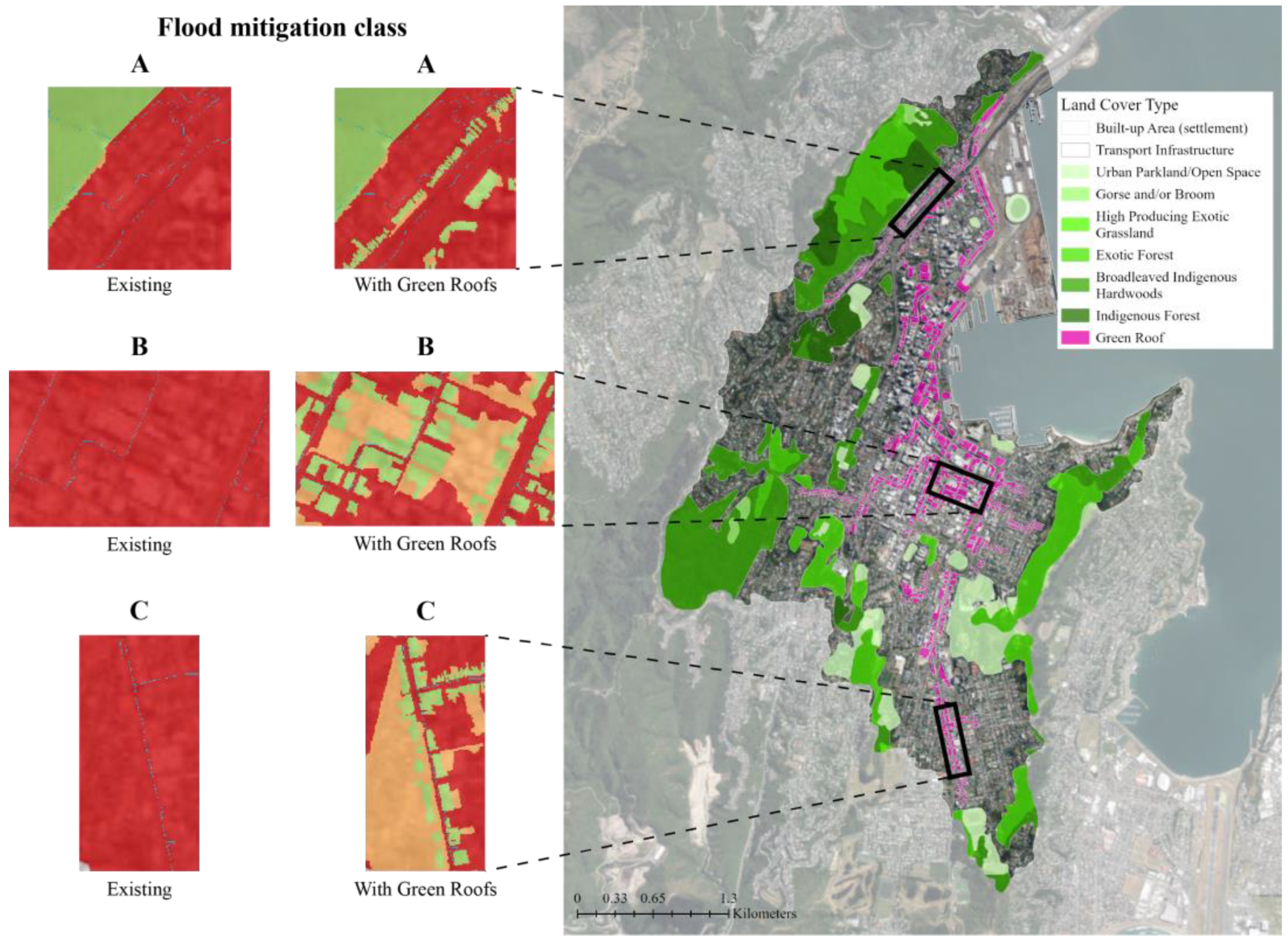
The city must implement "Sponge City" architecture. This involves mandatory bioswales, permeable pavements, and green roofs in all new developments. The goal is to slow the water down (attenuation) before it ever reaches the pipe network. By increasing the "Time of Concentration"—the time it takes for a drop of rain to travel from the furthest point of the catchment to the outlet—the peak flow is flattened, preventing the system from being overwhelmed.
2. Intelligent Sensor Integration
A dense grid of loT (Internet of Things) sensors is required to monitor soil moisture and pipe pressure in real-time. This allows for "Dynamic Evacuation Zones" rather than the current blanket warnings. By using predictive algorithms, the city can identify exactly which slopes are reaching critical saturation levels minutes or hours before a failure occurs.
3. Managed Retreat and Hard Zoning
There must be a brutal reassessment of where people are allowed to live. Certain zones in Wellington are effectively "un-engineerable" against the projected increase in storm intensity. A managed retreat strategy—buying out properties in high-risk zones and converting that land into flood-storage basins—is the only way to protect the wider city's viability.
The current evacuation orders in Wellington are a symptom of a city operating at the absolute limit of its Victorian-era design. The immediate priority is life safety, but the strategic priority must be a fundamental redesign of the city's relationship with its terrain. The "business as usual" approach to urban drainage is no longer a viable engineering stance; it is a liability that will continue to manifest in displaced residents and degraded capital. The next phase for Wellington is not "repair," but "reinvention" of its hydrological footprint.