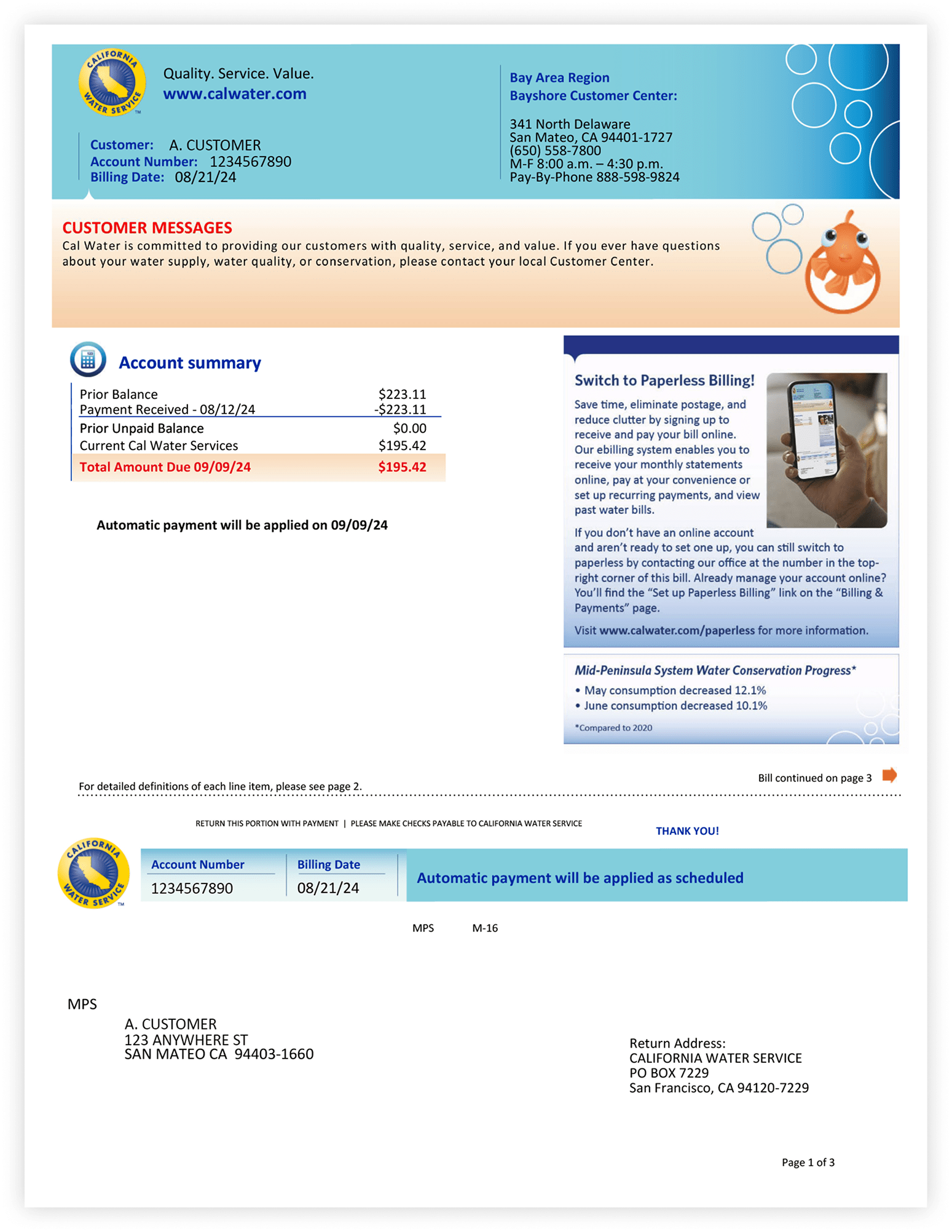
The modern obsession with the "hidden data" on your water bill is a masterclass in misdirection. We spend our energy squinting at microscopic parts-per-billion figures and complaining about municipal transparency, while the actual architecture of water toxicity remains untouched. You are being told to worry about the wrong thing.
Most activists and "industry watchdogs" want you to believe that the problem is a lack of information. They argue that if we just had better sensors or more granular reporting, we would be safe. They are wrong. Data is not safety. In fact, more data is often used as a shield by utility companies to hide the systemic failure of the infrastructure itself.
The PPM Myth and the Safety Illusion
The "parts per million" (PPM) metric is the biggest lie in environmental science. It creates an arbitrary threshold of safety that has more to do with political compromise than human biology.
When a utility company reports that your lead or PFAS levels are "within federal limits," they aren't saying the water is healthy. They are saying it is legally defensible. I have sat in boardrooms where the primary concern wasn't reducing contaminants, but rather finding the specific sampling methodology that would keep the numbers just below the regulatory ceiling.
Why Federal Limits Are Obsolete
The Environmental Protection Agency (EPA) moves at the speed of a glacier. Many of the standards currently used to judge your "clean" water are based on decades-old research that didn't account for bioaccumulation or the "cocktail effect."
- Bioaccumulation: Small doses don't leave your body; they stack.
- The Cocktail Effect: Regulators test chemicals in isolation. They have no idea how 0.05 mg of Chemical A interacts with 0.02 mg of Chemical B once they hit your gut.
If you are waiting for your water bill to warn you about these interactions, you will be waiting for a lifetime. The bill tells you what happened three months ago under specific, controlled conditions. It is a rearview mirror with a smudge on it.
Infrastructure is the Real Pollutant
Stop blaming the source water. Stop obsessing over the reservoir. The most significant pollution event doesn't happen at the treatment plant; it happens in the "last mile" of the pipe.
We have a trillion-dollar infrastructure deficit. We are running 21st-century chemistry through 19th-century lead and cast iron. Every time a utility company increases pressure to meet demand, or every time a water main breaks down the street, the protective "scale" inside those old pipes sloughs off. That is when the heavy metals enter your glass.
The Point-of-Use Reality
I have consulted for municipal water systems where the water leaving the plant was pristine. By the time it reached the tap in a zip code with older housing, it was a chemical soup.
The data on your bill doesn't reflect your tap. It reflects the plant. Believing your bill is like checking the weather in a different city and assuming you don't need an umbrella.
The Scams of the "Clean Water" Industry
The "solution" sold to the public is just as broken as the problem. The home filtration market is a predatory mess of pseudoscience and overpriced plastic.
- Pitcher Filters: Most of these are glorified flavor enhancers. They use basic activated carbon to remove chlorine—which makes the water taste better—but they do almost nothing for heavy metals or "forever chemicals" like PFOA.
- Alkaline Water: This is a biological scam. Your stomach acid has a pH of roughly 1.5 to 3.5. As soon as that "pH 9.5" water hits your stomach, it is neutralized. You are paying a 500% markup for basic chemistry.
- Reverse Osmosis (RO) Waste: RO is effective, but it is also an environmental disaster. For every gallon of clean water produced, a typical home system wastes three to five gallons. In a world facing water scarcity, we are literally flushing our future down the drain to fix the present.
The Hard Truth About Remediation
If we actually wanted to solve the water crisis, we would stop talking about "data transparency" and start talking about total pipe replacement and mandatory point-of-entry filtration for every building.
But that is expensive. It’s much cheaper for a city to build a shiny new dashboard with pretty charts than it is to dig up 500 miles of lead service lines. Transparency is the cheap substitute for action.
The Cost of Silence
I’ve seen cities spend $2 million on a public relations campaign to "educate" the public about water quality while simultaneously cutting the budget for pipe maintenance. It is a shell game. By making the data more accessible, they shift the burden of safety onto you.
"We told you the levels were slightly elevated," they will say. "It was on the website. Why didn't you buy a better filter?"
This is the privatization of risk. They provide the data; you provide the safety.
Stop Reading the Bill
The data they don't print on your water bill isn't some secret chemical. It’s the fact that the system is designed to provide compliant water, not healthy water.
Compliance is a legal standard. Health is a biological reality. The two rarely meet.
If you want to protect yourself, ignore the quarterly report. Assume the "last mile" of your infrastructure is failing. Stop looking for a "clean" bill and start acknowledging that the municipal water model is a relic of an era that didn't understand the chemistry of the modern world.
The water bill is a receipt for a service that is fundamentally outdated. Stop treating it like a health certificate. You are drinking the results of a political compromise, and no amount of data transparency will change the taste of lead.
Go buy a high-grade, multi-stage filtration system that actually targets PFAS and lead at the tap. Stop waiting for the government to fix the pipes under your house. They won't. They'll just send you another bill with more "transparent" data while the scale keeps flaking off.