The Invisible Wall
You know the feeling of a heavy door clicking shut behind you. It’s the sound of the pressurized cabin sealing, the moment the hum of the jet engine becomes the only heartbeat that matters. At 35,000 feet, we trade our autonomy for a seat assignment and a prayer that the machinery of modern security has done its job. We trust the system because we have to.
But systems are made of people. And right now, the people standing between a routine flight and a catastrophic headline are being treated like line items on a spreadsheet.
The latest budget proposal from the Trump administration isn't just a collection of numbers; it is a calculated withdrawal. It calls for the elimination of thousands of Transportation Security Administration (TSA) positions. On paper, it looks like "fiscal efficiency." In the physical world—at JFK, at LAX, at the small regional strip in Omaha—it looks like a gap. A hole in the net.
Consider a Tuesday morning at a major hub. The line is already snaking past the Starbucks, a river of tired parents, anxious consultants, and first-time flyers. In this scenario—which is not a metaphor, but a daily reality—the difference between a thorough screening and a rushed one is exactly three minutes of a human being's focused attention. When you remove the person behind the monitor, the three minutes vanish. The pressure to "move the line" takes over.
Security becomes a performance rather than a practice.
The Cost of a Shorter Line
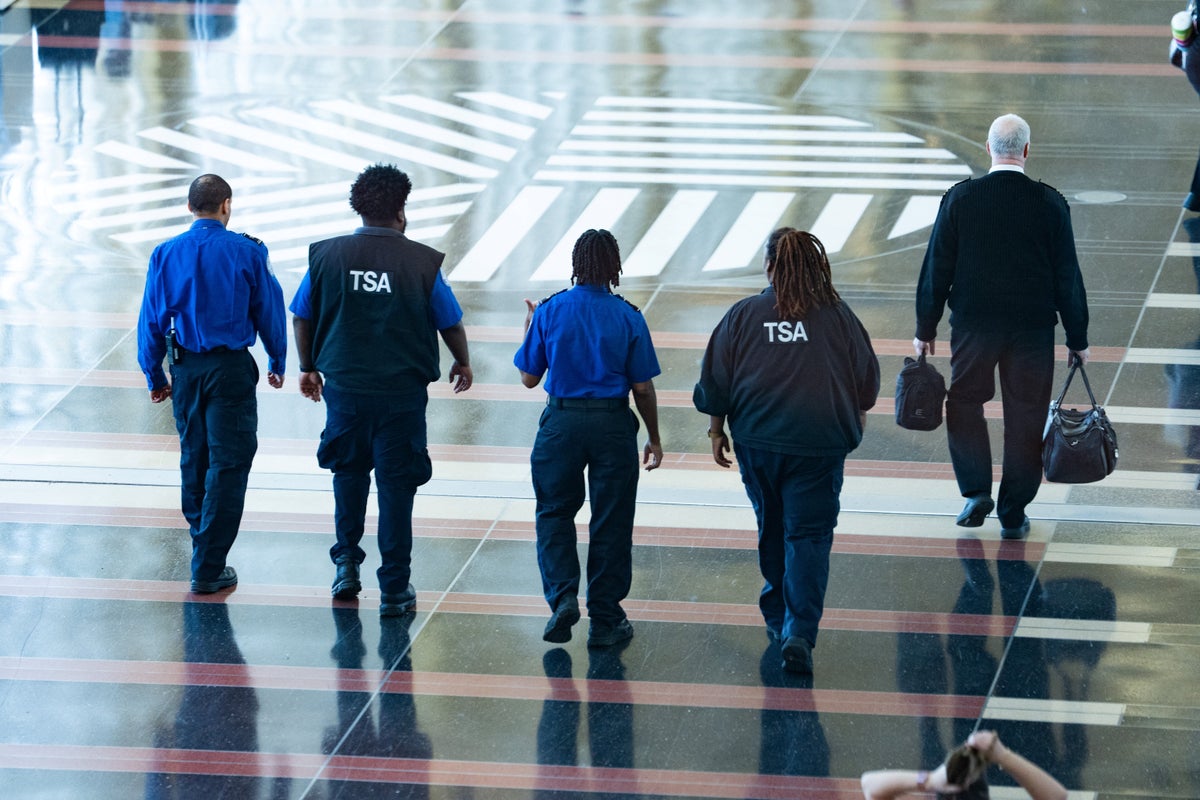
The math is brutal. The proposal suggests cutting roughly 3,000 screeners. To a budget hawk in a mahogany-paneled office in D.C., that is a "reduction in force." To a veteran TSA lead who has spent twelve years spotting the faint, unnatural density of a hidden wire in a cluttered carry-on, it’s a recipe for burnout.
When you have fewer eyes, the eyes you have left get tired faster. This is basic human biology. Vigilance decrement is a real psychological phenomenon: the longer you perform a monotonous task requiring high focus, the more your brain begins to fill in the blanks. You stop seeing the image and start seeing what you expect to see.
Critics aren't just sounding the alarm for the sake of politics. They are looking at the sheer physics of the checkpoint. If the volume of travelers continues to climb while the number of gatekeepers drops, something has to give. Either the wait times become so unbearable that the travel industry stutters to a halt, or the scrutiny is dialed back to keep the gears turning.
"I would not personally want to fly," one former security official remarked recently. It wasn't hyperbole. It was a professional assessment of risk versus resources.
We often think of airline security as a series of metal detectors and X-ray machines. We fall in love with the technology. We want the "cutting-edge" scanners to do the work for us. But technology is a tool, not a solution. An X-ray machine doesn't find a threat; a human being interprets a shadow. If that human is overworked, under-trained, or simply non-existent because their position was axed to balance a ledger, the machine is just an expensive light show.
The Human Core of the Shield
Think about the screener at the end of a ten-hour shift. Let’s call her Sarah. Sarah isn't a "job" to be cut; she is the one who notices the passenger who is sweating a little too much for a climate-controlled terminal. She is the one who recognizes that a laptop has been tampered with. She is the layer of defense that doesn't show up in a software update.
The proposal also targets the "Law Enforcement Officer" (LEO) reimbursement program. This is the funding that helps local police departments keep a presence at airports. It’s the blue uniform you see standing near the exit, the one that makes a would-be disruptor think twice.
When that funding dries up, the burden falls on local municipalities. Some will pay it. Many won't. The result is a patchwork of safety where your level of protection depends entirely on which zip code you’re flying out of.
We are moving toward a tiered reality of safety. Those who can afford private terminals or expedited, high-cost screening programs might maintain a semblance of the old standard. For everyone else—the family flying to a funeral, the student headed home for break—the experience becomes a gamble.
The Memory of Air
There is a specific kind of amnesia that settles over a country when it hasn't faced a major domestic aviation tragedy in a while. We begin to view security as an inconvenience rather than a necessity. We complain about taking off our shoes. We roll our eyes at the liquid restrictions. We start to see the TSA as a bureaucracy of "no."
But that "no" is what allows us to sleep on a red-eye.
The danger of these budget cuts is that they are invisible until they are tragic. You don't "see" a cut job. You don't "see" a vacant security post. You only see the result when the system fails to catch what it was designed to stop.
Critics are worried because they remember the era before the TSA. They remember when security was handled by private contractors who were paid minimum wage and had the turnover rate of a fast-food joint. We are moving backward, toward a model that prioritizes the speed of the line over the integrity of the search.
Is the TSA perfect? No. It is a massive, sometimes clunky agency. But the solution to a leaking roof isn't to tear down the walls. It’s to fix the tiles.
The Stakes at the Gate
The debate over the budget will likely be framed as a choice between "big government" and "fiscal responsibility." That is a distraction. The real choice is between a functioning security infrastructure and a hollowed-out shell that relies on luck.
If the cuts go through, the atmosphere in our airports will change. It won't happen overnight. It will be a slow erosion. A few more closed lanes here. A slightly more harried staff there. A police officer who is no longer standing by the baggage claim because the city couldn't bridge the federal funding gap.
Then comes the day when the line is too long, the staff is too tired, and someone—someone who has been watching, someone who has been waiting for the net to fray—walks through.
We are currently trading our long-term safety for a short-term line on a balance sheet. We are betting that the "thousands of jobs" being eliminated weren't actually doing anything. It is a high-stakes poker game where the chips are the lives of the people currently sitting in Terminal 4, waiting for their zone to be called.
The light is green. The engines are spooling up. The pilot tells you to sit back and relax. But as you look out the window at the receding tarmac, you have to wonder: who was left behind at the gate to make sure you actually get where you’re going?
Safety isn't a static condition. It is a constant, expensive, and deeply human effort. Once you stop paying for it, you start paying for the consequences. And those costs are never measured in dollars.