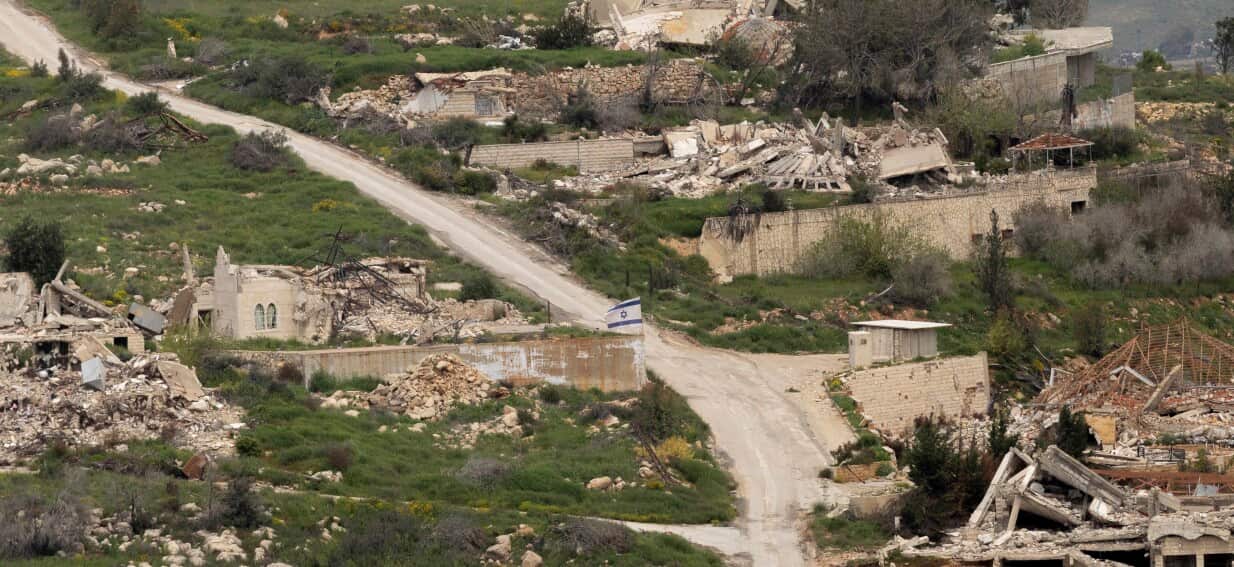
Lebanon’s first responders are being hunted. On Thursday, Israeli airstrikes targeted two separate rescue teams in the south of the country, killing four medics and adding a grim new chapter to a conflict that increasingly treats the Red Cross and Civil Defense symbols as bullseyes rather than shields. The Lebanese Ministry of Public Health confirmed the deaths, stating that the strikes hit vehicles and centers clearly marked for humanitarian operations. This is not an isolated tragedy. It is a documented pattern that suggests the neutral space required for medical aid in a war zone has effectively collapsed.
The reality on the ground in southern Lebanon has moved past the stage of "collateral damage." When a drone tracks a moving ambulance or a missile strikes a stationary civil defense center, the technology involved is too precise for the word "accident" to carry any weight. Investigative data and local reports indicate that the logic of the current campaign has shifted toward total area denial. By removing the medics, the military forces make the entire region uninhabitable for the civilians who remain.
The High Cost of Neutrality in a No-Man's Land
In the villages of the south, the "white sirens" are often the only authority left when the shelling starts. These medics belong to various organizations, ranging from the government-run Civil Defense to the Lebanese Red Cross and the Islamic Health Committee. While the Israeli military frequently claims that Hezbollah uses medical transport to move personnel or weapons, they rarely provide public, verifiable evidence for the specific strikes that kill rescuers in the line of duty.
The result is a paralysis of the humanitarian corridor. When a medic dies, the ripple effect is immediate. Ten more families decide to flee because they know that if their ceiling collapses, no one is coming to dig them out. This is a brutal efficiency. It clears the geography without the need for a house-to-house sweep.
The mechanics of these strikes deserve scrutiny. We are seeing the use of precision-guided munitions against soft-skinned vehicles. In the most recent incident, the rescue teams were reportedly attempting to reach a site already hit by a previous strike—a tactic known as a "double tap." This method ensures that the second round of explosives catches the very people who arrived to save the survivors of the first. It is a strategy designed to maximize the body count of the most courageous people in the conflict zone.
The Failure of International Safeguards
For decades, the Geneva Conventions stood as the baseline of human decency in war. Article 19 specifically dictates that medical establishments and mobile units may in no circumstances be attacked. Yet, the current environment in Lebanon shows that these international laws are now treated as optional suggestions. The diplomatic community issues statements of "deep concern," but there is no mechanism of accountability that stops the next drone from firing.
Observers who have spent years in conflict zones note a shift in the "rules of engagement." In previous wars, a marked ambulance was a pass. Today, in the eyes of an operator sitting in a control room miles away, that same ambulance is viewed through a lens of suspicion. The burden of proof has flipped. Instead of the military having to prove a vehicle is a legitimate target, the medic must somehow prove they are innocent while bleeding out on a dirt road.
The logistics of Lebanese rescue operations are a nightmare of coordination. Teams often wait for hours or days for "deconfliction" notices—essentially permission from the Israeli military to enter a specific area to retrieve bodies or the wounded. Even with these permissions, strikes occur. This suggests either a catastrophic failure in military communication or a deliberate policy of ignoring the deconfliction status when a "target of opportunity" arises.
Breaking the Spirit of the First Responder
There is a psychological dimension to this targeting that goes beyond the physical loss of life. Being a medic in Lebanon right now requires a level of stoicism that borders on the superhuman. You wake up, put on a fluorescent vest that you know makes you a target, and drive toward the smoke that everyone else is running away from.
When the state cannot protect its rescuers, the social contract dissolves. The Lebanese Ministry of Health has reported dozens of medical personnel killed since the escalation began. Each death is a message sent to the remaining staff: "Your uniform will not save you."
The data reflects a terrifying trend. Over 100 health workers have been killed in Lebanon over the last year. If this occurred in any other context, the global outcry would be deafening. Instead, it is filtered through the complicated politics of the Middle East, where the humanity of the victim is often judged by their proximity to a political faction.
The Myth of the Human Shield Argument
A common defense for these strikes is the "human shield" narrative. The claim is that because militants operate within civilian areas, every civilian structure—including clinics—is a potential military asset. While the use of human shields is a war crime, it does not grant a blank check to the opposing force to destroy everything in sight. The principle of proportionality remains.
If a single militant is suspected of being near a rescue center, does that justify the killing of four medics who are actively treating the wounded? The international legal answer is a firm no. The practical, military answer on the ground in Lebanon, however, appears to be a resounding yes. This divergence between law and practice is where the "grey zone" of modern warfare resides, and it is a space where civilians go to die.
The infrastructure of Lebanese healthcare is already brittle. Years of economic collapse had already drained the hospitals of medicine and the country of its best doctors. The targeted strikes on the remaining rescue teams are the final blow to a system that was already on life support.
A Landscape of Ghost Towns
The strategic aim of these strikes is becoming clearer as the wreckage of ambulances piles up. By making it impossible to provide emergency care, the military forces ensure that the border regions become a vacuum. No one stays in a town where a broken leg or a shrapnel wound is a death sentence because the ambulance was blown up yesterday.
The "why" behind the killing of these four medics isn't found in a single tactical error. It is found in the broader objective of making the south of Lebanon a dead zone. When the rescuers are gone, the land is surrendered. This isn't just about fighting a militia; it is about the systematic dismantling of the civic fabric that allows people to exist in their own homes.
The international community's silence is a form of consent. Every time a medic is killed and the world moves on to the next news cycle, the threshold for what is acceptable in war drops a little lower. We are moving toward a future where the Red Cross is just another piece of scenery to be cleared.
The four medics killed this week were not soldiers. They were not combatants. They were the people who believed, perhaps naively, that their mission to save lives would be respected. Their deaths prove that in the current architecture of war, there is no such thing as a neutral party. There is only the target and the person pulling the trigger.
As the smoke clears over the remains of the two rescue centers, the message to the remaining first responders is clear. They are on their own. The vests are useless, the sirens are ignored, and the law of the land is dictated by the drone overhead. If the world continues to look away, the very concept of humanitarian aid will be the next casualty of this war.
Stop looking for the "accidental" explanation for these strikes. Start looking at the map of abandoned villages. The absence of the medic is the final step in the conquest of a territory. When the healers are dead, the war is won by default.