In a small, nondescript office in Tokyo’s Ichigaya district, a pen stroke recently ended eight decades of history. There were no sirens. No parades. Yet, for the first time since the smoldering ruins of 1945, Japan has decided to export the tools of lethal force.
For generations, the Japanese identity was anchored in a singular, ironclad refusal: "We do not sell the means of death." This wasn't just a policy; it was a soul-deep penance. But the world outside Tokyo’s neon-lit safety has grown loud and jagged. The silence of the pacifist era has finally been broken by the mechanical hum of a Mitsubishi-built missile interceptor being loaded for shipment.
The Ghost of 1947
To understand why this move sends tremors through the Pacific, you have to look at the face of a hypothetical citizen—let’s call him Kenji. Kenji is seventy-four. He grew up in the shadow of a Constitution that explicitly renounced war. To Kenji, the "Self-Defense Forces" were a linguistic tightrope walk, a way to have a military that wasn't legally a military.
For decades, Japan adhered to the "Three Principles" on arms exports. It was a self-imposed straightjacket. Japan could build the most advanced technology in the world—silky-smooth robotics, world-class sensors, untouchable optics—but it couldn't sell a single bullet or fighter jet to a foreign power. This created a strange, cloistered ecosystem. Japan’s defense industry became a "Galapagos" market: highly evolved, incredibly sophisticated, but entirely isolated from the rest of the planet.
Kenji remembers when the idea of exporting weapons was unthinkable. It was a moral boundary. But Kenji’s grandson, an engineer at a heavy industries firm, sees a different reality. He sees a domestic defense industry that is suffocating. When you can only sell to one customer—the Japanese government—the costs become astronomical. Innovation slows. Talent drifts toward consumer electronics. Without the ability to export, Japan’s capacity to protect itself was actually beginning to wither from within.
The Global Chessboard Shifts
The decision to lift the ban on lethal exports, specifically allowing the transfer of finished products like the Patriot missile systems and future sixth-generation fighter jets, isn't about profit. Not primarily. It is about relevance.
The war in Ukraine acted as a cold bucket of water. It proved that the "peace dividend" was a spent currency. Western stockpiles were drained in months. Washington looked toward its most technologically advanced ally in the East and found a partner whose hands were tied by its own laws. The United States needed interceptors; Japan had them sitting in warehouses, bound by a legal ghost.
By changing these rules, Tokyo is signaling that it is no longer content to be a protected ward of the West. It wants to be a pillar. The "Global Combat Air Programme" (GCAP)—a joint venture between Japan, the UK, and Italy to build a next-generation fighter—became the catalyst. Britain and Italy wanted to sell the jet to other nations to recoup the billions in R&D. Japan, under the old rules, would have been the partner that held everyone back. They had to choose: remain a pacifist hermit or become a global power player.
The Mechanical Heart of the Matter
What does "lethal export" actually look like? It isn't just crates of rifles. It is the Patriot Advanced Capability-3 (PAC-3).
These are not weapons of aggression. They are the shields of the sky. But in the eyes of international law, a missile that destroys another missile is still a lethal weapon. By shipping these to the United States, Japan is effectively backfilling American inventories, allowing Washington to send more of its own stock to zones of conflict.
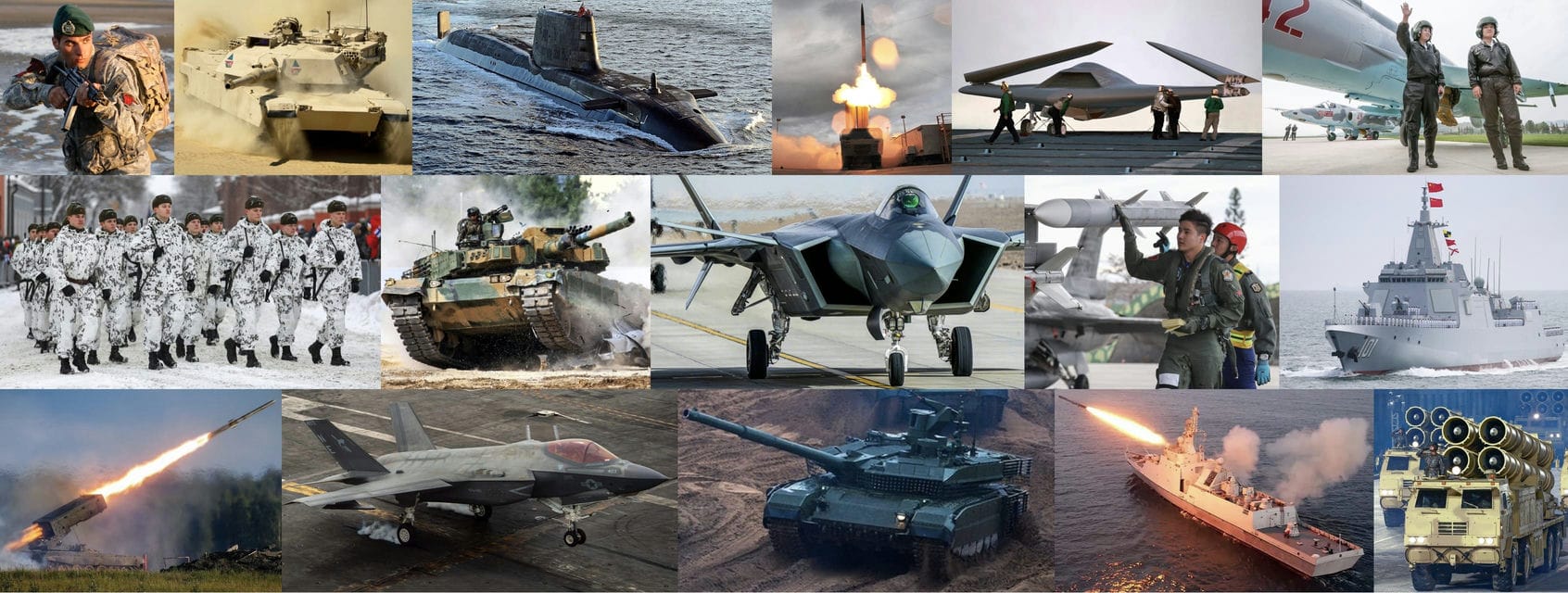
It is a clever, subtle maneuver. Japan isn't sending tanks directly to the front lines. They are providing the logistical and technological "depth" that allows the democratic bloc to breathe. But the distinction is a fine one. To the neighbors—Beijing and Pyongyang—the nuance is irrelevant. They see a Japan that is rearming, not just for itself, but for the world.
The Price of Admission
There is a visceral fear that accompanies this change. It’s the fear of the "Slippery Slope."
If Japan sells interceptors today, do they sell assault drones tomorrow? If they export fighter jet engines to London, do they eventually export sea-mines to Manila? The guardrails are still there, supposedly. The Japanese cabinet must approve each export of a finished lethal product. They claim they will only export to countries that are not currently in an active state of war.
But "active state of war" is a fluid definition in 2026. Grey-zone conflicts, cyber-warfare, and maritime skirmishes blur the lines. For a nation that has defined itself by its restraint, the act of becoming a merchant of "lethal defense" feels like a loss of innocence.
Consider the engineer. For forty years, he designed sensors meant only for the hills of Hokkaido or the waters of Okinawa. Now, his work might be mounted on a jet flying over the North Sea or a battery guarding a desert in the Middle East. There is pride in that—his tech is the best—but there is also a heavy, unspoken weight. His hands are now touching the global machinery of violence.
The Silent Evolution
This policy shift is part of a broader, quiet revolution in Tokyo. The defense budget is doubling. The "counterstrike capability"—the ability to hit bases on foreign soil—is no longer a taboo topic.
The strategy is simple: Deterrence through entanglement.
By integrating its defense industry with the West, Japan makes itself indispensable. If Japan’s factories are the ones producing the sensors for the world’s most advanced jets, then the world has a vested interest in the survival of Japan’s factories. It is security through supply chains.
But the human element remains conflicted. In the streets of Shinjuku, the younger generation is largely indifferent, preoccupied with a stagnant economy and the rising cost of living. To them, the "Peace Constitution" is a relic of a century they didn't live through. They see a world where China’s navy is growing and North Korea’s missiles are flying over their heads. To them, the ban on exports felt like a luxury Japan could no longer afford.
The Unseen Threshold
We often think of history as a series of loud explosions. But most of the time, history is a door opening slowly on a silent hinge.
Japan has crossed a threshold. The island nation that once swore off the tools of war has realized that in a world of predators, the only way to keep the peace is to be part of the pack. They are moving from a "passive pacifism" to an "active contribution to peace." It’s a linguistic gymnastic feat that would make any diplomat proud.
But under the polished language of "defense equipment transfers" lies a hard, metallic truth. The sword is out of the scabbard. It isn't being swung yet, but it is being sharpened, and for the first time in eighty years, it is for sale.
The sun is setting over the shipyards of Nagasaki. Inside those massive hulls, the steel is cold. But the circuits are live. The world is waiting for the first shipment. When those crates finally clear the harbor, the post-war era won't just be over. It will be a memory.
The silence has been replaced by the steady, rhythmic pulse of an industry waking up. Japan is no longer watching from the sidelines of the global struggle. It has decided that the cost of staying clean was far too high, and the price of involvement—no matter how heavy—is the only way to buy a future.
The pen is back in the drawer. The ink is dry. The world is different now.