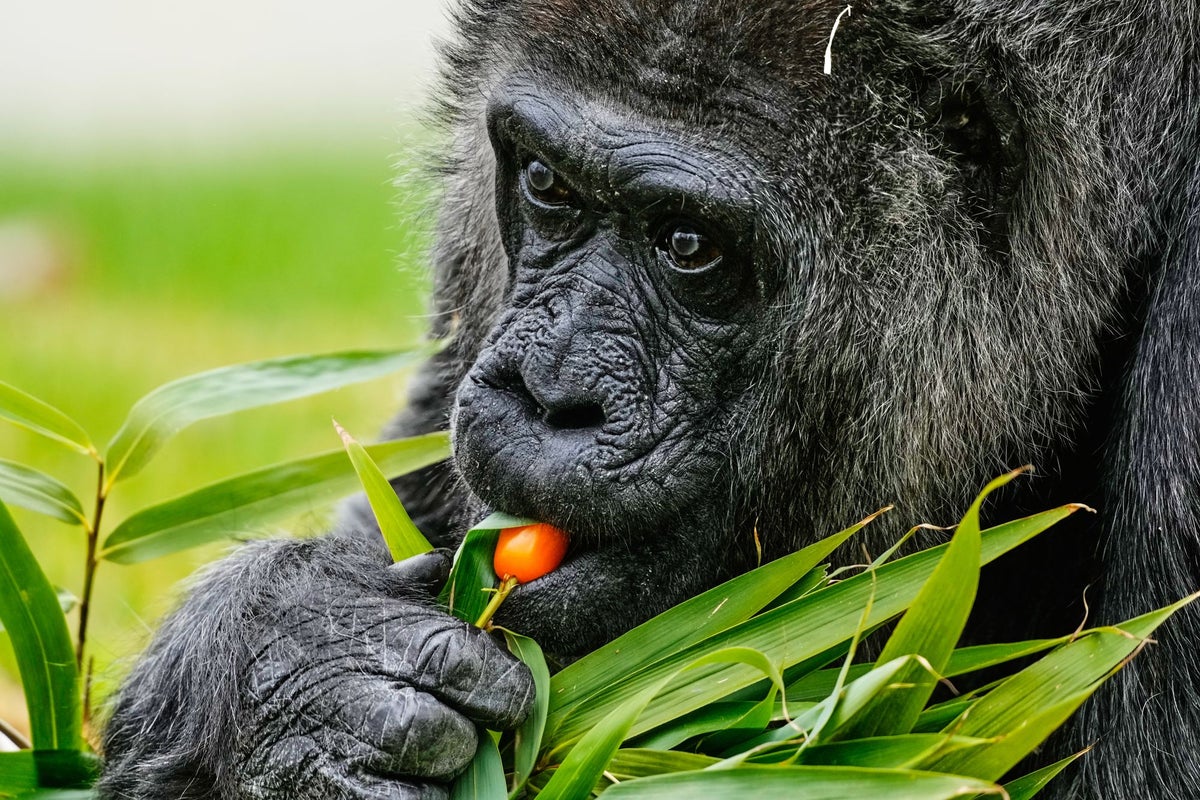
Fatou, a Western lowland gorilla residing at Zoo Berlin, recently marked her 69th birthday, solidifying her status as the oldest known living gorilla in the world. While headlines often focus on the spectacle of her birthday "cake"—usually a colorful arrangement of vegetables and fruit—the real story lies in the biological anomaly of her age. In the wild, gorillas rarely survive past 40. Fatou has bypassed that threshold by nearly three decades. Her continued existence offers a rare window into how high-level veterinary care and a controlled environment can effectively double the natural lifespan of a great ape.
This is not merely a story about an animal living a long time. It is a case study in the intersection of primate biology and modern captive management. For another perspective, consider: this related article.
The Accidental Legend
Fatou did not arrive at Zoo Berlin through a standard conservation exchange. Her journey began in 1959 when a French sailor used the young gorilla to pay a debt at a tavern in Marseille. Eventually, she was acquired by the Berlin zoo, where she has lived ever since. This chaotic start is a stark contrast to the highly regulated, data-driven world of modern zoology, yet it highlights a critical factor in her longevity: she has lived in one of the world’s most advanced veterinary environments for over 65 years.
Stability is a quiet killer or a silent savior for primates. The lack of predators, the absence of infectious diseases that ravage wild populations, and a guaranteed caloric intake are the foundational layers of her survival. However, many captive gorillas still succumb to heart disease—the leading cause of death for the species in zoos—long before they reach 60. Related reporting on the subject has been provided by NBC News.
Cracking the Gorilla Aging Code
What makes Fatou different from the hundreds of other silverbacks and females in the international studbooks? Genetics play a role, but the specific management of her "geriatric" years is the deciding factor.
Gorilla metabolism is notoriously sensitive. In the wild, they spend the vast majority of their day consuming fibrous vegetation. In captivity, historically, zoos made the mistake of feeding primates too much fruit. While fruit seems healthy to a human, the domesticated fruit found in grocery stores is bred for high sugar content. For a gorilla, this leads to obesity and the aforementioned cardiovascular issues.
Fatou’s diet is strictly monitored to prevent these spikes. Her birthday treats are often the only time she receives significant amounts of natural sugars. The rest of her year is spent on a regimen of twigs, leaves, and specific vegetables that mimic the high-fiber, low-sugar diet of the African rainforest.
The Veterinary Shield
At 69, Fatou deals with the same issues any elderly human would face. Arthritis and dental wear are the primary concerns. Unlike a wild gorilla, whose inability to chew or climb would lead to a rapid decline and death, Fatou receives targeted intervention.
- Customized Meals: Food is prepared to accommodate her aging teeth, ensuring she maintains her weight.
- Medical Monitoring: Non-invasive check-ups allow keepers to spot signs of distress or organ failure before they become acute.
- Social Dynamics: While gorillas are social, the stress of a troop’s hierarchy can be taxing for an elderly female. Fatou lives in her own enclosure adjacent to the main group, allowing her to interact visually and audibly without the physical strain of defending her status or dealing with rambunctious juveniles.
The Ethical Tension of Longevity
As Fatou continues to break records, her presence sparks a necessary debate about the role of aging animals in captivity. Critics often argue that keeping an animal into its seventh decade is an act of human vanity. They suggest that the quality of life for a geriatric primate, even one as well-cared-for as Fatou, is naturally diminished.
The counter-argument, held by the specialists at Zoo Berlin, is rooted in the concept of "behavioral competence." As long as Fatou demonstrates curiosity, moves independently, and maintains an appetite, her life has intrinsic value within the conservation framework. She serves as an ambassador for a species that is critically endangered in the wild due to poaching, habitat loss, and the Ebola virus.
The data gathered from her senior years is also invaluable. We are learning how primate bodies break down in slow motion. This information directly informs the care of younger gorillas across the globe, helping veterinarians predict and prevent the onset of age-related diseases in the broader captive population.
The Infrastructure of a Record
Maintaining a 69-year-old gorilla requires more than just a dedicated keeper. It requires a institutional commitment to "end-of-life" care that many smaller facilities cannot afford. This includes specialized climate control to ease aching joints during Berlin’s harsh winters and a specialized nutrition team that treats food as medicine.
Fatou's longevity is an expensive, labor-intensive achievement. It represents a shift in zoological philosophy from merely "displaying" animals to "stewarding" them through every life stage, including the messy, difficult, and fragile end.
A Biological Outlier
Despite the best care, there is an element of sheer biological luck involved. Some individuals are simply hardier than others. Fatou possesses a constitution that has resisted the common pitfalls of captive life. She has outlived her contemporaries and most of the keepers who cared for her in her youth.
She remains a living link to a different era of wildlife management, a time before modern conservation ethics were codified. Her survival is a testament to how far the industry has moved from the Marseille tavern where she was once traded as currency.
The Horizon of Great Ape Care
We are approaching a point where Fatou will no longer be the only gorilla reaching these extreme ages. As nutrition science and cardiac care for great apes improve, the "senior" wing of the world’s leading zoos will continue to grow. This brings new challenges in enclosure design and geriatric medicine that were unthinkable forty years ago.
The focus shifts from keeping them alive to ensuring their final years are spent with dignity. For Fatou, that means another morning of choosing the best pieces of bark and resting in the sun, oblivious to the fact that she is a scientific marvel. Her life is a slow-motion victory for a species that is struggling to survive anywhere else.
Watch the way she moves. It is slow, deliberate, and carries the weight of nearly seven decades. There is no clearer evidence of the power of consistent, expert-level intervention in the natural world.