The headlines are always the same. "Venice is drowning." "The City of Bridges is on the brink of extinction." "Act now or lose it forever." These narratives aren't just tired; they are fundamentally dishonest. They treat Venice like a fragile museum piece under glass rather than what it actually is: a triumph of engineering built on the explicit premise of defying nature.
The obsession with "saving" Venice through preservationist stasis is the very thing killing its soul. By freezing the city in a perpetual state of 18th-century aesthetics, we’ve turned a once-powerful maritime republic into a waterlogged Disneyland. If we actually want to respect the legacy of the Venetians, we need to stop coddling the stones and start embracing the inevitability of the tide.
The MOSE Failure of Imagination
The world cheered when the MOSE (Modulo Sperimentale Elettromeccanico) barriers finally rose to hold back the acqua alta. Proponents called it a miracle. In reality, it’s a multi-billion-euro band-aid on a gunshot wound.
The logic behind MOSE is flawed because it assumes a static sea level. Even the most conservative data from the Intergovernmental Panel on Climate Change (IPCC) suggests that if sea levels rise by even 50 centimeters, the barriers will have to stay closed so often that the lagoon will turn into a stagnant, septic pond. You cannot wall off a city from the ocean forever. The salt will still migrate through the porous brick. The foundations will still erode.
We are spending a fortune to delay the inevitable by a few decades while ignoring the actual physics of the Adriatic. We’ve fallen for the "Sunk Cost Fallacy"—literally. Because we spent €6 billion on a gate, we feel obligated to believe the gate is the answer. It isn't. It’s a pause button on a movie that’s already reaching its final act.
The Preservation Trap
The "lazy consensus" among travel writers and environmentalists is that Venice must be preserved exactly as it looks today. This is historical narcissism.
Venice was built by people who understood adaptation. When the ground sank, they built higher. When the wood rotted, they replaced it with stone. They didn't have a heritage committee breathing down their necks every time they wanted to change a window frame.
Today’s preservation laws have effectively embalmed the city. By forbidding modern architectural interventions and high-tech structural reinforcements that might "clash" with the Renaissance facade, we are ensuring that the buildings cannot evolve to survive. We are choosing a pretty corpse over a living city.
I have watched restoration projects drag on for decades, bogged down by bureaucracy and a refusal to use modern composite materials that would actually withstand the brine. We insist on using "traditional" methods that we know will fail again in twenty years. It’s a cycle of performative maintenance that serves the ego of the preservationist, not the survival of the resident.
The Myth of the Resident
"Save Venice for the Venetians," the activists cry. What Venetians?
The population of the historic center has plummeted from roughly 175,000 in the 1950s to fewer than 50,000 today. The city is losing roughly 1,000 residents a year. Most of the people you see walking the calli are day-trippers from cruise ships or Airbnb guests.
The high cost of maintaining these "saved" buildings, coupled with the restrictions on modernizing them, has driven out every soul who isn't a millionaire or a service worker commuting from Mestre. By "saving" the architecture, we have successfully killed the community. A city without a permanent, diverse population isn't a city; it’s a stage set.
If we truly wanted to save the city, we would stop obsessing over the height of the tides and start worrying about the lack of grocery stores, hardware shops, and affordable apartments. But those things aren't as "grammable" as a flooded St. Mark’s Square.
Accept the Wet Reality
Here is the counter-intuitive truth: Venice is more interesting as a ruin than as a theme park.
The most honest future for Venice involves a concept called "managed retreat," though even that is too passive. We should be looking at "amphibious architecture." Instead of fighting the water with heavy steel gates, we should be retrofitting buildings with flotation systems or waterproof lower levels that allow the sea to move in and out.
Imagine a Venice where the ground floors are intentionally surrendered to the sea, transformed into indoor aquatic gardens or tide-fed energy hubs. Imagine a city that functions $365$ days a year regardless of whether the tide is high or low, because its infrastructure doesn't view water as an enemy.
The Dutch have already pioneered this logic. They don't just build dikes; they build "Room for the River." Venice needs to make room for the Adriatic.
The Economics of Obsolescence
Critics will argue that letting the city succumb to the water would be an economic catastrophe. They point to the billions in tourism revenue.
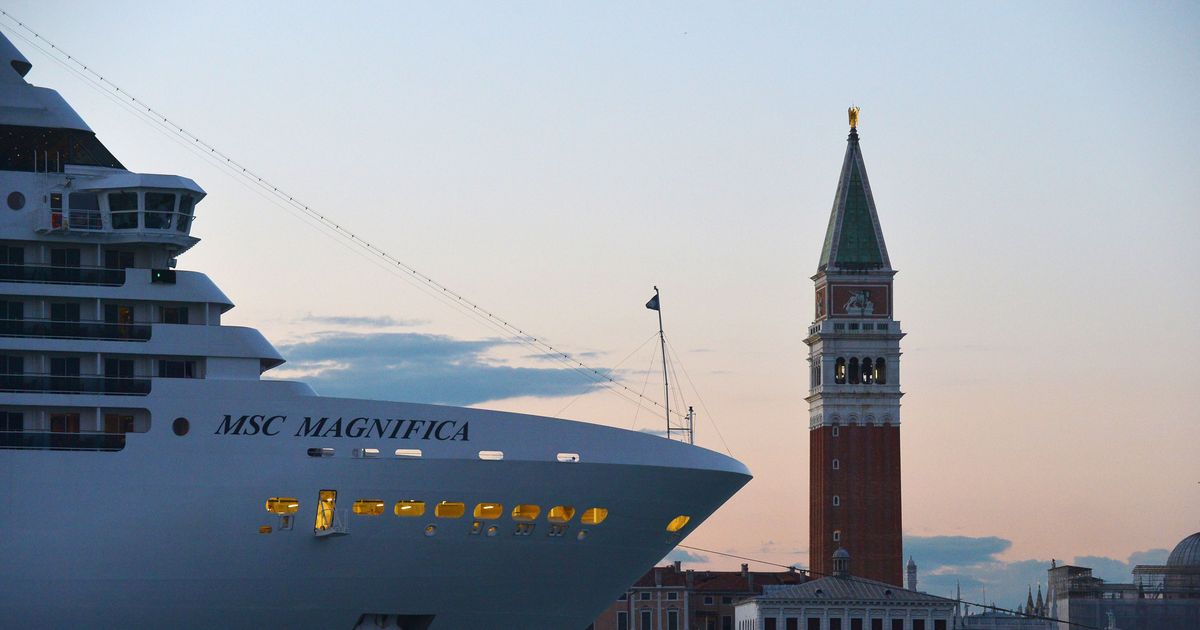
But look at the data on "Over-tourism." The sheer volume of visitors is physically crushing the city. The wake from large boats—moto ondoso—is more destructive to the foundations than the natural rising of the sea. The current economic model relies on a high-volume, low-impact visitor who spends six hours in the city, buys a cheap mask made in China, and leaves a pile of trash.
If Venice "sinks" slightly—if it becomes a bit more difficult to navigate, if it requires boots and a sense of adventure—the casual tourist will stay away. The people who remain will be those who actually care about the place. Disaster has a way of filtering out the superficial.
A Thought Experiment: The Atlantis Protocol
Imagine a scenario where we stop the MOSE project entirely. We take the billions earmarked for its maintenance and instead fund a massive, city-wide relocation and structural hardening project.
- Abandon the ground floor. Legally rezone all ground-level spaces as non-habitable.
- Hardened Infrastructure. Move all electrical, sewage, and communication lines to the second floor or suspended conduits.
- Internal Waterways. Allow the canals to reclaim the squares. St. Mark’s becomes a permanent pool.
This isn't a defeat. It’s an evolution. It turns Venice into a truly unique, 21st-century water-city rather than a failing 18th-century one. It honors the Venetian spirit of maritime dominance by acknowledging that the sea has won this round and inviting it inside for a drink.
The Cost of Cowardice
The downside to this approach is obvious: we lose the Venice of our postcards. We lose the ability to walk across the Piazza in loafers. We lose the pristine, dry-stone perfection that art historians drool over.
But the alternative is worse. The alternative is a city that eventually suffers a catastrophic, unmanaged failure. One day, a storm surge will exceed the MOSE limits. The gates will fail, or the sea will simply go around them. Because we didn't prepare the buildings to be wet, they will crumble.
Our current strategy is based on the arrogance that we can control the planet. We can’t. The Venetians of the 10th century knew this. They built on mud and sticks because they were agile. They didn't expect the ground to stay still.
We have become heavy. We have become rigid. We have become obsessed with the "sanctity" of the structure while ignoring the reality of the environment.
Stop donating to "Save Venice" funds that just want to scrub the salt off old marble. Start supporting the engineers and urban planners who want to build the Venice that lives under the waves.
The city is going under. It’s time to learn how to breathe underwater.