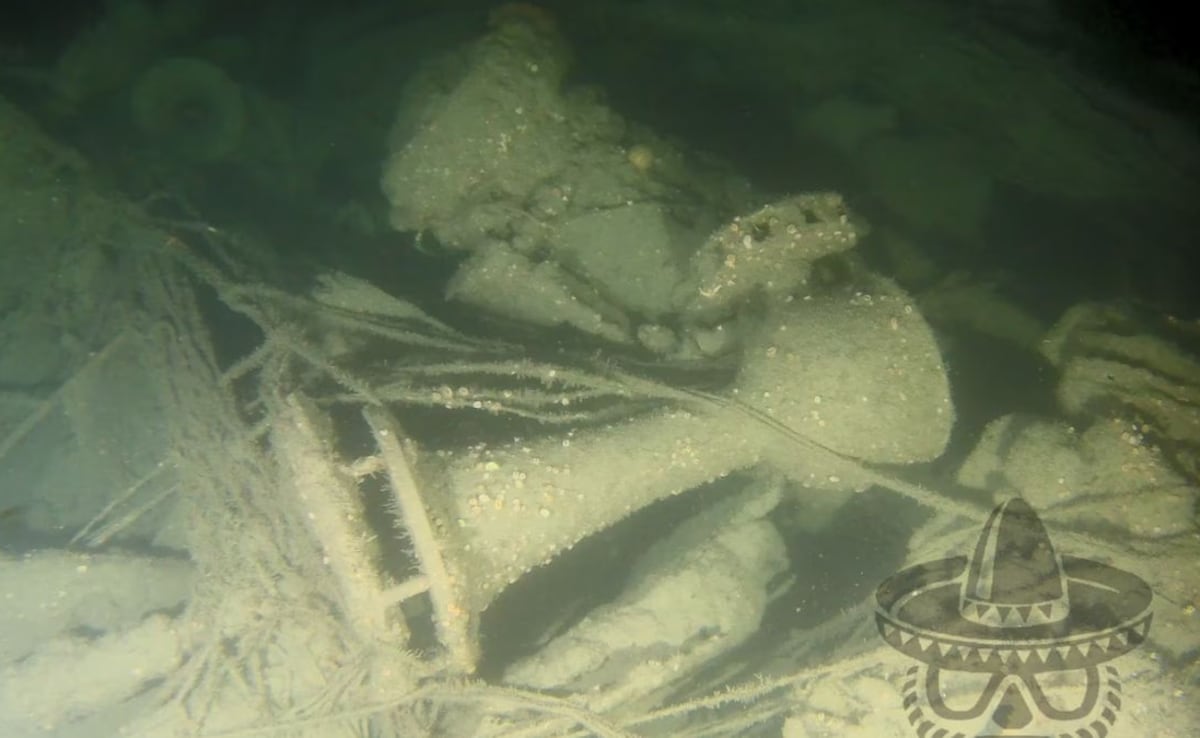
The headlines are bleeding with sentimentality. Researchers found the USS Jacob Jones—the first American destroyer sunk by enemy action in World War I—resting 400 feet down off the coast of the Scilly Isles. The media wants you to feel a sense of "closure" or "historic triumph." They paint a picture of a time-capsule preserved in the deep, a silent monument to heroism.
They are wrong.
Finding a century-old warship isn’t an archaeological victory. It is a grim reminder of how poorly we understand the ticking environmental time bombs littering our seabed. While historians argue over the exact angle the torpedo hit the hull, they are ignoring the chemical reality of thousands of tons of steel, fuel, and unexploded ordnance rotting in a high-pressure, corrosive salt-water environment.
The discovery of the USS Jacob Jones shouldn't be celebrated with a plaque. It should be met with a hazmat suit and a sense of urgency.
The Myth of the Sacred Grave
There is a pervasive, lazy consensus that sunken warships should be left "in situ" out of respect for the fallen. This sounds noble in a press release. In practice, it is a convenient excuse for governments to avoid the staggering cost of deep-sea remediation.
I have watched maritime agencies pat themselves on the back for "mapping" wrecks while ignoring the fact that these vessels are essentially leaking batteries. The USS Jacob Jones was a Tucker-class destroyer. It wasn't just carrying men; it was carrying depth charges and bunker oil. When we "honor" these sites by leaving them to the currents, we aren't protecting a grave. We are subsidizing a slow-motion ecological disaster.
The nuance the mainstream media misses is the corrosion curve. Metals don't decay at a linear rate. They reach a structural tipping point where the entire hull collapses, potentially releasing a century’s worth of toxins in a single event. If we wait for the "respectful" amount of time to pass, we lose the window to safely extract hazardous materials before the structure becomes too unstable to touch.
Data Over Drama
Let’s look at the numbers the history buffs won't tell you. There are over 8,500 "potentially polluting" wrecks worldwide according to data from the Ocean Foundation. Roughly 75% of these are from the World War eras. We are talking about an estimated 2.5 million to 20 million tonnes of oil sitting on the ocean floor.
The USS Jacob Jones is a drop in that bucket, but it represents a specific failure in how we prioritize deep-sea exploration. We spend millions on autonomous underwater vehicles (AUVs) to take 4K video of rusted rivets, yet we spend almost nothing on developing the large-scale robotic siphoning technology required to neutralize these threats.
Why the "People Also Ask" Section is Asking the Wrong Questions
If you look at the common queries regarding WWI shipwrecks, you see a pattern of curiosity without consequence:
- "Can you visit the USS Jacob Jones?" (No, and you shouldn't want to.)
- "What happened to the survivors?" (A tragic story of 64 men lost, but their legacy is being tarnished by our current inaction.)
- "Is there gold on WWI ships?" (Rarely. The real "value" is in the scrap steel, which is often low-background steel—pre-atomic age metal—worth a fortune for sensitive medical equipment.)
The question we should be asking is: "At what point does a historic site become a public health liability?"
The Technical Reality of Deep-Water Decay
The salt-saturated environment of the Atlantic doesn't "preserve" history; it consumes it. Through a process called galvanic corrosion, different metals on the ship act as an anode and a cathode. The sea is the electrolyte. The ship is literally eating itself to stay "alive" in the water column.
When the USS Jacob Jones went down in 1917, it took its depth charges with it. These aren't just curiosities. Picric acid and TNT don't always become inert under pressure. In some cases, they become more volatile or break down into carcinogenic byproducts that enter the local food chain.
I’ve consulted with salvage experts who have seen "pristine" wrecks turn into mush the moment a diver’s fin creates a pressure wave. The "look but don't touch" policy is a fantasy. By looking, we are merely documenting the decay of our own coastal safety.
The High Cost of Aesthetic Preservation
Critics will say that disturbing these sites is a violation of international law, specifically the UNESCO Convention on the Protection of the Underwater Cultural Heritage.
I argue that these laws were written for wooden galleons and marble statues, not for 1,000-ton steel carcasses filled with pollutants. We need a radical shift in maritime policy that treats 20th-century shipwrecks as industrial waste sites first and historical sites second.
Imagine a scenario where we treated a crashed tanker on land the way we treat the USS Jacob Jones. If a truck carrying oil and explosives crashed in a national forest, we wouldn't wait 100 years to find it, call it a "historic landmark," and then leave it there to leak into the groundwater. We would prioritize the cleanup. Why does the depth of the water change our moral and environmental obligations?
Professionalism vs. Sentimentality
The team that found the wreck, led by Darkstar and supported by the US Navy, did an incredible job of navigation and technical diving. Their skill is undeniable. But the narrative surrounding their find is dangerously soft.
We need to stop using the word "discovery" as if we found a new species. We found a mess we made 109 years ago.
The industry likes the "ghost ship" narrative because it sells documentaries and museum tickets. It’s much harder to sell a documentary about the grueling, expensive, and ugly process of "Hot Tapping"—the method of drilling into a sunken hull to extract oil without letting it escape into the ocean.
The Actionable Truth
If we actually cared about the history of the USS Jacob Jones and the men who served on it, we would do more than just take photos of its nameplate.
- Pressure governments to fund the "Triage of the Deep"—a systematic ranking of wrecks based on environmental risk, not historical fame.
- Invest in salvage tech, specifically heavy-lift ROVs that can stabilize hulls before they reach the point of no return.
- Acknowledge the downside: Yes, this involves disturbing graves. Yes, it is expensive. But the alternative is a poisoned coastline that honors no one.
The ocean is not a museum. It is a biological engine. Every time we find another "lost" ship and do nothing but celebrate the find, we are throwing more sand into the gears of that engine.
Stop asking when the next wreck will be found. Start asking when the first one will be cleaned up. The USS Jacob Jones is out there, 60 miles off the coast, and it is rotting. That isn't a story of the past. It's a crisis of the present.
Pick up the camera, but bring a pump.


