California’s Department of Insurance just dropped a hammer that has been decades in the making. On May 4, 2026, Insurance Commissioner Ricardo Lara announced a massive enforcement action against State Farm General Insurance Company, alleging the insurer systematically choked off payments to survivors of the 2025 Los Angeles wildfires. The state isn't just asking for money; it is threatening to pull State Farm’s license to operate in California for a full year. This is the regulatory equivalent of a death sentence for a company that currently holds a fifth of the state’s property insurance market.
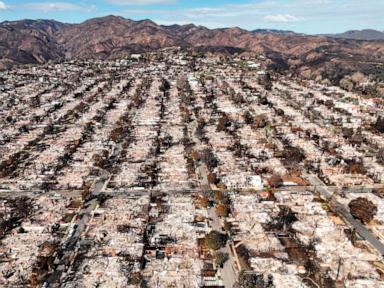
The investigation centered on the Eaton and Palisades fires, a pair of infernos that tore through Los Angeles County in January 2025, killing 31 people and leveling 16,000 structures. According to state regulators, State Farm handled roughly one-third of all residential claims from those disasters—about 11,300 files. A random audit of 220 of those claims uncovered 398 violations of state law. If the math holds across the company's entire book of business, thousands of families may have been illegally lowballed or ignored. Meanwhile, you can read other developments here: The Mathematical Mirage of Prediction Markets.
The Mechanics of the Delay
Insurance is a promise of future performance, but in the ruins of the Palisades, that promise apparently came with a lot of fine print and circular logic. The state’s investigation details a process of "adjuster roulette." In some instances, a single policyholder was assigned 12 different adjusters within a four-month window.
Each time a new adjuster took over, the clock essentially reset. Documentation was lost, previous verbal agreements were ignored, and the homeowner was forced to retell their trauma to a new voice on the phone. This isn't just an administrative hiccup. It is a known industry tactic to wear down claimants until they accept a fraction of what they are owed just to make the process stop. To understand the bigger picture, check out the recent report by The Wall Street Journal.
Under California law, insurers have 15 days to begin an investigation and 40 days to accept or deny a claim. State Farm allegedly blew past these deadlines repeatedly. In one documented case, the company waited nearly three months before even starting an investigation. In another, internal records showed the company knew a payment should be approved, yet they withheld the funds for months while the policyholder struggled to pay for temporary housing.
The Smoke Damage Shell Game
The most technical and perhaps most insidious part of the state’s case involves smoke damage. While a burned-down house is hard to ignore, smoke and ash damage are invisible killers of property value. Toxins left behind by wildfire smoke can permeate walls, ductwork, and insulation, requiring specialized hygienic testing to identify.
State Farm reportedly denied payments for this testing across the board. The state alleges the company failed to provide written denials—a legal requirement—and misrepresented policy provisions to avoid paying for inspections. By the time a homeowner realized their attic was filled with carcinogenic soot, the "period of restoration" had often expired, leaving the family to live in a toxic environment or pay out of pocket for remediation that their premiums should have covered.
A Market in Meltdown
State Farm has not taken these allegations lying down. Their response was blunt, calling the California insurance market "the most dysfunctional in the country." The company argues that the state's move is a "reckless, politically motivated attack" that could collapse the remaining market.
There is a kernel of truth in the company's frustration, even if it doesn't excuse the alleged legal violations. California has been in an insurance tailspin since 2023. Major carriers have either stopped writing new policies or exited the state entirely, citing the inability to price risk accurately as climate change turns once-a-century fires into an annual tradition.
Last year, Commissioner Lara approved a 17% rate hike for State Farm homeowners' policies—a move intended to keep the company solvent and participating in the California market. To see that same commissioner now move to suspend their license feels, to the industry, like a betrayal. But to the survivors in Altadena and the Palisades, it looks like accountability.
The Penalties and the Pivot
The state is seeking up to $4.3 million in fines. For a company like State Farm, which sits on hundreds of billions in assets, that is a rounding error. The real threat is the license suspension. If State Farm is barred from writing new business for a year, the "insurer of last resort"—the California FAIR Plan—will be forced to absorb an even greater share of the state's risk.
The FAIR Plan is already bloated and under-capitalized. It was never designed to be the primary insurer for the most populous state in the union. If State Farm is sidelined, the remaining private insurers will likely see it as a signal to flee before they are the next target of a "Market Conduct Examination."
The Legal Path Forward
An administrative law judge will now hear the case and provide a recommendation to the Commissioner. State Farm will argue that these were "procedural errors" caused by the sheer volume of the 2025 disasters. The state will argue that the volume is precisely why the laws exist: to prevent a company from using a catastrophe as a shield for bad behavior.
The outcome will define the next decade of residency in the American West. If the state wins, it proves that "too big to fail" does not apply to the California Insurance Code. If State Farm successfully paints this as a political witch hunt, the regulatory teeth of the Department of Insurance will be effectively blunted, leaving homeowners with little more than a "good luck" and a high premium.
The residents of Los Angeles are not waiting for the legal verdict. They are rebuilding with whatever funds they managed to claw out of their insurers, or they are packing up and leaving. For many, the "State Farm" sign in the front yard used to be a symbol of security. Today, it is a reminder of the red tape that proved more durable than their homes.
Demand for transparency in these hearings is high. The state has already recovered over $280 million for fire survivors through direct intervention since January. But that is a drop in the bucket compared to the $23.7 billion in total claims paid out. The gap between what was paid and what was owed remains the center of this battle.
Insurance companies are essentially data firms that sell peace of mind. When the data shows the risk is too high, they stop selling. When they stop performing on the peace of mind they already sold, the state has no choice but to step in. The collision of these two realities is what we are seeing in Sacramento today.