In the basement of a nondescript government building, a bureaucrat signs a piece of paper that changes the sound of death in America. There is no fanfare. No public debate rings through the halls of Congress. There is only the scratch of a pen and the quiet expansion of a manual. With that single stroke, the United States Department of Justice officially amended its execution protocols, clearing the way for the federal government to use firing squads to carry out the ultimate sentence.
It is a return to the mechanical. After decades of trying to medicalize the end of a human life—wrapping it in the sterile language of "lethal injection" and the clinical white of gurneys and IV drips—the state has looked back toward the musketry of the frontier.
The Illusion of the Clean Sleep
For years, we sold ourselves a lie about how the state kills. We called it "humane." We used three-drug cocktails designed to paralyze, sedate, and stop the heart. It was supposed to look like falling asleep. But the reality was often a horror show of collapsed veins, gasping lungs, and "chemical burning" that took place behind a curtain of forced stillness.
The shift back toward the firing squad isn't just a policy change; it’s a confession. It is an admission that the pharmacy has closed its doors to the executioner. Pharmaceutical companies, desperate to decouple their life-saving brands from the business of death, have choked off the supply of lethal drugs. States and the federal government found themselves holding empty syringes.
So, they looked at the wood and the lead.
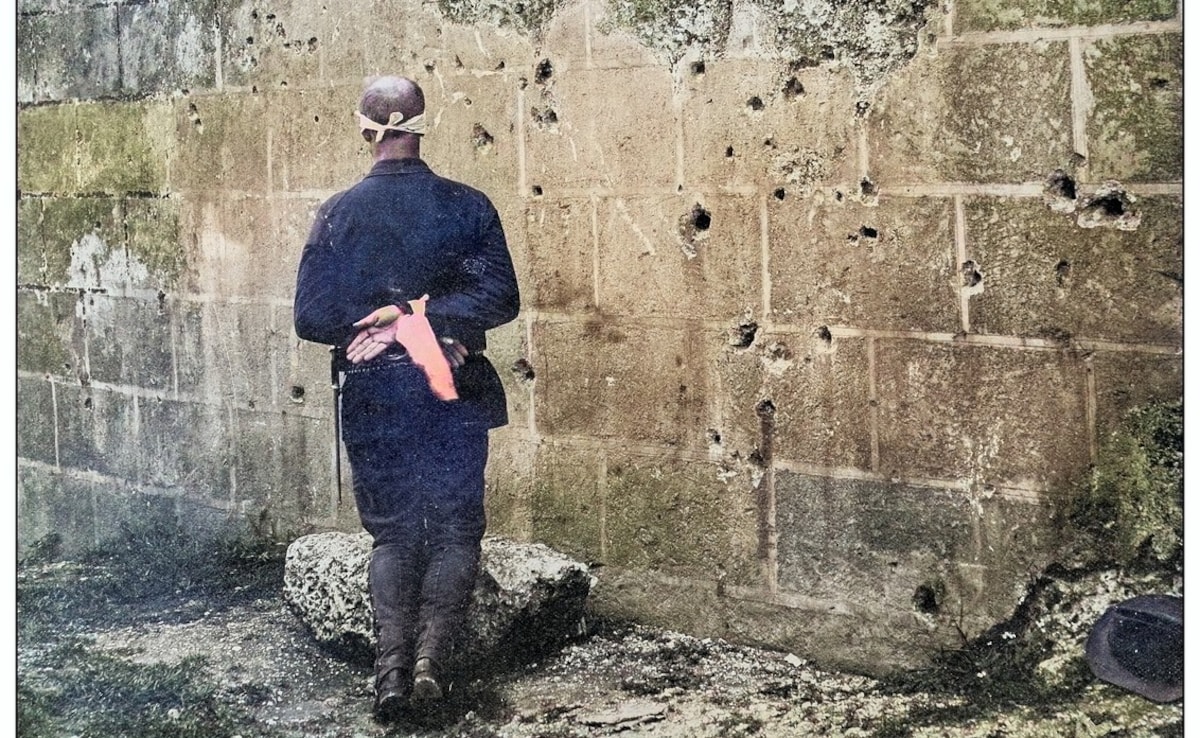
Consider the logistics of a federal firing squad. It isn't a chaotic scene from a movie. It is a choreographed, grimly efficient ritual. In many historical iterations, five shooters are chosen. One is given a blank. None know who holds the lethal round. This is the "diffusion of responsibility," a psychological grace note designed to let five men sleep at night, each clinging to the 20 percent chance that they didn't actually pull the trigger that mattered.
But the lead still finds its mark.
The Weight of the Lead
The Department of Justice’s rule change doesn't just add a method; it broadens the "available" means of execution to include any method legal in the state where the prisoner was sentenced. If a federal inmate was convicted in a state that allows the chair, the gas, or the squad, the federal government now has the green light to use those same tools.
This isn't about efficiency. A needle is easier to dispose of than a bullet-riddled backdrop. This is about power and the clearing of legal hurdles. By diversifying the ways the state can kill, the government ensures that a shortage of one chemical or a lawsuit over one specific strap won't grind the machinery of the death penalty to a halt.
Imagine standing in a room where the air is heavy with the scent of gun oil instead of antiseptic. There is a specific, haunting geometry to a firing squad. The chair is anchored. The target is pinned over the heart. The shooters are hidden behind a wall with small ports for their rifles. It is an architecture of distance.
We often think of progress as a forward march toward "softer" outcomes. We moved from the hanging tree to the electric chair, then to the gas chamber, then to the needle. Each step was framed as an evolution in mercy. But the firing squad strips away the pretense. It is loud. It is violent. It is certain.
There is a strange, dark honesty in it. If the state is to take a life, perhaps it should sound like a life being taken. Perhaps the silence of the lethal injection was too easy for the witnesses—a way to pretend that the person on the table was merely drifting away rather than being extinguished.
The Invisible Stakeholders
Beyond the prisoner and the shooters, there is a ripple effect that standard news reports rarely touch. There are the wardens who must now train teams for a type of violence they haven't practiced in generations. There are the families who must wait for the report of rifles instead of the slow drip of a pump.
The federal government’s move toward these "alternate" methods comes at a time when the death penalty itself is a flickering flame in most of the developed world. While many nations have long since relegated the executioner to the history books, the U.S. federal system is doubling down on the mechanics of the end.
Is a bullet more or less cruel than a chemical that might not work? In 2014, Clayton Lockett writhed on an execution table in Oklahoma for 43 minutes after a botched injection. He wasn't asleep. He was fighting a fire in his veins. Proponents of the firing squad argue that a well-placed round to the heart causes an almost instantaneous drop in blood pressure and a loss of consciousness. It is, they say, "reliable."
Reliability is a cold word when applied to a human heart.
The Clock in the Chamber
This policy shift happened under a specific political pressure—a rush to complete scheduled executions before a change in administration. It was a race against the calendar. The law was moved like a chess piece to ensure that the "ultimate justice" could be delivered without delay.
But the law is not just a set of rules; it is a reflection of a culture's soul. When we decide that the firing squad is a valid instrument of federal power, we are making a statement about what we are willing to see and what we are willing to hear. We are stepping out of the clinic and back onto the field.
The debate usually centers on the "who"—the names of the condemned, the crimes they committed. We focus on the monsters and the victims. But the "how" matters just as much. The "how" defines the people pulling the triggers. It defines the witnesses sitting behind the glass. It defines us.
There is no such thing as a "seamless" execution. There is only the moment before and the moment after. By reintroducing the firing squad, the federal government has ensured that the moment after will be filled with the smell of smoke and the echoes of a mechanical finality that no chemical could ever match.
The paper is signed. The rifles are cleaned. The target is being printed. We have traded the sterile lie of the needle for the heavy, unmistakable truth of the bullet, and in doing so, we have finally admitted that there is no "humane" way to break a human being.
The silence that follows the volley is the only thing that remains.