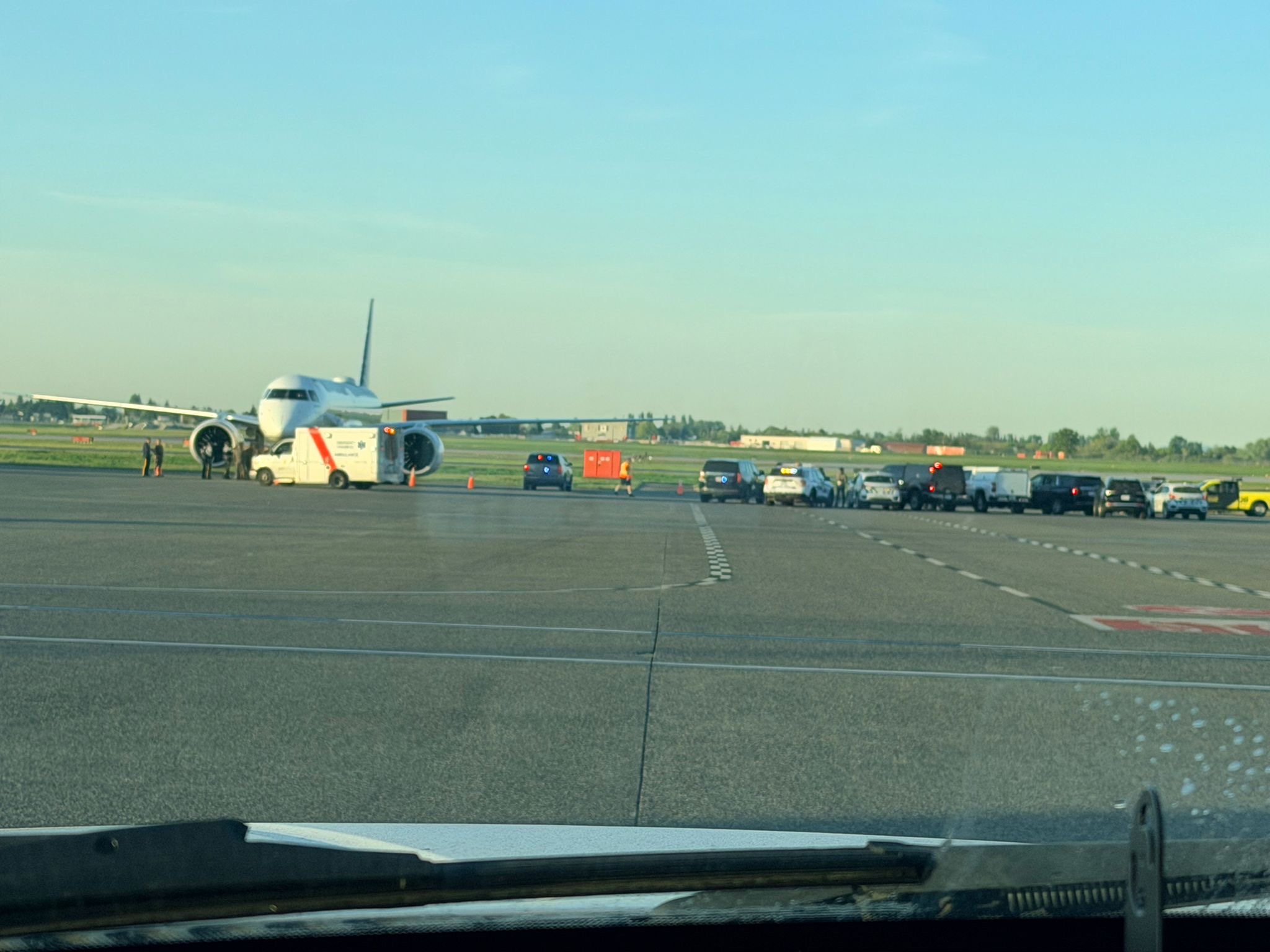
The headlines are predictable. A man breeched the perimeter at Vancouver International Airport (YVR), accessed an aircraft, and now he is shuffling through the court system. The media treats this like a freak occurrence—a "lapse" in an otherwise impenetrable fortress of Canadian aviation security.
They are wrong.
This wasn't a lapse. It was the logical conclusion of a system designed to harass grandmothers for carrying four ounces of shampoo while leaving the actual physical perimeter of the airfield vulnerable to anyone with a bit of momentum and a lack of fear. We have spent billions on the "theater" of security—the scanners, the shoe removal, the liquid bans—while ignoring the fundamental reality that an airport is a massive, porous sieve.
The Myth of the Hardened Perimeter
The public believes that once you pass the boarding gate, you are in a sterile, untouchable environment. Industry insiders know better. Most major international airports are sprawling industrial complexes surrounded by chain-link fences that wouldn't stop a determined teenager, let alone a motivated actor.
When a man manages to walk onto the tarmac at YVR, the knee-jerk reaction from Transport Canada and airport authorities is to promise a "review of protocols." This is bureaucratic code for doing nothing. You cannot "protocol" your way out of a physical geography problem.
Most perimeter security relies on Passive Detection. This means we have cameras that record someone climbing a fence, but we don't have the manpower or the automated response systems to stop them before they reach a multi-million dollar fuselage. We are great at watching people break the law; we are terrible at preventing it.
Why More Guards Won't Fix the Problem
The lazy consensus suggests we need more boots on the ground. It sounds logical. More guards equals more safety, right? Wrong.
Human guards are the least reliable link in the chain. They suffer from "alarm fatigue." In a massive facility like YVR, sensors go off constantly due to wildlife, wind, or debris. A guard who has investigated 1,000 false alarms is biologically wired to move slowly on the 1,001st.
Furthermore, the cost-benefit analysis of 24/7 human patrolling of a perimeter that spans kilometers is a fiscal nightmare. If we double the guard force, we increase the ticket prices for every traveler, yet we only marginally decrease the response time.
The False Security of the Boarding Pass
The media focuses on the individual charged in court. They paint a picture of a "security breach" as if the person bypassed a digital firewall. In reality, they likely exploited the massive gap between "passenger security" and "operational security."
We have spent twenty years perfecting the art of screening people with tickets. We have done almost nothing to evolve the way we protect the aircraft themselves once they are parked at the gate. If you can get onto the tarmac, the plane is essentially an unlocked car in a driveway.
The Industry’s Dirty Little Secret: Ground Crew Vulnerability
If you want to talk about real risk, stop looking at the guy climbing the fence and start looking at the high-turnover, low-wage economy of ground handling.
- Vetting is not continuous. A background check performed three years ago doesn't account for a radicalized or desperate employee today.
- Access is decentralized. Thousands of people—catering, cleaning, refueling, baggage—have legitimate reasons to be near the aircraft.
- Piggybacking is rampant. In the rush to meet "on-time performance" metrics, employees often hold doors for one another or bypass secondary checks to save seconds.
I have seen airports where "secure" doors are propped open with a fire extinguisher because the air conditioning in the breakroom is broken. That is the reality of aviation security. It isn't a high-tech thriller; it’s a series of minimum-wage workers trying to get through a shift.
Stop Asking "How Did He Get In?" and Ask "Why Was It Possible?"
When the "People Also Ask" sections of search engines fill up with queries about airport safety, the answers are usually sanitized PR fluff. They tell you that "safety is our top priority."
If safety were the top priority, airports would look like military bases. They don't. Airports are malls with runways attached. Their priority is throughput—getting as many people and as much cargo through the gates as possible to maximize landing fees and retail revenue.
The Vancouver incident exposes the "Security Gap." This is the space between what the public perceives as safety and what the infrastructure actually provides.
The Contrarian Solution: Liability over Legislation
Governments love to pass new laws after a breach. They want to increase fines or add new criminal charges. This is useless. The man at YVR is already facing charges; he clearly wasn't deterred by the existing ones.
If we want to actually fix airport security, we need to shift the financial burden of a breach directly onto the airport authorities and the airlines, without the protection of government bailouts or "act of god" clauses.
- Direct Fines for Dwell Time: If an unauthorized person is on the tarmac for more than 120 seconds without being intercepted, the airport should face a mandatory seven-figure fine paid into a victim's compensation fund.
- Automated Interception: We have the technology for autonomous ground vehicles (AGVs) that can intercept intruders faster than any human. We don't use them because they are expensive and "scary" to the public.
- Biometric Perimeters: Stop focusing on the fence. Start focusing on the "invisible" layers. LIDAR and AI-driven movement analysis can distinguish between a coyote and a human in milliseconds, triggering immediate, localized lockdowns of aircraft electronics.
The Downside of Truth
The honest truth is that a perfectly secure airport is an unusable airport. If we truly hardened the perimeter, the "customer experience" would be so miserable that the industry would collapse.
We accept a certain level of vulnerability as a trade-off for the convenience of flight. The Vancouver breach wasn't a failure of the system—it was the system operating exactly as it was designed: to prioritize flow over absolute containment.
The Court Case is a Distraction
Watching this man appear in court is a performance designed to make the public feel like justice is being served. It isn't. The legal system is punishing an individual for highlighting a structural flaw.
The aviation industry thrives on the illusion of control. We want to believe that the "No Fly List" and the X-ray machines keep us safe. But as long as an airport is a 3,000-acre field surrounded by a fence you could cut with a pair of $20 pliers, the illusion is all we have.
Stop looking at the defendant. Look at the fence. Look at the propped-open door. Look at the security guard sleeping in a truck at 3:00 AM.
The man in Vancouver didn't break the system. He just showed us that the system is a facade.
Fix the physics, or stop pretending the theater keeps us safe.