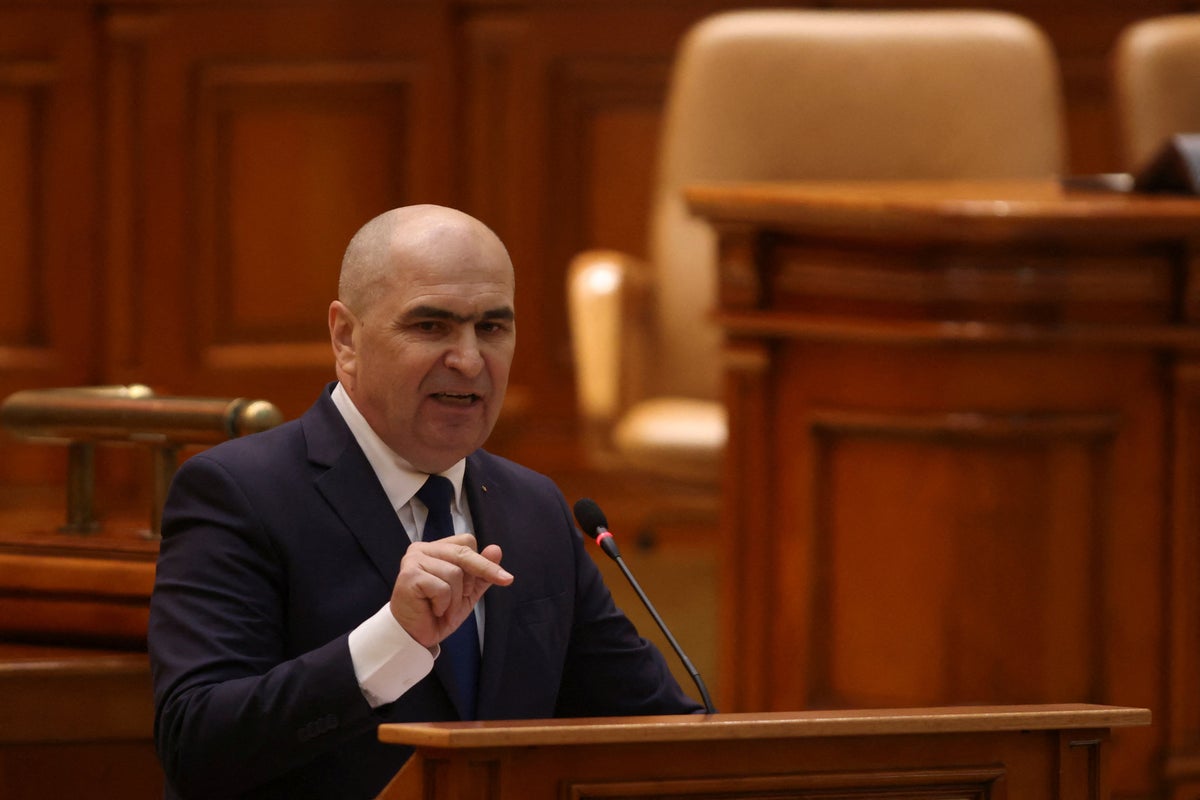
Romania's brief experiment with fiscal discipline just slammed into a brick wall. On Tuesday, May 5, 2026, the pro-European government led by Prime Minister Ilie Bolojan collapsed after a no-confidence vote that wasn't just a political shift—it was a demolition.
The numbers tell a brutal story. Out of 464 seats in parliament, 281 lawmakers voted to oust him. That’s well above the 233 needed. While the center-right PNL and the reformist USR sat out the vote in a show of defiance, the damage was done. Bolojan, the man often called "the administrator" for his no-nonsense reform style, is now a caretaker PM.
The Unholy Alliance That Toppled Bolojan
If you're looking for a hero in this story, you won't find one. The motion was pushed by the Social Democrats (PSD), the largest party in the building. But they didn't do it alone. They teamed up with the far-right Alliance for the Union of Romanians (AUR).
It’s a bizarre pairing. You’ve got the mainstream center-left PSD shaking hands with George Simion’s AUR—a party that thrives on anti-EU rhetoric and nationalist fire. For the PSD, this was about survival. Their voters were screaming over Bolojan’s austerity measures. For AUR, it was about chaos. They’re currently sitting at 37% in the polls and they want the whole system to burn so they can rebuild it in their image.
Bolojan didn't hold back before the gavels came down. He called the motion "cynical and artificial." He’s not entirely wrong. The PSD was part of his coalition until just a few weeks ago. They walked out, complained about his "cold" leadership, and then grabbed the nearest political weapon—the far right—to finish the job.
Why Reform is a Dirty Word in Bucharest
Bolojan’s downfall wasn't a mystery. It was math. Romania is currently wrestling with the EU’s largest budget deficit. When he took over 10 months ago, the deficit was a staggering 9.3%. He managed to drag it down to 7.9%, but he did it by swinging a heavy axe.
- Public Sector Freezes: He stopped the endless growth of government salaries and pensions.
- Tax Hikes: He pushed through increases that hit businesses and middle-class pockets.
- The Privatization Scare: Bolojan wanted to sell off stakes in state-owned gems like the Port of Constanta and the national salt company.
The PSD called this "destroying the economy." Bolojan called it "necessary." He told lawmakers, "I chose to do what was urgent, not what was popular." That’s a noble sentiment, but in Romanian politics, being unpopular is a death sentence.
The Economic Aftershocks
The markets are already flinching. The Romanian leu hit a record low against the euro right before the vote. Investors hate uncertainty, and right now, Romania is a giant question mark.
The biggest risk? The money. Bucharest is sitting on roughly €10 billion in EU recovery funds. To get that cash, they have to hit specific reform milestones by August. With a caretaker government that can't pass major laws, that money is effectively stuck in Brussels. If a new government isn't formed fast, the country faces a potential ratings downgrade to "junk" status.
What Happens Now
Don’t expect snap elections. Even though AUR is calling for them, nobody else wants to roll the dice while the far right is polling at nearly 40%. President Nicușor Dan is the one holding the cards now. He has to nominate a new Prime Minister.
- The "Same Face, Different Name" Play: Dan could try to rebuild the PNL-PSD-USR coalition with a different, more "flexible" leader.
- The Technocrat Route: He might appoint a non-partisan expert to steer the ship until the 2028 elections.
- The Minority Struggle: A weak government could try to limp along, but it won't have the muscle to pass the reforms the EU demands.
President Dan has already ruled out bringing AUR into the government. He’s promising a "pro-Western" solution, but the PSD is going to demand a high price for their cooperation—likely a total reversal of the austerity measures that Bolojan fought for.
Your Next Steps
If you have business interests or investments in the region, keep a close eye on the August deadline for EU fund milestones. The political theater in Bucharest is entertaining, but the real impact will be felt in the currency markets and the sovereign debt ratings.
Watch for the President's first nominee. If he picks another reform-minded fiscal hawk, expect the gridlock to continue. If he picks a "consensus" candidate from the PSD ranks, the austerity era is officially over, and the deficit will likely balloon again.
Stop waiting for a "stable" Romania. This country has never had a snap election in its post-communist history, but it changes prime ministers like most people change their oil. The "administrator" is out, and the "politicians" are back in charge. Plan your financial exposure accordingly.