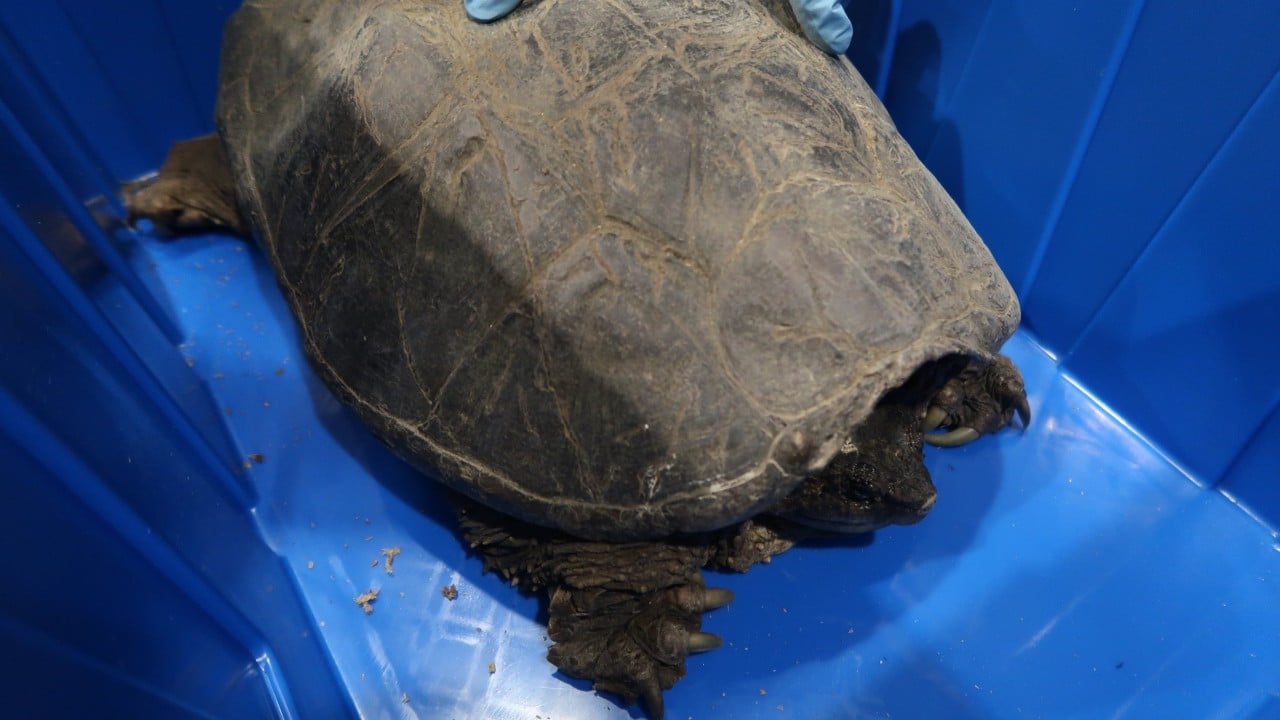
The headlines write themselves. Hong Kong Customs intercepts a shipment of 760 endangered reptiles. The estimated value is HK$580,000. Law enforcement takes a victory lap. The public nods in somber approval, convinced that "the system" is working.
It isn’t.
In fact, these high-profile seizures are the clearest indicator that our global conservation strategy is a catastrophic failure. By focusing on the "bust," we are ignoring the market mechanics that make smuggling inevitable. We are treating a symptom while feeding the virus. If you actually care about biodiversity, you need to stop cheering for the seizures and start questioning the prohibitionist logic that creates them.
The Valuation Lie
Let’s talk about that HK$580,000 figure. It’s a ghost number.
Customs agencies love to inflate the "street value" of seizures because it justifies their budget. But value in the exotic pet trade is not a static metric; it is a direct function of risk. When you increase enforcement without addressing demand, you don't stop the trade. You simply increase the risk premium.
By seizing 760 animals, the authorities just made the remaining animals in the wild significantly more valuable. You didn't save a species; you just gave every poacher still in the field a massive pay raise. This is Basic Economics 101, yet we pretend the laws of supply and demand magically suspend themselves when an animal is "endangered."
The Tragedy of the CITES Appendix
The Convention on International Trade in Endangered Species (CITES) is the gold standard for "doing something" while achieving nothing.
When a species is moved to Appendix I—effectively banning all commercial trade—the price on the black market spikes instantly. I’ve watched this play out with the Earless Monitor Lizard and various Astrochelys tortoise species. The moment the "Protected" label hits, the clock starts ticking for collectors who want the "ultimate" rare specimen before it disappears.
Prohibition doesn't extinguish desire. It fetishizes the commodity.
By forcing the entire trade underground, we lose all visibility. We trade a regulated, taxable, and traceable supply chain for a shadowy network where animal mortality rates skyrocket because smugglers have to pack them into false-bottom suitcases to avoid the very "victories" Hong Kong Customs just celebrated.
The Captive Breeding Solution Nobody Wants to Hear
Here is the hard truth: The only way to save these reptiles is to flood the market with legal, captive-bred alternatives.
The "lazy consensus" among conservationists is that all trade is bad. They argue that any legal trade provides a "laundered" path for wild-caught animals. This is a defeatist myth. We have the technology—DNA sequencing, microchipping, and blockchain-verified breeder registries—to distinguish between a wild-caught animal and one born in a facility in Florida or Indonesia.
Why don't we do it? Because it’s not "pure."
The conservation industry is addicted to the narrative of the pristine wild. They would rather see a species go extinct in a "protected" forest than see it thrive in a thousand climate-controlled terrariums. But look at the Crested Gecko. Once thought extinct, it is now one of the most common pets in the world. It is safe from extinction precisely because it is commercially viable.
If we legalized and regulated the trade of these 760 reptiles, their "black market value" would crater. When a tortoise costs $50 because it was hatched in a lab, no one is going to risk a prison sentence to smuggle a wild one for $500.
Hong Kong is a Filter, Not a Shield
Hong Kong prides itself on being a "logistics hub." That is code for being the world's most efficient transit point for whatever people want to move.
A seizure of 760 animals is a rounding error. For every crate intercepted, a dozen more pass through the Port of Hong Kong or the Zhuhai-Macau Bridge unnoticed. Smugglers treat these losses as a "cost of doing business." It’s an insurance premium paid in scales and shells.
When customs officers pose for photos with plastic tubs of turtles, they aren't showing you a win. They are showing you the 1% of the trade they were lucky enough to find. The other 99% is currently being moved by syndicates that are far more sophisticated than the government agencies chasing them. These syndicates use the same "just-in-time" logistics that Amazon uses. They use encrypted comms. They use shell companies.
The Ethics of the "Bust"
What happens to those 760 reptiles now?
The article won't tell you this, but many of them will die. They are often kept as "evidence" in cramped, inadequate conditions for months while the legal system grinds along. If they are lucky, they go to a crowded rescue center. They almost never go back to the wild.
"Back to the wild" is a fantasy. You can't just dump a confiscated animal back into a forest. You don't know its precise origin. You don't know what pathogens it picked up in the smuggler's warehouse. Reintroduction is a multi-year, multi-million dollar process that almost no government is willing to fund.
So, the "rescue" is often just a slower, more bureaucratic death sentence.
Stop Asking the Wrong Question
The public asks: "How can we catch more smugglers?"
The wrong question.
The real question: "How do we make smuggling obsolete?"
You make it obsolete by:
- Decentralizing Conservation: Move away from top-down bans and toward community-based programs where locals get paid more to protect nests than to raid them.
- Professionalizing the Hobby: Support high-end captive breeding programs that can out-compete poachers on price and quality.
- Ending the CITES Fetish: Stop pretending that moving an animal from Appendix II to Appendix I is a victory. It’s a surrender.
Imagine a scenario where we treated these reptiles like any other high-value commodity. We would track them from "birth" to "retail." We would tax the trade and funnel 100% of that revenue back into habitat restoration.
But we don't. We prefer the drama of the seizure. We prefer the moral clarity of "good guys" vs. "bad guys." We prefer a system that allows 760 animals to be shoved into a shipping container so we can feel a brief flash of indignation when they are found.
If you are satisfied with this HK$580,000 seizure, you are part of the problem. You are rewarding a strategy that has presided over the greatest decline in biodiversity in human history.
The smugglers aren't afraid of Hong Kong Customs. They are afraid of a market where their "endangered" product is no longer rare, no longer expensive, and no longer worth the risk.
Kill the price, save the species. Everything else is just theater.