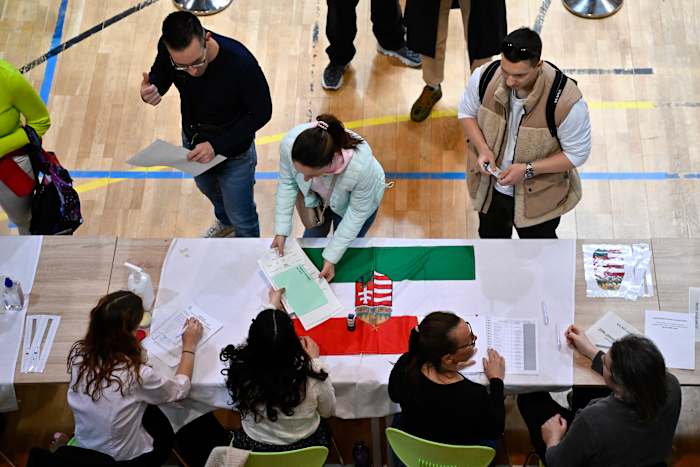
Western media is currently salivating over the prospect of a "democratic spring" in Budapest. They see Péter Magyar, the charismatic defector from Viktor Orbán’s inner circle, leading the Tisza Party to a 10-point polling lead, and they’ve already written the obituary for Fidesz. They are convinced that removing the man unseats the system.
They are wrong.
The lazy consensus treats the April 12, 2026 election as a binary choice between "East and West" or "Corruption and Reform." This narrative is a comfortable lie for Brussels and Washington. It ignores the structural reality that Orbán has spent 16 years building a state that is physically and legally incapable of pivoting on a dime, regardless of who sits in the Prime Minister's chair.
The Myth of the Clean Sweep
The most dangerous misconception is that a victory for Péter Magyar equals a return to "liberal normalcy." It doesn't.
I’ve seen this play out in dozens of emerging markets: the "reformer" is often just a younger, more energetic version of the incumbent. Magyar is a product of the Fidesz machine. He isn't a liberal; he is a center-right nationalist who thinks the current management is simply too clumsy and too isolated. His positions on migration, the EU budget, and even Ukraine are often indistinguishable from Orbán's. If you think a Tisza victory means Hungary becomes a subservient satellite of the European Commission, you haven't been paying attention to Magyar's rhetoric.
Even if Magyar wins a simple majority, he inherits a "captured state." Imagine a scenario where a new CEO takes over a company, but the Board of Directors, the legal department, the middle management, and the IT infrastructure are all contractually bound to the former boss.
- The Supermajority Trap: Fidesz has used its two-thirds majority to cement "cardinal laws" that require a two-thirds vote to change. Without a massive supermajority—which even the best polling doesn't guarantee—Magyar will be a lame-duck leader from day one.
- The Shadow State: Key institutions, from the Media Council to the Constitutional Court, are packed with Fidesz loyalists on nine-year terms. They aren't going anywhere.
- The Deep Economic Moat: Orbán didn't just win elections; he privatized the state's wealth into "public interest foundations" managed by allies. The money is locked away in vaults Magyar doesn't have the keys to.
The Economic Reality Check
Critics point to Hungary’s 3.6% inflation and 2.3% projected GDP growth as signs of Orbán's vulnerability. They argue that the "bread and butter" issues will sink him.
This ignores the fact that Fidesz has survived far worse. In 2023, Hungary had the highest inflation in the EU, yet the party's base remained rock-solid. Why? Because the Hungarian economy is no longer a free market; it is a patronage network.
When the EU freezes funds, Orbán doesn't just cut spending. He pivots to Beijing. While Brussels moralizes about the "rule of law," Chinese battery plants are being built in Debrecen. Orbán has diversified his political risk. If a Tisza government tries to pivot back to the EU, they face an immediate credit squeeze and the potential withdrawal of Eastern capital that currently keeps the lights on.
The Illusion of "East vs. West"
The media loves the "East vs. West" binary. It makes for great headlines. But for the average voter in Miskolc or Debrecen, this is a fake choice.
Magyar knows this. That’s why his campaign hasn't been a full-throated defense of Brussels. It’s been an attack on propaganda and incompetence. He is winning over Fidesz voters not by offering a different ideology, but by offering a more efficient version of the same one.
The Western establishment is banking on a "pro-European" shift. They are setting themselves up for a brutal disappointment. If Magyar wins, he will still use Hungary's veto. He will still demand exceptions for Russian oil. He will still fight the EU’s migration pact. He has to. To do otherwise would be political suicide in a country where the media environment has spent two decades marinating the public in "sovereigntist" rhetoric.
The Inevitable Disenchantment
Let’s look at the "day after" scenario.
Magyar wins. The crowds cheer. Two weeks later, he realizes he can't fire the Chief Prosecutor. He can't change the tax code. He can't get the €90 billion EU loan because Brussels demands "milestones" that would require him to dismantle the very legal protections his own supporters might still want.
The result? Gridlock.
A Tisza victory without a supermajority is the worst-case scenario for Hungarian stability. It creates a vacuum where Fidesz remains in control of the gears of power while Magyar takes the blame for the stalled economy.
The "People Also Ask" crowd wants to know if this is the "most consequential election in Europe." It’s not. It’s a referendum on a personality, not a system. The system was built to be permanent.
The real story isn't whether Orbán loses. It’s whether the West can handle a Hungary that looks exactly the same, even after he's gone. Stop looking at the polls and start looking at the plumbing. The pipes are all Fidesz-orange, and no amount of voting changes the water pressure.