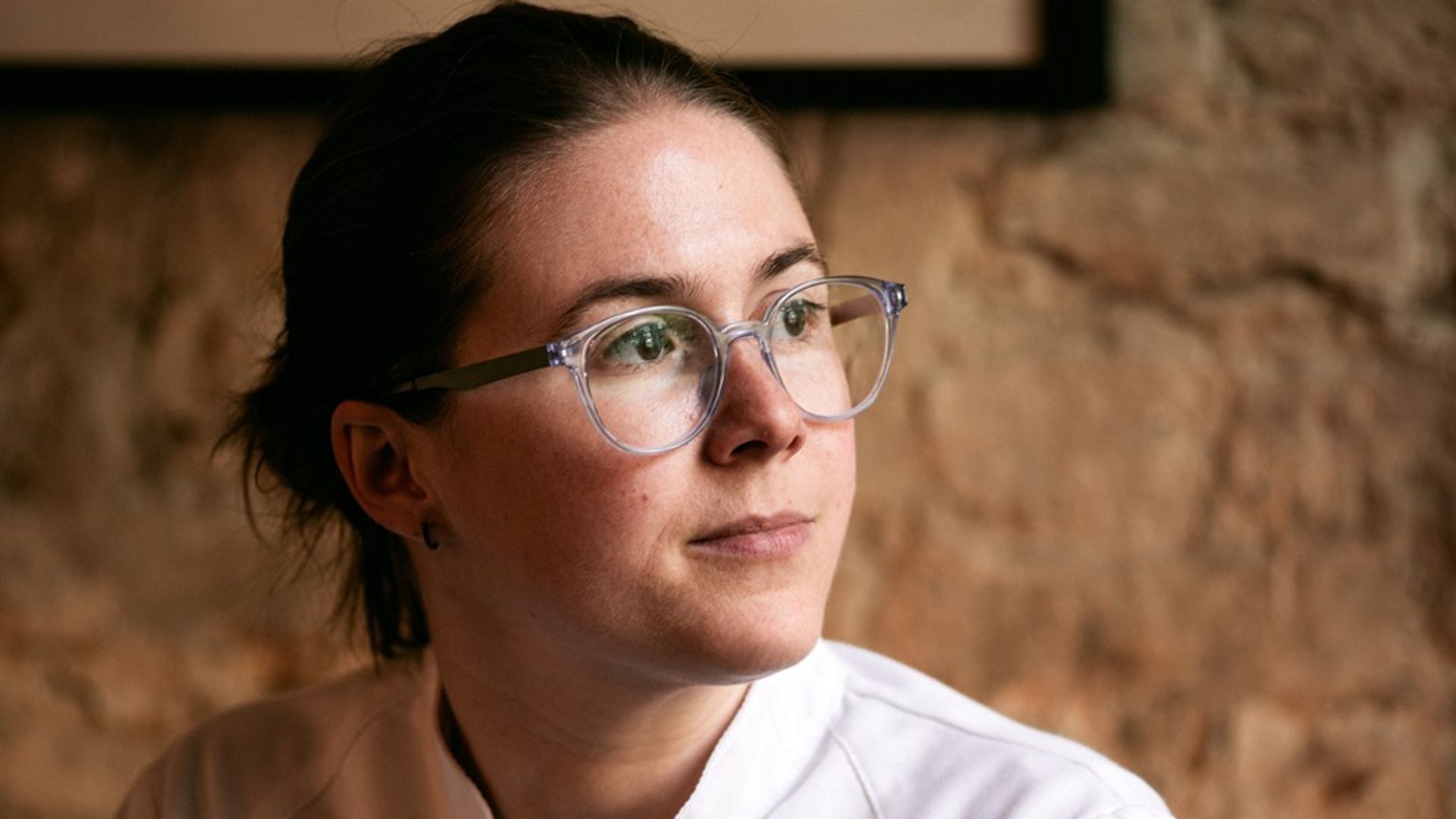
The profitability of a high-end independent restaurant is governed by an unforgiving inverse relationship between artisanal quality and scalable margins. When Emily Roux opened Caractère, the venture was positioned at the intersection of culinary heritage and modern market realities. However, the prestige of a family name provides no immunity against the structural volatility of the UK hospitality sector. The core problem is not a lack of demand, but a fundamental misalignment between the cost of high-touch service and the consumer's price sensitivity in a high-inflation environment.
The Margin Compression Framework
The financial health of a restaurant like Caractère is dictated by a triple-constraint model: labor intensity, ingredient volatility, and fixed-site overhead. In the current economic climate, these three factors have synchronized into a period of sustained margin compression.
- Labor Intensity as a Fixed Variable: Unlike casual dining, where "service" can be automated or reduced, fine dining requires a specific staff-to-guest ratio to maintain brand equity. Reducing headcount directly degrades the product. This creates a floor for operational costs that cannot be lowered without changing the business model entirely.
- Ingredient Beta: Fine dining menus rely on premium, often seasonal, supply chains. These chains exhibit high beta—meaning their prices fluctuate significantly more than the general Consumer Price Index (CPI). A restaurant cannot rewrite its menu daily to perfectly track these fluctuations without alienating its core audience.
- The Utility Ceiling: Energy costs and business rates act as a regressive tax on physical dining spaces. For a 60-seat venue, these costs are amortized over a small number of units (covers), meaning every empty chair represents a disproportionate hit to the net margin.
The Psychographics of the "Table of Six"
The specific incident involving a table of six spending significantly less than the per-head average highlights a critical failure in revenue management: the gap between "minimum viable spend" and "average check size." In a high-end establishment, every seat carries a calculated "opportunity cost."
When a large party occupies a significant percentage of the floor space but bypasses high-margin items—specifically alcohol and tasting menus—they disrupt the restaurant’s internal economics.
- Alcohol as the Subsidy: In almost all fine dining structures, food margins are razor-thin, often barely covering the cost of goods sold (COGS) and the labor required for preparation. The net profit is almost entirely derived from the wine list.
- The Service Time Trap: A table of six typically stays longer than a table of two. If that table does not order a full progression of courses, the "Revenue Per Available Seat Hour" (RevPASH) drops below the break-even point.
This tension reveals a broader shift in consumer behavior. Diners are increasingly treating fine dining as a "commodity experience"—seeking the prestige of the venue without committing to the full financial ecosystem required to sustain it. This creates an asymmetrical value exchange where the guest receives the ambiance and service of a luxury product while paying the price of a mid-market meal.
Structural Pathologies of the London Market
The UK hospitality industry is currently navigating a "perfect storm" of legislative and macroeconomic pressures that have rendered the traditional 10% net profit margin nearly impossible to achieve for independents.
The Post-Brexit Labor Deficit
The removal of freedom of movement significantly restricted the supply of skilled hospitality workers. Basic economic theory dictates that a restricted supply of labor coupled with stable demand leads to wage inflation. For Roux and her contemporaries, this has meant paying significantly higher wages for back-of-house staff simply to maintain basic operations, further eating into the surplus that would previously have been "profit."
The VAT Disconnect
The UK’s 20% VAT on hospitality services remains one of the highest in Europe. Unlike other sectors where VAT is passed directly to the consumer, fine dining reaches a "price ceiling" where further increases result in a sharp drop in volume. Therefore, the restaurant often "absorbs" portions of the VAT by keeping prices lower than the true market value of the labor and ingredients, effectively taxing their own survival.
The Fallacy of the Legacy Advantage
There is a common misconception that a "famous name" acts as a financial buffer. In reality, it often functions as a liability. The "Roux" brand carries with it an expectation of excellence that prevents the restaurant from cutting corners. A generic bistro can switch to cheaper linen or lower-grade butter; a Roux-led establishment cannot do so without risking catastrophic brand devaluation.
This creates a "Prestige Trap":
- Fixed Expectations: Customers expect a level of polish that requires a high headcount.
- Price Anchoring: Despite inflation, customers have a psychological anchor for what a "good meal" should cost, making it difficult to price menus at the levels required for a 15-20% margin.
- Visibility: High-profile owners are targets for public scrutiny regarding pricing, making it harder to implement aggressive revenue management strategies.
Optimizing the "Service Function"
To survive, the modern independent restaurant must move away from the "Artisan Model" toward a "Systems-Based Model." This involves deconstructing the guest experience into high-value and low-value components.
- Menu Engineering for Throughput: Reducing the complexity of the "mise en place" (preparation) to lower labor hours without sacrificing the final presentation. This involves utilizing modern techniques to achieve consistency with fewer touchpoints.
- Dynamic Pricing and Deposit Structures: The "table of six" problem is solved through mandatory minimum spends for large groups and non-refundable deposits. While this may seem "unwelcoming," it is a mathematical necessity to protect the RevPASH.
- Ancillary Revenue Streams: The physical restaurant must be viewed as a brand showroom rather than the sole source of income. Diversification into retail (sauces, kits, books) or high-margin events is the only way to subsidize the core dining room.
The Strategic Pivot: Survival of the Integrated
The era of the "standalone profitable fine dining room" is effectively over. The survivors will be those who integrate their dining operations into larger ecosystems. This could mean partnering with hotels (where the restaurant is an amenity subsidized by room rates) or operating as part of a larger group where back-office costs (HR, procurement, legal) are centralized.
For Emily Roux and Caractère, the path forward requires a cold, data-driven reassessment of the "Hospitality Contract." If the market refuses to pay the price required for a traditional fine dining experience, the experience itself must be re-engineered. This is not a failure of talent, but a refusal of the current economic reality to support the 20th-century model of high-end gastronomy.
The immediate tactical move for independent operators is the implementation of a "Hard Floor" on covers. This involves setting a mandatory per-head minimum spend for peak hours, effectively filtering out the low-margin "lifestyle" diners who consume space without contributing to the net margin. By treating the dining room as a limited inventory of "time-slots" rather than a service of hospitality, the operator can align their financial reality with their culinary output. Failure to do so results in a "noble exit"—a restaurant that is critically acclaimed but mathematically insolvent.