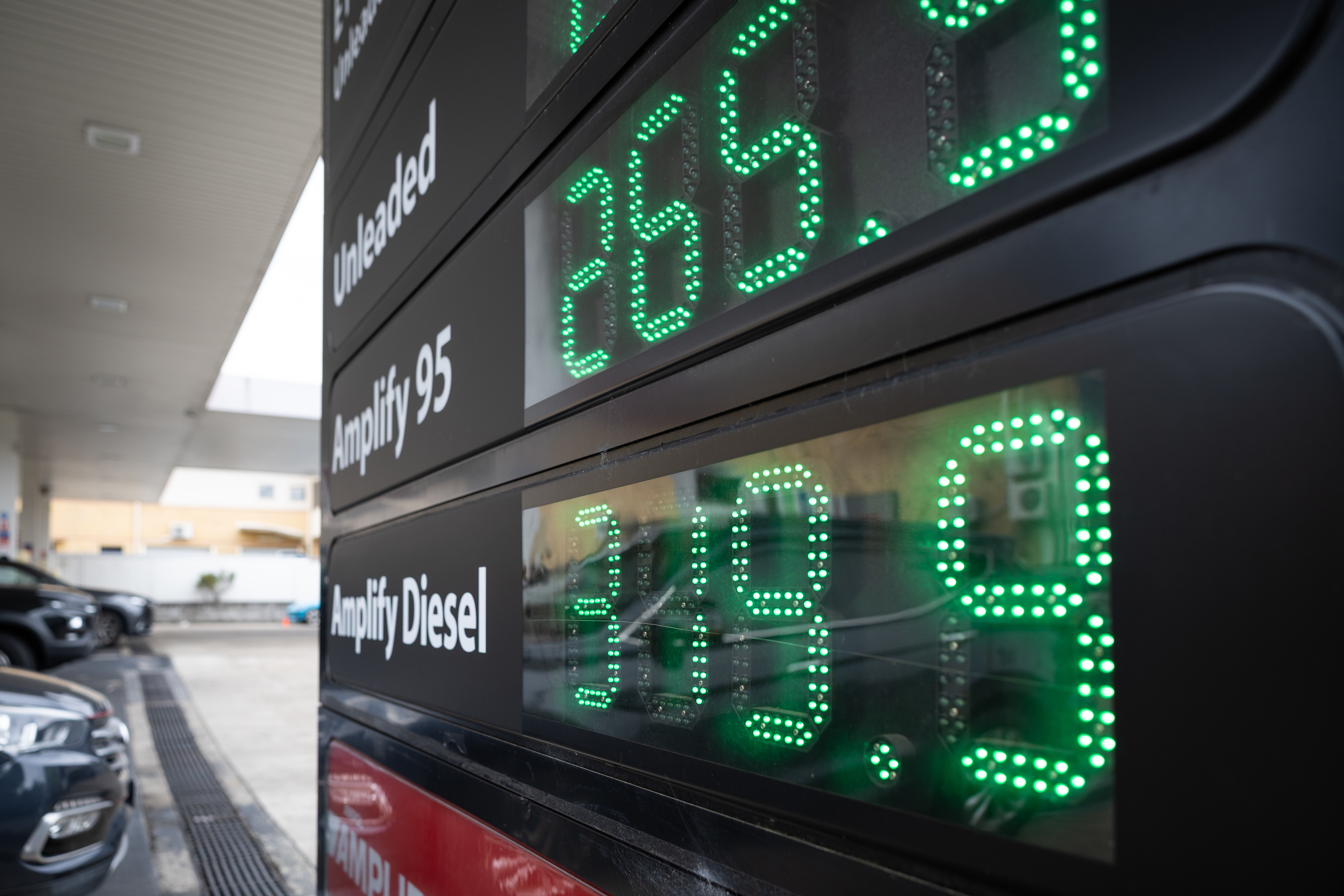
Australia’s liquid fuel security is currently sustained by a fragile equilibrium between domestic storage mandates and the operational efficiency of North Asian refining hubs. The Albanese government’s recent diplomatic efforts to secure "normal supply" assurances from regional partners are not merely diplomatic gestures; they are risk-mitigation strategies designed to address a structural vulnerability where 90% of Australia’s fuel is imported. Understanding this dependency requires moving beyond political rhetoric and into the cold mechanics of maritime logistics, refining margins, and the Minimum Stockholding Obligation (MSO).
The stability of Australia’s transport, agriculture, and mining sectors rests on a three-tiered architecture: regional refining capacity (predominantly in Singapore, South Korea, and Japan), the "just-in-time" maritime corridor, and the domestic legislative framework that penalizes stock drawdowns below defined safety levels.
The Tri-Node Dependency Framework
The assurance of "normal supply" from Asian partners must be analyzed through the lens of supply-side economics. Australia relies on these nations because domestic refining capacity has collapsed to just two facilities: Viva Energy’s Geelong refinery and Ampol’s Lytton refinery. This creates a reliance on a tri-node system:
- Refining Specialization (The Origin): South Korean and Singaporean refineries operate at scales that domestic Australian plants cannot match. These facilities benefit from high complexity indices, allowing them to process diverse crude grades into ultra-low sulfur diesel and high-octane gasoline with high efficiency.
- Maritime Transit (The Vector): Australia exists at the end of a long, vulnerable supply line. Any disruption in the South China Sea or the Indonesian archipelago immediately impacts the landed cost of fuel (the "Terminal Gate Price").
- Strategic Storage (The Buffer): To counter the "just-in-time" risk, the Australian government enforces the MSO, requiring importers and refiners to hold a set number of days of supply. As of early 2024, this includes a requirement for 24 days of primary automotive gasoline and 28 days of diesel.
The Economics of Assurance vs. The Reality of Scarcity
When the Prime Minister seeks assurances of "normal supply," he is negotiating for priority in a "force majeure" event. In a global supply crunch, fuel is directed toward the highest bidder or the most strategic ally. The current diplomatic push aims to formalize Australia's status as a "preferred buyer." However, market reality dictates that "normal supply" is subject to the Opportunity Cost of Diversion. If a refinery in Ulsan can fetch a higher premium in Europe due to geopolitical shifts, the contractual "assurance" faces its first stress test.
The government’s focus on averting shortages is a reaction to the Diesel Paradox. Diesel is the "blood" of the Australian economy, powering the heavy rail and trucking fleets that move iron ore and food. Unlike gasoline, which has a higher elasticity of demand (consumers can drive less), diesel demand is largely inelastic. A 5% drop in diesel availability does not lead to a 5% drop in price; it leads to a systemic seizure of the logistics chain.
Structural Bottlenecks in the Sovereign Petroleum Reserve
The Australian strategy involves a two-pronged approach to storage: domestic commercial stocks and the Sovereign Petroleum Reserve (SPR). The SPR is currently partially held in the United States Strategic Petroleum Reserve under a long-term lease agreement. This creates a geographical disconnect.
- The Lead-Time Lag: Fuel held in the US Gulf Coast takes roughly 20 to 30 days to reach Australian shores.
- The Refining Gap: Crude oil held in the SPR is useless if domestic refineries are offline or at capacity. Australia requires refined product—specifically 10ppm sulfur diesel—not just raw crude.
The Albanese government’s strategy to shift focus toward domestic storage tanks is a necessary move to reduce this lead-time lag. By incentivizing the construction of new high-capacity tanks through the Boosting Australia’s Diesel Storage Program, the state is attempting to decouple national security from immediate maritime arrivals.
The Cost Function of Fuel Security
Achieving fuel security is not a cost-neutral exercise. Every liter of fuel held in a tank for "emergency use" represents locked-up capital and physical depreciation.
$$C_{total} = C_{acquisition} + C_{storage} + C_{opportunity} + C_{evaporation}$$
The consumer ultimately bears this cost. The MSO effectively acts as a hidden tax on the Terminal Gate Price. When the government mandates higher stock levels, fuel wholesalers pass the costs of tank maintenance and capital financing to the pump. The strategic challenge for the Department of Climate Change, Energy, the Environment and Water (DCCEEW) is determining the "Optimal Security Point"—the level of storage that provides safety without inducing a localized inflationary spike that harms economic competitiveness.
Geopolitical Friction and the Shipping Multiplier
The "normal supply" from Asia is contingent on the stability of the Vessel Freight Rate. Australia’s distance from refining hubs makes it hypersensitive to changes in the tanker market (LR1 and LR2 class vessels).
Three factors currently threaten this "normalcy":
- The Tanker Pivot: As global sanctions shift oil flows, tankers are being utilized for longer voyages (e.g., Russia to India), reducing the "spot" availability of ships for the Asian-Australian routes.
- Fuel Standards Divergence: Australia is transitioning to "Euro 6" fuel standards. As Australian specifications become more stringent and unique, fewer Asian refineries may find it profitable to run specific batches for a relatively small, distant market. This reduces the number of viable "emergency" suppliers.
- Port Infrastructure Constraints: Australia’s ports are optimized for export (coal, iron ore) rather than massive bulk liquid import. The throughput capacity of berths in Sydney, Melbourne, and Brisbane creates a physical ceiling on how quickly the nation can "refill" if stocks are depleted.
The Failure of the Just-in-Time Model
The fundamental flaw in the previous decade's energy policy was the assumption that the market would always provide. This "Efficient Market Hypothesis" ignored the reality of Strategic Commodity Weaponization. By securing verbal and written assurances from Asian neighbors, the current administration is acknowledging that the market is no longer purely commercial—it is geopolitical.
The transition to Electric Vehicles (EVs) and hydrogen does not solve the immediate crisis. In fact, it creates a Transition Valley of Death. As the "ICE" (Internal Combustion Engine) fleet remains large but the long-term investment in petroleum infrastructure declines, the risk of a "stranded asset" prevents private companies from building the very storage tanks Australia needs for security. This necessitates direct government intervention and subsidies, effectively socializing the risk of fuel insolvency.
Strategic Imperatives for the Next 36 Months
To move beyond the vulnerability described in current diplomatic briefings, the Australian energy strategy must execute three specific maneuvers:
- Refinement of the MSO Compliance Mechanism: The government must move from a "days of cover" metric to a "usable volume" metric. Current stock levels often include "tank bottoms"—fuel that cannot be physically pumped out—which overestimates actual security.
- Bilateral Product Sharing Agreements: Beyond "assurances," Australia requires formal treaties with South Korea and Japan that include "priority off-take" clauses during declared energy emergencies, mirroring the IEA's collective action response but on a faster, regional basis.
- Incentivizing "Dead-End" Storage: The government should fund the conversion of decommissioned refinery sites into massive, automated refined-product terminals. This utilizes existing pipeline infrastructure while bypassing the high operational costs of active refining.
The reliance on Asian fuel is a permanent feature of the Australian economy for the next two decades. Assurances of "normal supply" are a baseline, but true resilience will be measured by the physical volume of diesel sitting in Australian soil, ready for immediate injection into the heavy transport network without the requirement of a 14-day sea voyage. The focus must shift from diplomatic "focus" to the hard engineering of storage and the rigorous enforcement of stockholding mandates.