Sports writers love a redemption arc. It is the easiest play in the book. You take a runner, add a prison sentence, sprinkle in some geopolitical tension, and wrap it all in the "triumph of the human spirit." It sells papers. It wins awards. It also happens to be a total fantasy that ignores the brutal mechanics of how sports and politics actually collide in the Middle East.
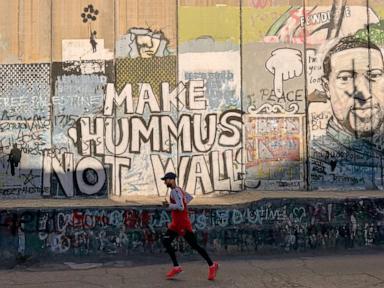
The standard narrative surrounding Palestinian runners—specifically those recently released from detention—is that the act of running a marathon is a "turning point." It is framed as a reclamation of freedom, a poetic middle finger to a system of incarceration. But if you look at the cold reality of athletic performance and regional policy, this "turning point" is a mirage. Running 26.2 miles doesn't change a geopolitical stalemate, and pretending it does is a disservice to both the athlete and the reader.
The Physiology of False Hope
Let’s start with the biology. You cannot just walk out of a high-security facility and "conquer" a marathon in any meaningful competitive sense. Chronic stress, nutritional deficits, and the lack of high-altitude training or specialized recovery gear in a carceral environment do not create elite athletes. They create survivors.
When media outlets frame these runs as professional milestones, they are lying to you about what it takes to compete. In the world of high-stakes distance running, every second counts. You don't find those seconds in a prison yard. By romanticizing the "effort," we ignore the fact that these athletes are being set up for failure on the international stage. We are cheering for a participation trophy while the actual infrastructure for Palestinian sport remains in shambles.
The focus on the individual runner is a distraction. It allows the global community to feel good about a single "success story" while ignoring the systemic blockages that prevent a thousand other runners from even reaching the starting line.
The Sports Diplomacy Fallacy
The "lazy consensus" suggests that sport is a universal language that can bridge divides. This is a tired trope that has been failing since the 1936 Olympics. In the context of the Israeli-Palestinian conflict, sports aren't a bridge; they are a battlefield.
Every time a Palestinian athlete competes, the narrative is immediately hijacked.
- The Human Rights Angle: One side uses the athlete to highlight the restrictions on movement (the "Permit System").
- The Security Angle: The other side focuses on the reasons for the prior detention, citing security protocols.
- The Result: The actual athletic performance is buried under a mountain of talking points.
If you think a marathon is a "turning point," ask yourself: what actually turned? Did the movement restrictions change? No. Did the Olympic Committee’s stance on regional recognition shift? No. The athlete ran, the cameras clicked, and the status quo remained perfectly intact.
Stop Asking "Can Sports Heal?"
People also ask: "How can sports help the Palestinian cause?" or "Does international competition provide a platform for peace?"
The answer is a brutal "no." Sports provide a release valve. They allow for a momentary venting of pressure that would be better spent on actual policy change or legal challenges. When we celebrate a runner for "breaking free" through a race, we are engaging in a form of soft-power voyeurism. We are watching someone struggle against the odds for our entertainment, then patting ourselves on the back for being "inspired."
True athletic development requires three things:
- Consistency of Environment: You cannot train for a world-class marathon in a zone where roads are blocked or permits are revoked at 4:00 AM.
- Predictable Funding: Sponsorships for Palestinian athletes are often tied to political optics, not performance metrics. This is a death sentence for a long-term career.
- Reciprocity: If an athlete cannot travel to compete against the best in the world without a "miracle" or a viral news story, they aren't an athlete; they’re a symbol. And symbols don't win medals.
The Cult of the Underdog
I have seen organizations pour money into "sports for peace" initiatives that have a 0% success rate in changing actual legislation. These programs are designed to make donors feel virtuous. They focus on the optics of the marathon—the sweat, the flags, the finish line—because the reality of the training is too grim to put on a brochure.
The "Turning Point" article is a classic example of this. It focuses on the emotional high of the finish line to avoid talking about the 22 hours a day when the runner isn't running. It ignores the fact that once the journalists go home, the runner is still living in a geopolitical pressure cooker.
If we actually cared about these athletes, we would stop treating their lives like a Hollywood script. We would talk about the failure of international sports bodies to enforce neutrality or the economic realities that make professional athletics impossible in Gaza or the West Bank.
The Nuance Everyone Misses
The counter-intuitive truth is this: The more we focus on the "heroic individual," the more we justify the systemic failures surrounding them. If one person can do it, the logic goes, then the system must be navigable.
"Look at this runner!" the article screams. "He was in prison, and now he’s at the marathon! Anything is possible!"
This is a lie. Everything is not possible. Most runners in that situation will never get a visa. Most will never have a pair of shoes that cost more than a week’s worth of groceries. Most will see their peak athletic years vanish behind concrete walls or at checkpoints.
By highlighting the exception, we validate the rule. We provide a "feel-good" mask for a "feel-bad" reality.
The Industry Insider’s Take
I have sat in rooms where "sports diplomacy" is planned. It’s never about the sport. It’s about which photos will look best in a year-end report. The athletes are treated like chess pieces. If they win, it’s a political statement. If they lose, it’s a tragedy. They are never allowed to just be runners.
If you want to support Palestinian athletics, stop reading the "turning point" fluff. Stop looking for the "inspirational" angle. Start looking at the logistical data. Look at the number of cancelled training camps. Look at the equipment held at customs. Look at the lack of synthetic tracks in the region.
The marathon isn't a turning point. It’s a 26-mile reminder of how much ground there is left to cover, and no amount of "spirit" is going to close that gap. The runner isn't finding freedom on the pavement; he is performing a ritual for a global audience that prefers metaphors to mechanics.
If you want to see a real turning point, stop cheering for the runner and start dismantling the hurdles. Until then, it’s just a guy running in circles while the world watches from the sidelines.
Stop buying the redemption arc. It’s the cheapest product on the market.