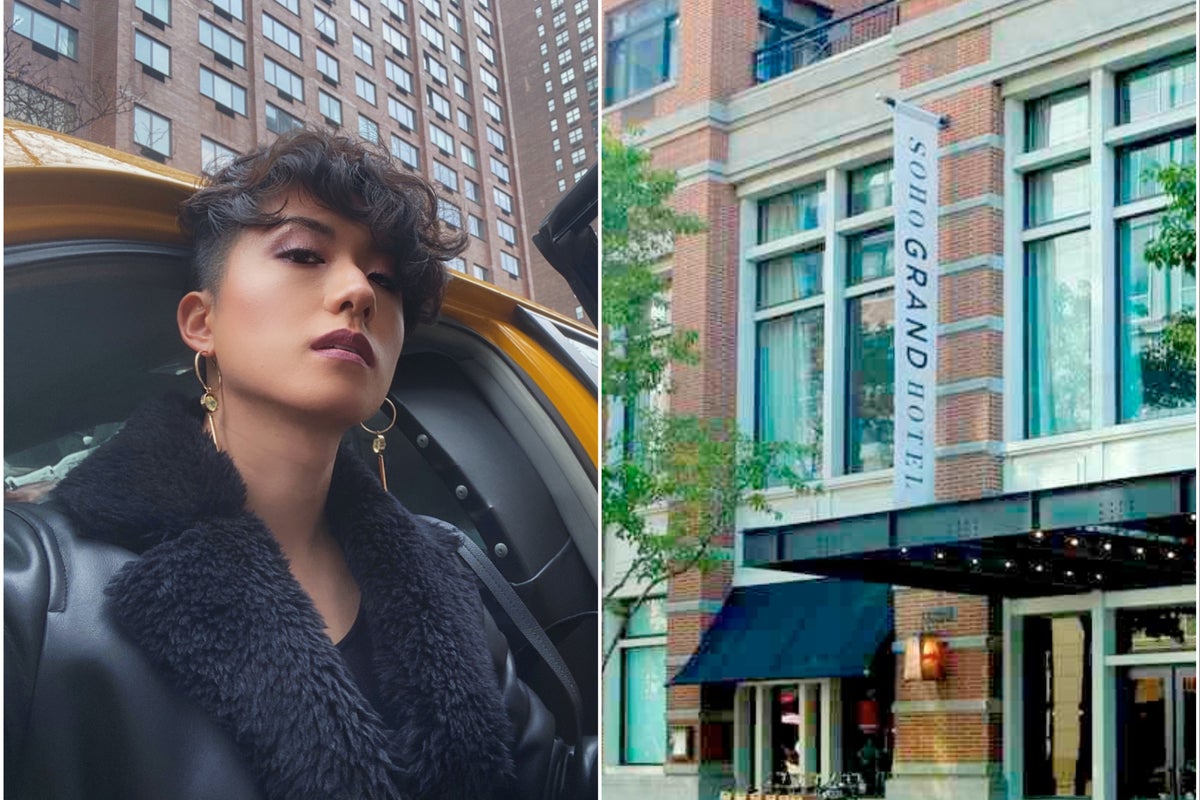
The intersection of New York City’s Human Rights Law (NYCHRL) and private sector property management creates a high-stakes compliance environment where operational failure results in immediate litigation. The recent lawsuit filed by actor Bobbi Salvör Menuez against a New York City hotel following a 2023 incident in a women’s restroom serves as a primary data point for analyzing the breakdown of institutional training. When a non-binary individual is forcibly removed from a facility that aligns with their gender identity, the failure is rarely one of policy—it is a failure of frontline execution and a misunderstanding of the strict liability standards governing public accommodations.
The Triad of Liability Under NYCHRL
New York City possesses one of the most stringent anti-discrimination frameworks in the United States. To understand the legal exposure faced by hospitality entities, one must evaluate the three distinct pillars that constitute a violation in this context.
- Self-Identification Supremacy: Under the NYCHRL, an individual’s gender identity is the sole determinant of their right to access gender-segregated facilities. Evidence of biological sex or "consistency" in presentation is legally irrelevant.
- The Prohibition of Inquiry: Staff members are prohibited from requesting proof of gender or questioning an individual’s presence in a restroom if that presence is based on the individual's self-asserted identity.
- Physical Intervention as Aggravated Liability: The transition from a verbal dispute to physical removal transforms a civil rights violation into a potential battery claim, significantly increasing the "pain and suffering" valuation of a lawsuit.
The Menuez filing alleges that hotel security ignored these pillars, opting for physical removal despite the actor’s clear assertion of their right to be there. This suggests a systemic gap between corporate legal counsel and the security personnel tasked with floor-level enforcement.
The Cost Function of Operational Friction
In high-end hospitality, the perceived comfort of the "traditional" guest often clashes with the legal rights of the "non-conforming" guest. Management often treats this as a social preference issue, but it is more accurately viewed through a cost-benefit lens. The "Cost of Intervention" ($C_i$) far outweighs the "Cost of Guest Complaint" ($C_g$).
- $C_g$ (Complaint Cost): Typically involves a comped room, a formal apology, or a minor loss in brand loyalty from a single disgruntled patron who is uncomfortable sharing a space with a non-binary person.
- $C_i$ (Intervention Cost): Includes legal retainers, public relations damage control, potential statutory penalties, and high-value settlements or jury awards.
The failure at the NYC hotel was an inability to recognize that $C_i$ is an uncapped liability. By prioritizing the immediate, low-stakes discomfort of other patrons—or the internal biases of security staff—the entity triggered a cascade of legal and reputational expenses that could have been mitigated by a "zero-intervention" policy.
The Mechanism of Security Breakdown
The breakdown in the Menuez case reveals a common structural flaw in third-party security contracts. Most hotels outsource security to agencies that prioritize "threat detection" over "civil rights compliance." This creates a bottleneck where personnel are trained to see non-conformity as a "suspicious activity" rather than a protected characteristic.
When a security guard decides to remove a patron from a restroom, they are executing a high-risk maneuver based on a subjective assessment. In New York City, subjectivity is a liability. The law requires a binary state of compliance: either the person is allowed to be there (which they are, by virtue of their identity) or they are committing a crime. Because using a restroom that aligns with one's gender identity is not a crime, any security intervention is, by definition, a breach of the peace and a violation of the NYCHRL.
Dissecting the Psychological and Legal Damages
The lawsuit seeks damages for "severe emotional distress" and "humiliation." From a strategic standpoint, these are not mere buzzwords; they are calculated metrics used to bridge the gap between statutory fines and multi-million dollar settlements.
In the case of a public figure like Menuez, the "humiliation" is quantified by the scale of the audience. Being "dragged out" of a bathroom in a luxury environment creates a narrative of trauma that is easily digestible for a jury. The defense cannot argue "mistake of fact" because the NYCHRL does not recognize a "good faith" mistake regarding a person's gender identity as a valid defense against a discrimination claim.
The Fallacy of the Single-Stall Solution
Many institutions attempt to mitigate this risk by installing single-stall, gender-neutral restrooms. While this provides a safe alternative, it does not legally absolve the institution from allowing access to multi-stall gendered facilities. A common tactical error in management is directing a non-binary person to a "neutral" bathroom when they have already entered a "gendered" one. Under the law, the act of "steering"—suggesting a person use a different facility because of their gender expression—is itself a discriminatory act.
Quantitative Impact on Brand Equity
For a luxury hotel, brand equity is built on the promise of an "exclusive" and "safe" environment. However, "safety" is increasingly being redefined by the market. Younger, high-net-worth demographics—the core audience for shows like Russian Doll—view inclusivity as a baseline requirement.
- Search Sentiment Shift: When a brand is linked with "forced removal" and "discrimination," the organic search results for the property are poisoned for 18–36 months.
- Talent Attrition: Luxury properties rely on elite staff. Professionals in the hospitality industry are increasingly hesitant to work for entities that face public civil rights litigation, as it reflects a poor internal culture.
- Insurance Premium Spikes: Frequent or high-profile civil rights violations lead to a re-rating of Employment Practices Liability Insurance (EPLI) and general liability policies.
Strategic Correction for High-Traffic Public Accommodations
To prevent the recurrence of the failures seen in the Menuez incident, properties must move beyond "sensitivity training" and into "operational protocols."
- Mandatory De-escalation over Removal: Security protocols must be rewritten to strictly forbid physical removal for anything less than an active violent threat. Restroom "occupancy disputes" must be handled by management-level personnel, not entry-level guards.
- Legal Indemnification in Security Contracts: Hotels must include clauses in their security contracts that hold the security firm liable for civil rights violations resulting from the unauthorized removal of guests. This shifts the financial burden and incentivizes the agency to provide better training.
- Infrastructure Transparency: Clear signage stating that "All individuals have the right to use the facility consistent with their gender identity" serves as both a guest education tool and a legal shield, demonstrating the property's intent to comply with local laws.
The litigation initiated by Menuez is a predictable outcome of a failure to align frontline operations with a rigorous legal landscape. Entities that continue to rely on the "discretion" of untrained security personnel are essentially self-insuring against a guaranteed loss. The only viable path forward is the total removal of gender-policing from the operational manual. Management must accept that the legal risk of a "wrongful removal" is infinitely higher than the social risk of a guest's discomfort.
Stop all active gender-policing interventions immediately. Transition all security training to a "non-intervention" model for restrooms and audit all third-party security contracts for civil rights compliance and indemnification.


