A young girl named Sahar sits in a darkened room in Tehran, her skin so fragile that even the weight of a bedsheet feels like a serrated blade. She has Epidermolysis Bullosa, often called "Butterfly Disease." Her skin does not anchor to her body; it blisters and peels at the slightest touch. For children like Sahar, specialized medical bandages are not a luxury. They are the only thing keeping her internal organs from the open air. They are her second skin.
Thousands of miles away, a legal gavel strikes a mahogany desk. A ship is seized. A cargo of Iranian crude oil is redirected to satisfy a court judgment. To the diplomats in Washington and the lawyers in high-rise offices, this is a matter of geopolitical leverage, a strategic move in a long-standing game of economic pressure. But in that darkened room in Tehran, the move has a different name. It is a death sentence.
The seizure of the vessel Advantage Sweet—and the subsequent retaliatory actions surrounding Iranian oil—isn't just a headline about maritime law. It is a story about the collapse of the humanitarian exception. We are told that sanctions are surgical, designed to squeeze governments while sparing the innocent. The reality on the ground suggests the scalpel is actually a sledgehammer.
The Paper Wall of Humanitarian Aid
On paper, medicine and food are exempt from international sanctions. This is the "humanitarian corridor" we are promised exists. But talk to any doctor working within the Iranian Red Crescent, and they will tell you that this corridor is a mirage. To buy bandages for Sahar, a hospital needs to move money. To move money, they need a bank.
But banks are terrified. The global financial system is so tightly interconnected that one "wrong" transaction with a sanctioned entity can result in billions of dollars in fines from the U.S. Treasury. This is called "over-compliance." It is easier for a Swiss medical supplier to simply stop selling to Iran than it is to risk the wrath of the American financial regulators. The result is a silent blockade. The medicine isn't banned, but the path to get it is effectively destroyed.
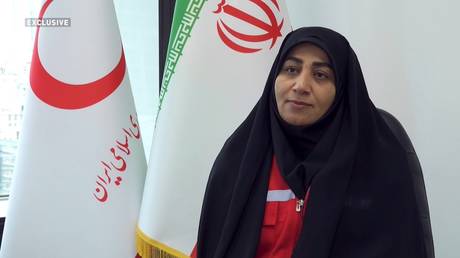
Pir-Hossein Koulivand, the head of the Iranian Red Crescent Society, recently stood before the cameras not as a politician, but as a witness to a slow-motion catastrophe. He pointed to the seizure of Iranian assets—specifically the oil that pays for the country’s social safety net—as a direct blow to the most vulnerable. When a country's main source of revenue is choked off, the first things to go aren't the military parades. It is the specialized oncology drugs. It is the specialized dressings for "Butterfly Children." It is the heart valves.
The Physics of Economic Warfare
Think of a nation’s economy like a complex plumbing system. The oil is the water pressure that keeps everything moving. When the pressure is cut at the source, the furthest, smallest taps in the house dry up first. Those taps are the rural clinics and the specialized pediatric wards.
When the U.S. seized the Suez Rajan (now the St. Nikolas) and its cargo of Iranian oil, it set off a chain reaction. Iran retaliated by seizing the Advantage Sweet, which was carrying oil for an American company. On the surface, this looks like a "tit-for-tat" maritime dispute. But the Advantage Sweet wasn't just carrying oil; its seizure became the flashpoint for a legal and humanitarian crisis that has frozen the movement of essential goods.
The logic of the seizure is rooted in legal judgments meant to compensate victims of terrorism. It is a pursuit of justice, or at least a version of it. However, the mechanism of that justice is fueled by the very resources that the Iranian state uses to subsidize its healthcare system. We are witnessing a collision between the right to legal restitution and the fundamental human right to health.
The tragedy is that the people who suffer the most are never the ones sitting at the negotiating table. The officials who sign the seizure orders don't see the blisters on Sahar’s back. The Iranian officials who use these crises for domestic propaganda don't feel the phantom pains of a patient whose surgery was canceled because the imported anesthetic didn't arrive.
A Culture of Fear in the Supply Chain
Imagine you are a logistics manager for a global shipping firm. You have a crate of life-saving insulin destined for a port in Bandar Abbas. You know that insulin is legal to ship. You know it’s a humanitarian necessity. But you also know that the vessel you use might be caught in a legal tug-of-war. You know your insurance company might revoke your coverage if you enter those waters. You know your bank might freeze your accounts for three months just to "verify" the transaction.
What do you do? You cancel the shipment.
This is how the "invisible stakes" manifest. It isn’t a loud explosion; it is a quiet email saying "Service Unavailable." It is a vacant shelf in a pharmacy. It is the exhausted look on a father's face as he navigates the black market, hoping the "insulin" he just bought at five times the price was actually kept at the right temperature during its clandestine journey across the border.
The Red Crescent official’s warning isn't just rhetoric. It is a plea for the recognition of a basic biological truth: the human body does not care about borders, or treaties, or the seizure of oil tankers. A body in pain needs relief. A failing heart needs a valve.
The Cost of the Game
We have become desensitized to the language of sanctions. We talk about "maximum pressure" as if we are adjusting the settings on a machine. But a nation is not a machine. It is a collection of millions of individual lives, each one tethered to a fragile web of international trade.
When we seize a vessel, we aren't just taking oil. We are taking the currency that buys the cooling units for vaccines. We are taking the leverage that allows a Red Crescent volunteer to negotiate for a shipment of dialysis filters. We are creating a world where the luck of your birth determines whether a geopolitical spat will end your life.
The international community often speaks of "international law." Yet, there is a profound silence regarding the legal obligations to ensure that sanctions do not mutate into a form of collective punishment. The Red Crescent’s role is supposed to be neutral, a sanctuary of mercy in the middle of a conflict. But when the very tools of mercy—money, transport, and supplies—are caught in the gears of economic warfare, neutrality becomes an impossibility.
The Human Toll
Consider a hypothetical surgeon in Shiraz. Let’s call him Dr. Reza. He has spent twenty years perfecting the art of pediatric heart surgery. He has the skill. He has the staff. But today, he is staring at a monitor that is flickering because the replacement parts for the medical imaging system are held up in a port in Dubai. They are "under review" because the manufacturer is worried about a new round of secondary sanctions.
Dr. Reza has to tell a mother that her son’s surgery is postponed. He doesn't mention the Advantage Sweet. He doesn't talk about the U.S. Department of Justice or the Iranian Revolutionary Guard. He just tells her that they are waiting for a part. He sees the light go out in her eyes. He knows, even if she doesn't, that "waiting" is often just a polite word for dying.
This is the reality of the "Butterfly Children" and thousands of others. They are the collateral damage in a war where no shots are fired, but lives are lost nonetheless. The seizure of a ship is a visible act of power, a display of reach and authority. But the consequences are felt in the quietest, most private moments of human suffering.
We are living in an era where the financial system has been weaponized to such a degree that the "humanitarian exception" is little more than a footnote that no one reads. The Red Crescent’s outcry is a reminder that there is a cost to these maneuvers that cannot be measured in barrels of oil or millions of dollars.
The ink on a seizure warrant eventually dries. The oil is eventually sold. The legal disputes are eventually settled in some wood-paneled room years from now. But for the child waiting for a bandage, or the patient waiting for a heart valve, time is a resource that cannot be seized, redirected, or recovered once it is gone.
In the end, we are left with a haunting question: if our pursuit of justice or security requires us to ignore the screams of the most vulnerable, what exactly are we securing?
Sahar is still in that room. The bandages are running low. Somewhere on the high seas, another ship is being tracked, another legal brief is being filed, and the invisible line between a policy decision and a human tragedy grows thinner every day.
[Image of the human circulatory system]
The world watches the tankers. It should be watching the children.