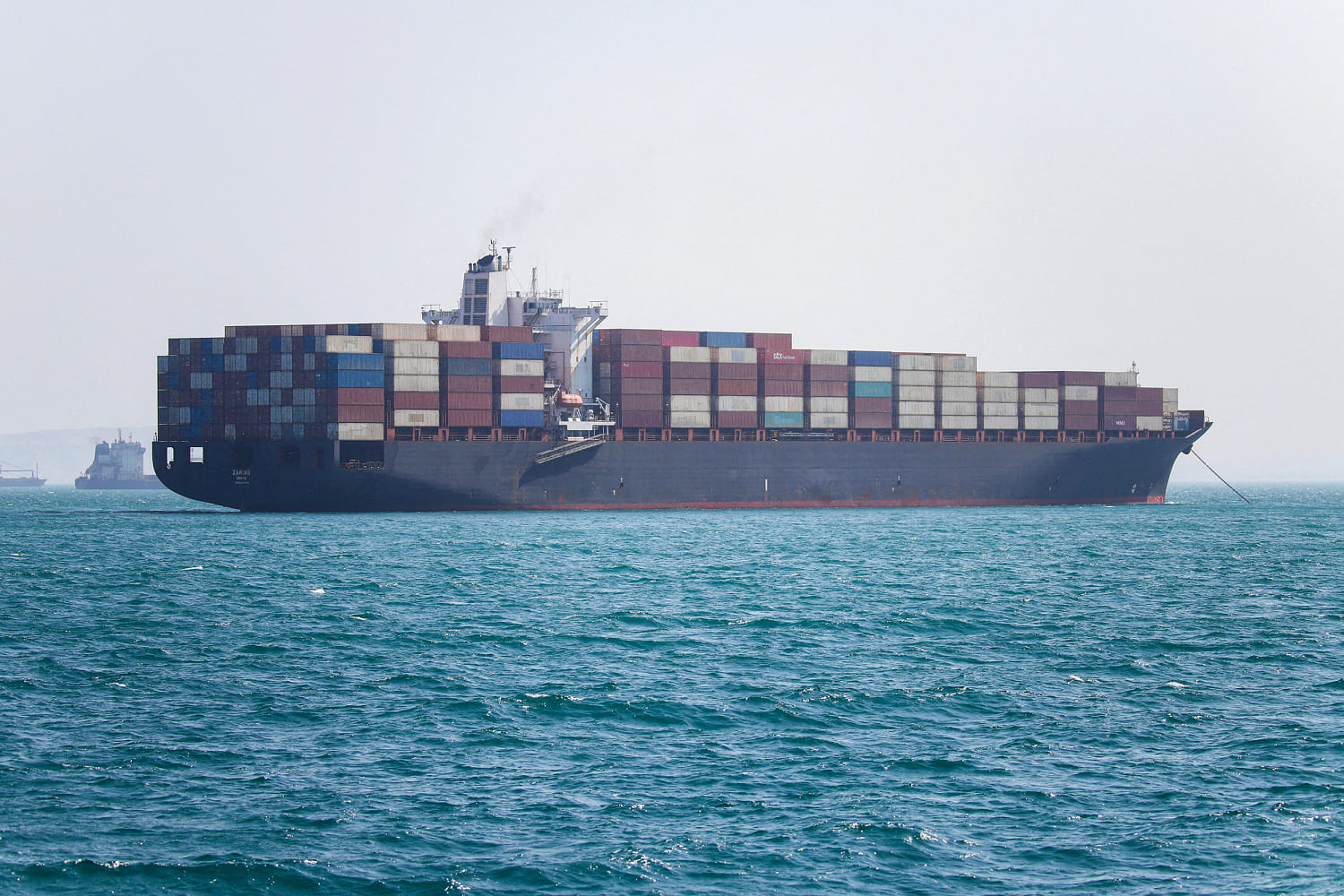
The United States maintains that the fragile ceasefire between its interests and Iranian-backed forces remains intact, but the reality on the water in the Strait of Hormuz suggests a much more volatile situation. Despite a series of drone sightings, close-range naval intercepts, and "gray zone" provocations that would have triggered a shooting war a decade ago, the State Department continues to categorize these incidents as manageable friction rather than a collapse of diplomacy. This insistence on a functional status quo is a calculated gamble. Washington is betting that by refusing to acknowledge the death of the ceasefire, it can prevent a full-scale regional escalation that neither side actually wants, even as the tactical reality turns increasingly violent.
This is the central paradox of modern Middle Eastern diplomacy. A ceasefire is no longer a cessation of hostilities; it is a high-stakes agreement to ignore specific types of violence to avoid larger ones.
The Strategy of Managed Friction
To understand why the U.S. is clinging to the narrative of a lasting truce, one must look at the mechanics of the "Shadow War." For years, the Strait of Hormuz has served as a pressure valve. When geopolitical tensions rise, the Islamic Revolutionary Guard Corps (IRGC) increases its activity in the channel, through which roughly 20% of the world’s petroleum passes.
The current strategy involves a deliberate blurring of lines. By using fast-attack craft to harass commercial tankers or deploying low-cost loitering munitions, Iran tests the limits of American engagement. The U.S. response has shifted from immediate kinetic retaliation to a posture of "active monitoring." This change in doctrine is designed to deprive Tehran of the escalatory ladder it seeks to climb. If the U.S. does not declare the ceasefire over, it does not have to launch the retaliatory strikes that would inevitably lead to a broader conflict.
However, this policy of restraint has a shelf life. Every time an Iranian drone buzzes a U.S. destroyer without consequence, the threshold for what constitutes "unacceptable" behavior moves. We are seeing a slow-motion erosion of deterrence that the Pentagon is struggling to mask with optimistic press briefings.
The Economic Ghost in the Machine
The primary reason for the U.S. insistence on stability is not military—it is economic. Global markets are currently hypersensitive to energy disruptions. A formal declaration that the ceasefire has failed would send Brent crude prices spiraling, triggering an immediate inflationary spike that the current administration cannot afford during a period of domestic economic recovery.
Shipping insurance companies are already pricing in the risk. Premiums for transiting the Strait have ticked upward, reflecting a reality that diplomats refuse to voice. The "war risk" surcharge is a more accurate barometer of regional stability than any statement coming out of Foggy Bottom.
Tactical Shifts on the Water
The nature of the provocations has changed. We are no longer seeing the massive naval exercises of the past. Instead, the IRGC is utilizing asymmetric maritime tactics that are harder to categorize as "acts of war." These include:
- GPS Jamming: Spoofing the navigation systems of commercial vessels to lure them into Iranian territorial waters.
- Swarm Maneuvers: Using dozens of small, armed boats to overwhelm the sensor arrays of larger Western warships.
- Drone Surveillance: Constant, low-altitude flights that gather real-time intelligence on U.S. defensive positions.
These actions are calibrated to stay just below the "red line" of the U.S. Rules of Engagement (ROE). By maintaining the fiction of a ceasefire, the U.S. essentially accepts these indignities as the cost of doing business in the 21st century.
The Intelligence Gap and the Proxy Problem
One factor often overlooked by standard news reporting is the lack of a monolithic command structure within the Iranian security apparatus. The IRGC Navy often operates with a degree of autonomy from the regular Artesh forces or even the civilian government in Tehran. This internal fragmentation creates a convenient layer of deniability.
If a drone attack occurs, the U.S. can choose to view it as a "rogue element" action rather than a direct violation by the Iranian state. This allows both parties to save face. It is a cynical but effective method of conflict management. The U.S. intelligence community is well aware of these internal dynamics, and they use this ambiguity to justify the continuation of the ceasefire narrative.
However, the "proxy" excuse is wearing thin. The weapons being used—advanced drones and precision-guided missiles—require state-level logistics and training. To suggest these are the actions of uncoordinated radicals is a diplomatic politeness that borders on the absurd.
The Failure of Regional Deterrence
The insistence that the ceasefire is holding ignores the fact that America’s regional allies are losing faith in the security umbrella. Saudi Arabia and the UAE have watched the Strait with growing concern, noting that the U.S. response to maritime aggression has become increasingly rhetorical rather than physical.
When the U.S. fails to respond forcefully to "gray zone" attacks, it signals to regional partners that they may need to seek their own security arrangements. This often leads to a dangerous "every nation for itself" mentality, where local powers begin to build their own deterrents or, conversely, start making their own separate deals with Tehran. This fragmentation undermines the very stability the U.S. claims to be protecting.
The U.S. Navy’s 5th Fleet is currently caught in a difficult position. They are tasked with maintaining the freedom of navigation while being told to avoid any action that could be construed as escalatory. It is a defensive posture that cedes the initiative to the adversary. In naval warfare, the side that controls the tempo and the location of the engagement usually holds the upper hand. Right now, that side is not the United States.
The Problem with "Proportionality"
International law and modern military doctrine lean heavily on the concept of proportionality. If Iran harasses a tanker, the U.S. cannot legally sink an Iranian frigate without being seen as the aggressor. Iran knows this. They use proportionality as a shield, conducting small-scale attacks that do not "deserve" a massive response but cumulatively degrade the security environment.
The U.S. is essentially trying to fight a wildfire with a spray bottle, hoping that by dampening the small flames, the forest won't catch. But the heat is rising.
Rethinking the Definition of Peace
We have entered an era where the binary of "war" and "peace" no longer applies. The situation in the Strait of Hormuz is a permanent state of low-intensity conflict. By continuing to use the word "ceasefire," the U.S. government is using 20th-century terminology to describe a 21st-century reality.
The risk is that this semantic game leads to a catastrophic miscalculation. If a U.S. sailor is killed or a major vessel is sunk, the "ceasefire" narrative will vanish in an instant, leaving the administration with no middle ground between "nothing happened" and "total war." There is currently no graduated response strategy that allows for firm pushback without total escalation.
The focus should not be on whether the ceasefire is "over," but on whether the current rules of engagement are sufficient to protect American interests and global commerce. Currently, they are not. The U.S. is performing a masterclass in diplomatic denial, but the cracks are becoming impossible to ignore.
Military commanders on the ground—or in this case, on the bridge—know the truth. They see the drones, they hear the radio threats, and they watch the Iranian ships close within yards of their hulls. They are living in a combat zone, even if the politicians in Washington are calling it a peace.
The policy of strategic patience has become a policy of strategic passivity. Every day the U.S. insists the ceasefire is alive, it grants Iran more room to reshape the maritime borders of the Middle East. Diplomacy requires a credible threat of force to be effective; without it, a ceasefire is just a countdown to the next explosion.
Stop looking at the statements from the podium and start looking at the hull numbers in the water.