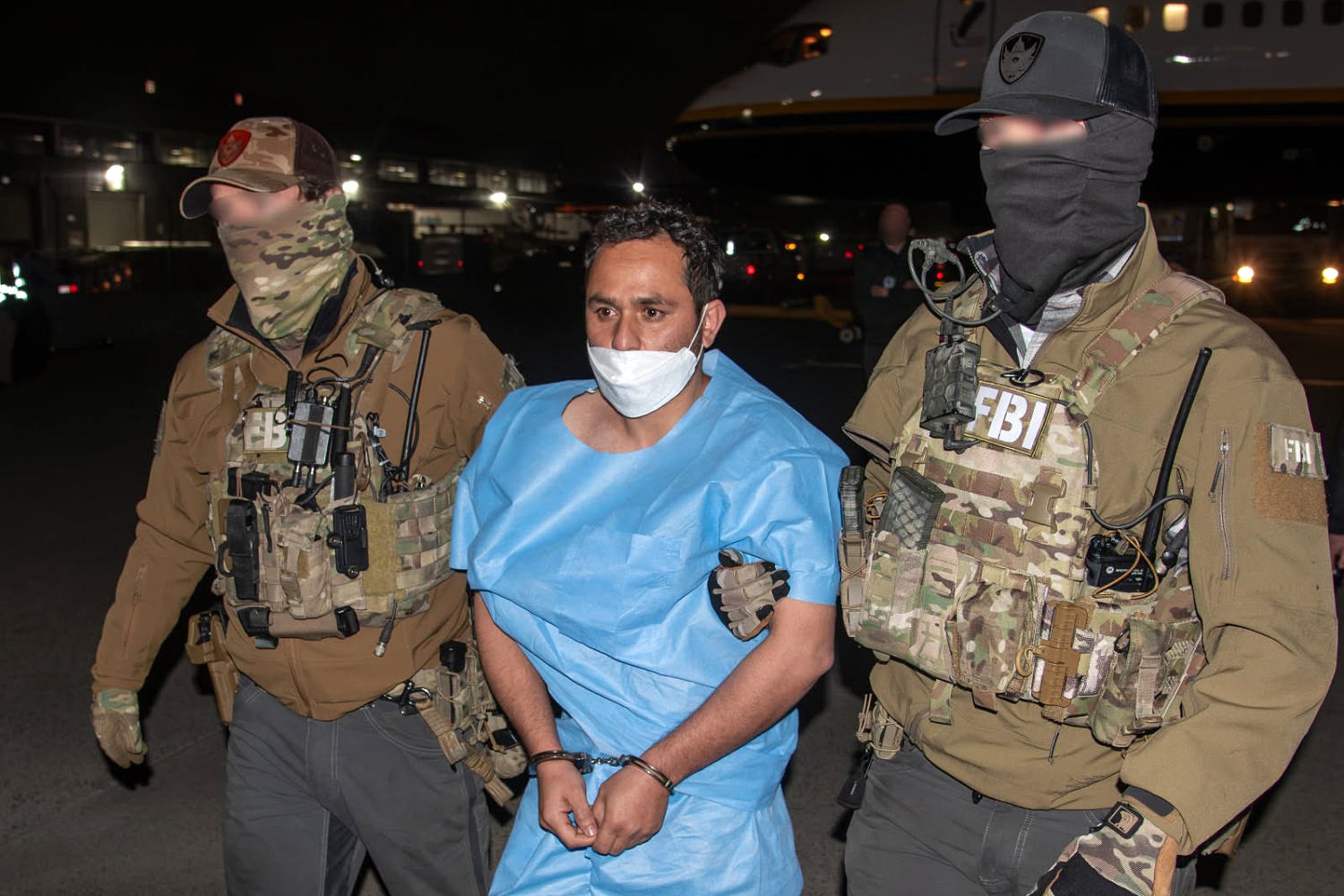
The bloody chaos of the August 2021 withdrawal from Afghanistan has finally reached a sterile courtroom in Virginia, far from the heat and sewage-filled canals of Kabul. Mohammad Sharifullah, an Afghan national and self-confessed member of the Islamic State-Khorasan (ISIS-K), now stands as the face of an atrocity that left 13 American service members and 170 Afghan civilians dead. Federal prosecutors allege Sharifullah was the scout who cleared the path for Abdul Rahman al-Logari, the suicide bomber who detonated a vest packed with ball bearings into a desperate crowd at the airport's Abbey Gate.
This trial represents the first significant legal reckoning for a day that effectively signaled the collapse of Western influence in Central Asia. While the Pentagon previously labeled the bombing "unpreventable," the emergence of Sharifullah in U.S. custody—captured near the Pakistan-Afghanistan border after years in the shadows—suggests that while the attack may have been unavoidable on the ground, the architects were never truly out of reach.
From Bagram to the Border
The journey of Mohammad Sharifullah to a light-blue jail jumpsuit in America is a timeline of institutional failure and intelligence persistence. Arrested by the former US-backed Afghan government in 2019, Sharifullah was already a known quantity. He was a radicalized operative who had joined ISIS-K in 2016. He didn't escape through a sophisticated tunnel or a daring raid. He simply walked out of prison on August 15, 2021, when the Taliban seized Kabul and threw open the gates of every major detention center in the country.
Among those released was al-Logari, the bomber. Within eleven days of their release, the two men, who had met while incarcerated, transformed their newfound freedom into a massacre. Sharifullah’s role was logistical. According to FBI affidavits, he was provided with a motorcycle, a burner phone, and a SIM card. His task was to scout the route, navigate the shifting checkpoints of a crumbling city, and signal that the way to the airport perimeter was clear.
The Logistics of a Massacre
The Abbey Gate attack was not a stroke of luck for ISIS-K. It was a calculated exploit of the security vacuum created during the handoff between the departing U.S. military and the incoming Taliban. The bombing occurred at a point where the two forces were essentially forced into an uneasy, local coordination.
Abbey Gate Security Layers:
- The Outer Ring: Controlled by Taliban fighters who were supposed to screen for weapons but often let crowds surge forward.
- The Canal: A narrow, filthy waterway where Afghans stood waist-deep in water, waving documents at U.S. Marines.
- The Checkpoint: The immediate area where Marines performed physical searches—the exact spot where al-Logari detonated his device.
The ball bearings in the vest were designed for maximum lethality in a confined space. When the trigger was pulled, the blast was so concentrated that initial reports incorrectly suggested a complex attack involving gunmen. Military investigations later corrected this, confirming that the wounds appearing to be gunshot hits were actually the result of high-velocity metal fragments. Sharifullah, having finished his scouting mission, had already been ordered to leave the area before the blast.
A Wider Web of Terror
Sharifullah is more than just a ghost of the Kabul withdrawal. During FBI interrogations, he reportedly admitted to providing weapons and tactical instructions for the March 2024 attack on the Crocus City Hall in Moscow. This link is vital. It positions Sharifullah not as a low-level foot soldier, but as a technical and logistical node in a global ISIS-K network that has spent the last five years evolving from a regional insurgency into a major international threat.
The prosecution’s case rests on "material support to a foreign terrorist organization resulting in death." This is a heavy-duty legal lever that allows the U.S. to prosecute foreign nationals for acts committed abroad if the victims include Americans. The defense will likely scrutinize the conditions of his interrogation in Pakistan and his subsequent extradition, but the sheer volume of his admissions—paired with intelligence gathered from the border region—makes for a daunting evidentiary mountain.
The Regional Shadow Game
The arrest of Sharifullah in Balochistan, Pakistan, underscores a complicated reality. While the Taliban in Kabul frequently claim they have eradicated ISIS-K, the group continues to find sanctuary in the rugged, lawless borderlands. The operation to seize him was a joint effort between the CIA and Pakistani intelligence, a rare moment of public cooperation in a relationship that has been fractured for decades.
Pakistan has used the arrest to bolster its own narrative: that Afghanistan, under Taliban rule, has become a "hotbed" for regional terror. Conversely, the Taliban spokespeople have pointed to the arrest on Pakistani soil as proof that ISIS-K leaders are hiding in Pakistan, not Afghanistan. For the families of the 13 fallen Americans, these geopolitical finger-pointings are secondary to the fact that someone is finally being held in a room with a judge.
Accountability and the Aftermath
The trial will not bring back the dead, nor will it erase the images of people falling from C-17s or the sight of blood-red water in the Kabul canals. It does, however, pierce the veil of "unpreventability." If the planners and scouts were individuals known to intelligence agencies and previously held in Western-funded prisons, the questions surrounding the 2021 withdrawal shift from "What happened?" to "How was this allowed to happen twice?"
Sharifullah’s presence in Virginia is a reminder that the war in Afghanistan did not end in August 2021. It merely entered a new, more clinical phase of litigation and long-range intelligence strikes. The "swift sword of justice" touted by the administration is now a series of legal filings, witness testimonies, and a life sentence in a federal supermax.
The evidence suggests Sharifullah was the eyes for a man who had no eyes left for the world. By clearing the path to the gate, he ensured that the end of the longest war in American history would be written in the blood of those who were trying to escape it.

:strip_icc()/pic2513216.jpg)