Geopolitical analysts love a good peace offering. When Tehran floats a proposal to allow merchant vessels to hug the Omani coastline to avoid strikes, the consensus machine grinds into gear. The headlines paint it as a de-escalation. They call it a "concession." They treat it as a diplomatic opening.
They are dead wrong.
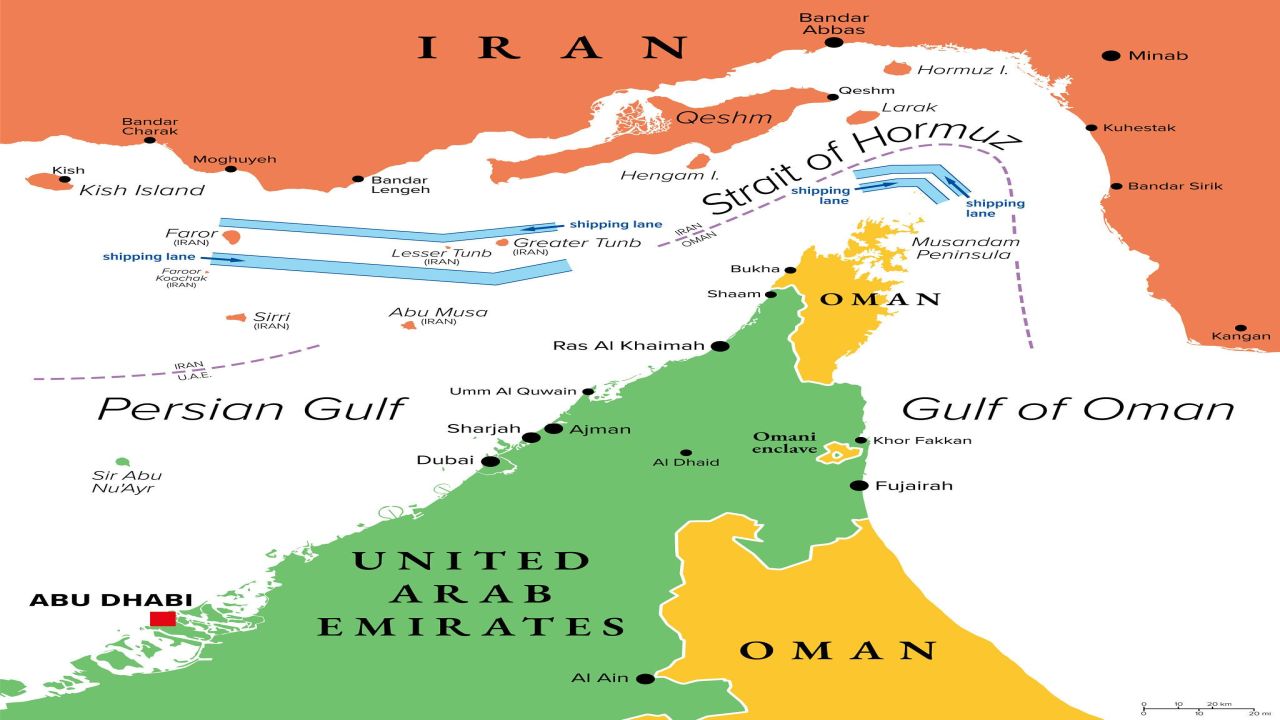
This isn’t a peace offering. It is a sophisticated branding exercise for a protection racket. By designating a specific "safe zone" on the Omani side of the Strait of Hormuz, Iran isn't giving up its ability to disrupt global trade; it is formalizing its role as the Strait’s sole traffic warden. If you accept the premise that one side of a 21-mile-wide choke point is "safe" only because the IRGC says so, you have already handed them the keys to the global economy.
The Geography of Extortion
The Strait of Hormuz is the most vital artery in the world. We are talking about $21%$ of the world's petroleum liquids consumption passing through that gap every single day. The "lazy consensus" argues that moving traffic toward Omani waters reduces the risk of miscalculation or accidental skirmishes with Iranian patrol boats.
Here is the reality: The shipping lanes in the Strait are already strictly regulated by the Traffic Separation Scheme (TSS). The inward-bound lane (entering the Gulf) and the outward-bound lane (exiting) are separated by a two-mile buffer zone. Most of these lanes already lie within Omani territorial waters.
Iran isn't "offering" anything new. They are re-labeling existing international law as a personal favor. By doing so, they create a psychological precedent: if the Omani side is "safe," then the rest of the Strait is a legitimate kill zone. It is the maritime equivalent of a mugger telling you he won't hit you as long as you stay on the left side of the sidewalk. It doesn’t make the sidewalk safe; it confirms the mugger owns the street.
The Insurance Premium Fallacy
I’ve spent years watching commodity markets react to these "diplomatic breakthroughs." Every time a proposal like this hits the wires, analysts predict a drop in War Risk Insurance premiums. They think clarity leads to stability.
It doesn’t. It creates a binary risk model that is even more volatile.
When you funnel the world's tankers into a narrower, Iran-approved corridor, you create a "bottleneck within a bottleneck." You concentrate the target. If a single incident occurs in that designated "safe" lane—whether it’s a limpet mine or a "mechanical failure" that blocks the path—the entire global supply chain seizes up.
Market stability requires redundancy, not a single, sanctioned path dictated by a hostile actor. The moment Lloyd’s of London or the International Group of P&I Clubs starts pricing risk based on an Iranian "proposal," the IRGC has won. They have successfully shifted the risk assessment from international law to their own internal policy.
The Omani Neutrality Myth
We need to talk about Muscat. Oman has long played the "Switzerland of the Middle East," and they are excellent at it. But this proposal puts them in an impossible bind.
If shipping shifts entirely to the Omani side under an Iranian guarantee, Oman becomes the de facto guarantor of security for the entire world’s oil supply. They don't have the naval capacity to police that volume of traffic against asymmetric threats.
By pushing ships toward Oman, Iran is effectively:
- Outsourcing the liability: If something goes wrong in Omani waters, Tehran shrugs and points the finger at Muscat’s inability to secure its own backyard.
- Violating Sovereignty: It forces Oman to host an increased naval presence from the U.S. and its allies, which Iran then uses as a pretext for "defensive" escalations.
The Asymmetric Advantage
Traditional naval theory dictates that you control a waterway through "Sea Control"—having enough hulls in the water to dominate the space. Iran uses "Sea Denial." They don't need a massive fleet; they just need to make the cost of transit high enough to be prohibitive.
This proposal is a Sea Denial masterstroke. It’s a velvet glove over a spiked fist. By "allowing" passage, they are asserting the right to disallow it at any moment.
Imagine a scenario where a tanker deviates by half a mile from the "Omani side" due to weather or engine trouble. Under this new "proposal," that ship is now fair game. Tehran can claim they didn't break their word; the ship broke the rules. It provides a legalistic veneer for piracy.
Stop Asking for Permission
The "People Also Ask" sections of the internet are filled with queries like: "How can we make the Strait of Hormuz safer?" or "Will the Iran-Oman proposal lower oil prices?"
These are the wrong questions. They assume that safety is something Iran can grant.
The only way to secure the Strait is to stop treating it as a negotiable space. The moment we start debating which side of the channel is "free of attack," we have conceded that the other side is a shooting gallery.
Security in the Strait of Hormuz isn't about finding a path that Iran likes. It’s about maintaining a presence that makes it impossible for them to interfere with any path.
The Logistics of the Trap
If you are a shipping firm, the "unconventional advice" here is simple: Do not change your routing based on Iranian "guarantees."
Rerouting creates predictable patterns. Predictability is the best friend of a guerrilla navy. The IRGC Navy (IRGCN) excels at fast-attack craft maneuvers. If they know exactly where every high-value target will be—squeezed into the Omani corridor—they can monitor, harass, and board with 100% efficiency.
You are being asked to walk into a narrower hallway so the person holding the door can keep a closer eye on you.
The Hard Truth About De-escalation
Western diplomats are desperate for a win. They see this proposal as a "stepping stone." It isn't. It is a tactical pause. Iran uses these proposals when they need to lower the temperature just enough to avoid a massive kinetic response from the U.S. Fifth Fleet, while still maintaining their grip on the world's throat.
We have seen this cycle before. 2019, 2021, 2023. Different names, same game. They create a crisis, offer a "solution" that validates their power, and wait for the world to thank them for it.
The downside of my stance? It sounds "hawkish." It sounds like I'm inviting conflict. I'm not. I'm advocating for reality. The most dangerous thing you can do in a choke point is trust the person who is currently choking you when they say they'll only squeeze your left side.
True freedom of navigation is indivisible. You either have it across the entire 21 miles, or you don't have it at all.
Accepting a "safe zone" is just a slow-motion surrender of the high seas. Stop looking for the "safe side" of the Strait. There isn't one as long as we allow the premise that safety is a gift rather than a right.
The proposal isn't a bridge to peace. It’s a toll booth. And the currency isn't just money—it's sovereignty. If you want to keep the global economy moving, stop negotiating for a better cage.
Navies don’t exist to ask for "safe passage." They exist to ensure it. Any diplomat who thinks otherwise shouldn't be anywhere near a map.
The Strait of Hormuz belongs to the world. Not to a regime looking to play traffic cop with the global energy supply. Every ship that hugs the Omani coast out of fear is a victory for the IRGC.
The map hasn't changed. Only our resolve has. Fix that, and you won't need a "proposal" to exit the Gulf.