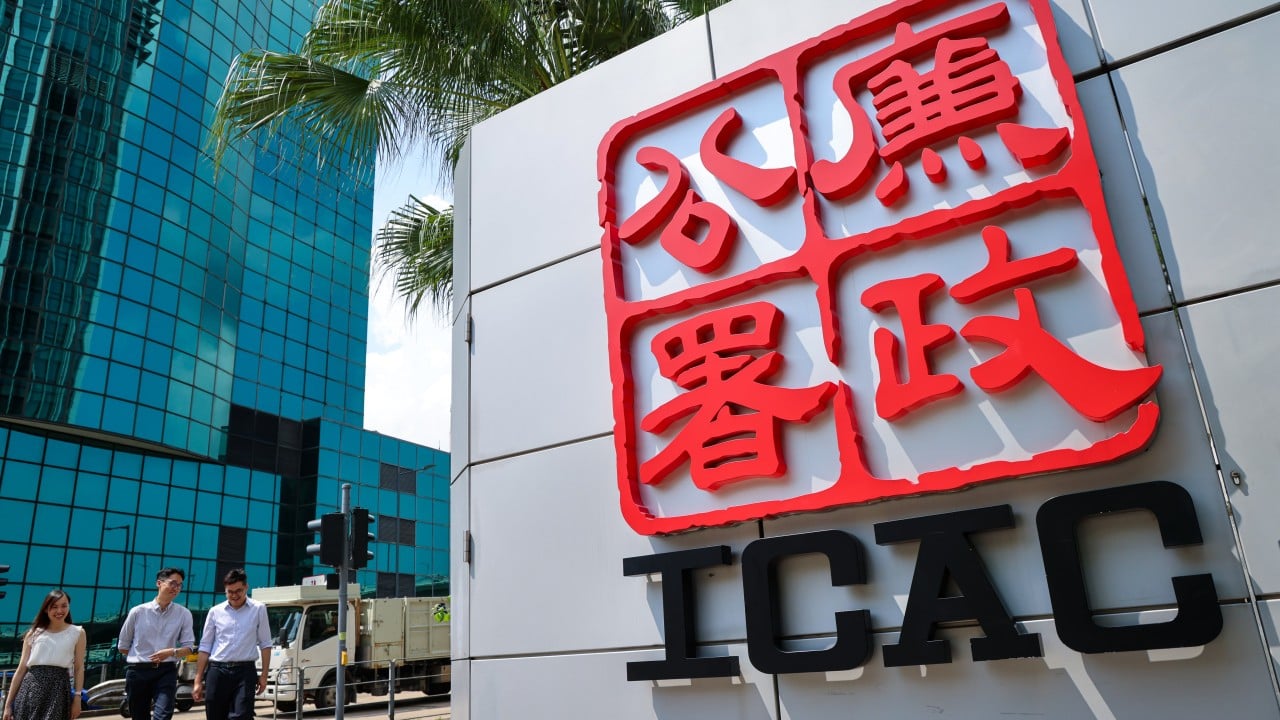
Seven people arrested. Handcuffs in the lobby. A few headlines about "rigged tenders" and $15 million in shady contracts. The media treats this latest ICAC sting like a victory for the average homeowner.
They are wrong.
These arrests are a distraction from a systemic rot that the ICAC is either unwilling or unable to touch. When you see a "corruption watchdog" pick off a few mid-level players in a renovation scam, you aren't seeing a cleanup. You are seeing the cost of doing business. These seven individuals are the sacrificial lambs offered up to keep the public from asking why the entire building management industry in Hong Kong is designed to bleed residents dry.
The Illusion of Regulation
The standard narrative is simple: bad actors rigged a bid, the ICAC caught them, and the system works. This is a fairy tale.
In reality, the "Building Management Ordinance" and the "Mandatory Building Inspection Scheme" (MBIS) have created a government-mandated gold mine for cartels. When the government mandates that every aging building must undergo massive structural overhauls, they aren't just ensuring safety; they are handing a captive audience to a predatory industry.
I have spent years watching the mechanics of these "tenders." The "Seven" arrested this week are small fish. They used the same tired tactics: inflated quotes, kickbacks to building managers, and "consultants" who act as double agents. If the ICAC thinks arresting seven people fixes a city where over 5,000 buildings are currently under statutory orders to repair, they are delusional.
The problem isn't "corruption." The problem is the structure of the market.
Why Your Property Manager Wants You to Overpay
Most homeowners think their Property Management Company (PMC) works for them. That is the first mistake. The PMC works for its own bottom line.
In a standard renovation tender, the PMC is the gatekeeper. They suggest the "independent" consultant. That consultant then draws up the technical specifications. Coincidentally, those specifications often perfectly match the capabilities of three or four specific contractors.
- The Phantom Bidder: Contractors often submit multiple bids under different company names to create the illusion of competition.
- The Kickback Ratio: In the circles I run in, the "standard" kickback for a renovation contract is 10% to 15%. On a $100 million project, that is $15 million in untraceable cash.
- The "Consultant" Tax: Consultants are often paid a pittance by the Owners’ Corporation. How do they survive? They get "referral fees" from the winning contractor.
The ICAC arrests focus on the handshake—the physical exchange of money. They ignore the process that makes the exchange inevitable.
The High Cost of "Transparency"
The government introduced the "Smart Tender" scheme to solve this. It’s a digital platform intended to prevent bid-rigging. It is a band-aid on a gunshot wound.
Contractors have already adapted. They now coordinate long before the digital "tender" is even opened. They decide whose "turn" it is to win. The "Smart Tender" platform just provides a digital veneer of legitimacy to a pre-decided outcome.
Imagine a scenario where four major contractors agree to rotate wins across different districts. Contractor A takes Kowloon, Contractor B takes Hong Kong Island. They all bid, but B and C intentionally overprice their quotes by 40%. Contractor A "wins" with a quote that is still 20% above market value. The homeowners see a "competitive" process. The ICAC sees nothing but valid paperwork.
This is the nuance the headlines miss. The arrests happen when people get greedy or sloppy. The smart ones—the ones really running the city—never get caught because they don't need to break the law. They just need to manipulate the rules.
The Myth of the "Innocent" Homeowner
Let's talk about the uncomfortable truth: homeowners are part of the problem.
The apathy in Hong Kong’s housing estates is staggering. At an Annual General Meeting (AGM), you are lucky if 10% of owners show up. The rest sign over their "proxy votes" to the building manager.
When you give your proxy to a building manager, you are handing a loaded gun to the person most likely to rob you. I’ve seen estates where a single PMC employee held enough proxy votes to approve a $200 million renovation project against the vocal opposition of every person actually in the room.
If you don't show up, you are subsidizing the kickbacks. You are the liquidity in the cartel's bank account.
The Consultant is the Kingpin
In every ICAC report, the focus is on "contractors." This is a fundamental misunderstanding of the hierarchy. The contractor is just the muscle. The consultant is the brain.
The consultant defines the scope of work. They decide if your building needs a "total facelift" or just a "patch-up." If a consultant says the concrete is crumbling, who are you to argue? You aren't a structural engineer.
This information asymmetry is where the real money is made. Consultants can engineer a project to be unnecessarily expensive, ensuring that only their preferred "heavyweight" contractors can meet the criteria. This isn't illegal; it’s "professional judgment."
Until the ICAC starts arresting consultants for "over-specifying" projects, these headlines about arrested contractors are nothing but theater.
Stop Looking for "Honesty"
The market for property maintenance in Hong Kong will never be "honest." There is too much money and too little oversight.
If you want to protect your assets, you have to stop asking how to "stop corruption" and start asking how to "break the monopoly."
- Fire Your PMC During Renovations: The entity managing your daily trash should not be the entity overseeing a $50 million construction project. The conflict of interest is built-in.
- Hire a Second Auditor: Spend the extra $100,000 to hire an independent quantity surveyor whose only job is to debunk the first consultant's report. It will save you millions.
- Abolish Proxy Voting: The "Proxy" system is the primary tool of the bid-rigger. Until the law is changed to require a quorum of actual physical bodies or verified digital IDs, the cartels will win every time.
The ICAC is a PR Machine
The ICAC loves these arrests because they look good in an annual report. They provide the illusion of a "clean" city. But look at the numbers. The number of corruption complaints in the private building management sector has remained consistently high for decades.
If their "arrest and prosecute" strategy worked, the numbers would be going down. They aren't.
They are playing a game of Whac-A-Mole while the moles are building a high-speed rail network underground. Arresting seven people for a $15 million scam in a city with trillions of dollars in real estate is like trying to drain the South China Sea with a teaspoon. It's performative justice.
The real "rigging" isn't happening in dark alleys or through bags of cash anymore. It is happening in plain sight, through "technical specifications," "tender requirements," and "professional consultations."
While the public cheers for the latest arrests, the next $100 million project is being carved up in a boardroom in Central. The paperwork will be perfect. The "Smart Tender" will be followed to the letter. And the homeowners will be fleeced just the same.
Stop waiting for the ICAC to save you. They are just the janitors who clean up when the criminals get messy. The ones who are neat and tidy are currently sitting on your building's board.


