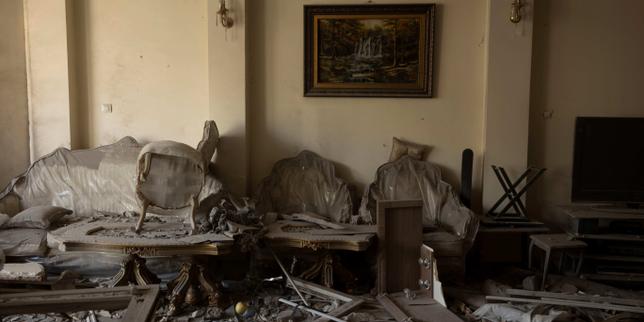
Walk through the streets of Tehran today and you won't just see smog or traffic. You'll see a profound, heavy exhaustion. It's the kind of fatigue that comes from years of high-stakes hope followed by the crushing weight of reality. For many Iranians, the current state of the nation isn't just a political crisis. It's a personal inventory of loss. They look at the "Woman, Life, Freedom" protests of 2022, the economic shifts, and the shifting regional alliances, and they ask a simple, brutal question. What actually changed?
The answer for most is nothing. Or worse, things got more expensive, more restrictive, and more dangerous. While international headlines focus on uranium enrichment or drone exports, the people on the ground are counting the cost of a life spent waiting for a breakthrough that never arrives. They've seen destruction. They've seen their friends disappear into the prison system. Yet, the old guard remains, and the currency continues its slow-motion crash against the floor.
Why the Iranian middle class is disappearing
Economies don't just shrink. They swallow people. In Iran, the middle class is being digested by a combination of systemic corruption and the relentless pressure of international sanctions. If you talk to a shopkeeper in the Grand Bazaar or a tech worker in North Tehran, the story is the same. They're working twice as hard to buy half as much.
The rial has become a joke that isn't funny anymore. When the currency loses value at this speed, you aren't just losing money. You're losing time. You're losing the ability to plan a wedding, buy an apartment, or even imagine a retirement that doesn't involve selling off family heirlooms. This isn't a "fluctuation." It's an erasure of a generation's labor.
Inflation isn't just a statistic in the World Bank reports. It's the reason a young couple decides not to have a child. It's the reason a surgeon drives an unofficial taxi at night. People are tired of being told to wait for the "resistance economy" to bear fruit. They've been resisting for decades. They want to live.
The psychological toll of the 2022 aftermath
The 2022 protests following the death of Mahsa Amini felt different. There was a spark that seemed like it might finally light a fire under the status quo. For a few months, the atmosphere was electric. People felt a sense of agency they hadn't felt in years. But the crackdown that followed was surgical and relentless.
Executions. Long prison sentences. The "morality police" returning to the streets under new names and with new technology. The state didn't just win the physical battle; it doubled down on the psychological one. This creates a specific kind of bitterness. It’s the bitterness of knowing that you risked everything and the needle barely moved.
Many young Iranians now describe a sense of "internal migration." They're still in the country physically, but they've checked out mentally. They don't engage. They don't watch state TV. They use VPNs to live in a digital world that looks nothing like their physical one. It’s a survival mechanism, but it’s also a tragedy. A country where the youth have mentally emigrated is a country with a hole in its heart.
Reform is a word that has lost its meaning
There was a time when the "Reformist" camp in Iranian politics offered a glimmer of a path forward. Figures like Khatami or Rouhani promised a slow, steady opening of society. But that bridge is burned. The public has realized that the system's structure is designed to absorb reform and neutralize it.
Every time a moderate gains some ground, the unelected bodies—the Guardian Council, the Office of the Supreme Leader—clamp down. The result? Total apathy. Recent election turnouts have been at historic lows. People aren't boycotting because they're lazy. They're boycotting because they've done the math. They know that the ballot box isn't where the power lives.
This leaves the country in a dangerous stalemate. The government can't win back the hearts of the people, and the people haven't yet found a way to dislodge the government. So, everyone sits in the bitterness. It's a stalemate of misery.
The brain drain is a national emergency
If you can leave, you do. That’s the unspoken rule in modern Iran. It’s not just the activists or the political dissidents anymore. It’s the engineers, the nurses, the artists, and the researchers. Iran is effectively subsidizing the workforces of Europe, Canada, and the Gulf States by educating its best and brightest only to see them flee the moment they get a visa.
- Doctors are leaving because the healthcare system is buckling under the lack of imported medicine and equipment.
- IT professionals are leaving because the internet is a minefield of filters and outages.
- Students are leaving because a degree from a top Iranian university doesn't guarantee a life above the poverty line.
This isn't just a loss of talent. It's a loss of the very people who could rebuild the country if things ever did change. The "destruction" the competitor article mentions isn't just physical buildings or broken protests. It's the dismantling of the human capital of a 3,000-year-old civilization.
Reality check on international intervention
Let’s be honest. The West’s approach hasn't helped the average Iranian. Sanctions were supposed to squeeze the government into submission. Instead, they've squeezed the grandmother trying to buy cancer medication and the student trying to pay for a TOEFL exam. The ruling elite always finds a way to get their luxury cars and their high-end electronics through "shadow banking" and smuggling routes.
The "maximum pressure" campaign didn't lead to a democratic breakthrough. It led to a more paranoid, more militarized state. The IRGC (Islamic Revolutionary Guard Corps) now controls massive swaths of the economy. When the formal economy dies, the black market thrives, and those with the guns always run the black market.
The cycle of hope and heartbreak
Every few years, there’s a new event. A protest. A funeral. A sudden shift in the exchange rate. The world watches and wonders if this is "the big one." But for those living in it, these aren't plot points in a geopolitical thriller. They're scars.
The bitterness comes from the repetition. It’s the realization that the "changes" promised by politicians—both domestic and foreign—rarely trickle down to the dinner table. People are tired of being used as pawns in a Great Power game while they can't afford a kilogram of red meat.
You see this bitterness in the art, the music, and the literature coming out of the Iranian underground. It’s dark, cynical, and deeply beautiful. It reflects a society that has seen the worst of humanity and is still trying to find a reason to wake up tomorrow.
Finding the path forward
If you want to understand Iran in 2026, stop looking at the nuclear centrifuges. Look at the people. Look at the way a young woman wears her scarf—just enough to follow the law, but defiant enough to show she doesn't believe in it. Look at the way neighbors share food and resources because the state has failed to provide a safety net.
True change in Iran won't come from a signature on a treaty in Vienna. It won't come from a foreign-backed coup. It will come when the internal pressure of a disillusioned, educated, and exhausted population finally outweighs the state's ability to repress them. Until then, the bitterness remains.
Stop looking for quick fixes. Start supporting the civil society that actually exists. Support the Iranian artists, the independent journalists, and the families of political prisoners. Don't let their stories be reduced to a headline about "instability." They're people, and they're tired of being told that their destruction was for nothing. Pay attention to the digital rights of Iranians, as internet access is often their only lifeline to the outside world. Advocate for targeted sanctions that hit the leadership, not the common citizen’s access to life-saving goods. The bitterness is real, but it isn't the end of the story.


