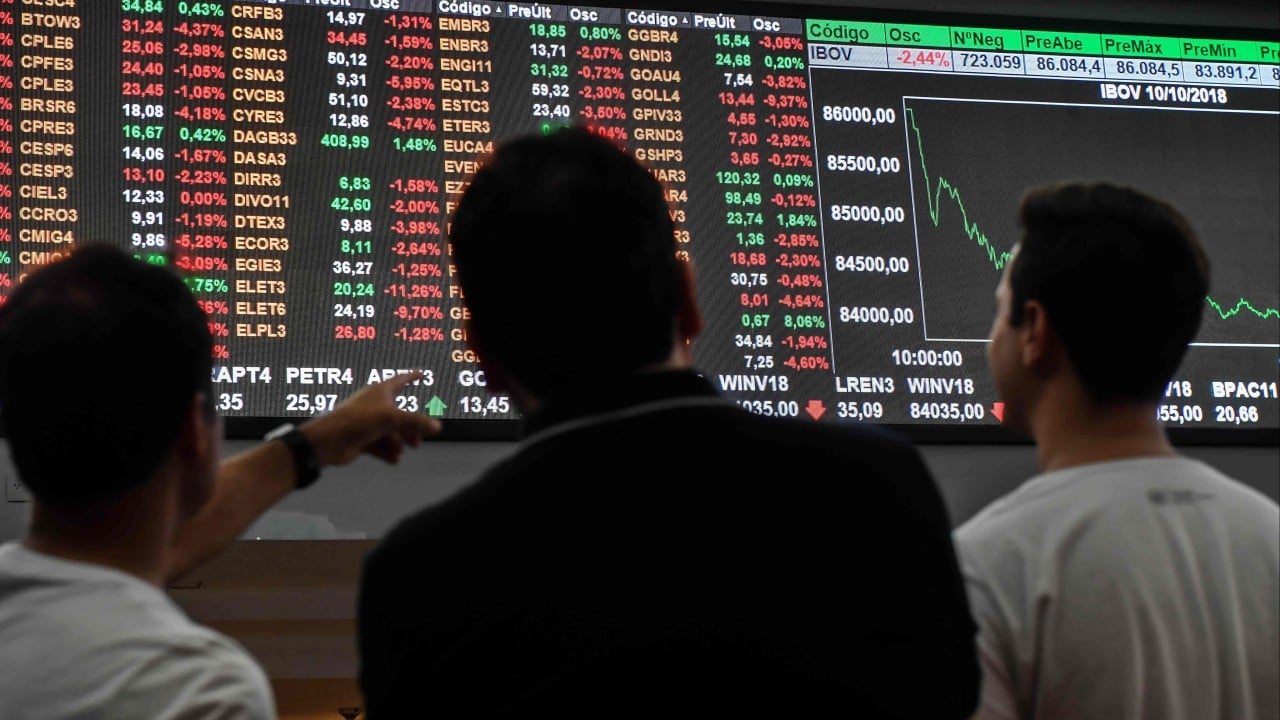
An analyst in a glass tower in São Paulo stares at a flickering terminal. The numbers are green, but they represent something more than a percentage point increase. They represent a bridge built across an ocean of historical hesitation. For decades, the flow of global capital felt like a one-way street, a predictable current moving from the West toward the rest of the world. That current has changed direction.
Money is no longer just looking for a home; it is looking for a partner.
China’s financial evolution is often described in the dry, brittle language of regulatory frameworks and bilateral agreements. We hear words like "Connect" and "Scheme" and our eyes glaze over. But strip away the jargon and you find a story of survival, ambition, and the quiet reconfiguration of how the world’s wealth is shared. Brazil is the latest to join a growing circle of nations—five distinct regions now—that have plugged their nervous systems directly into the Chinese market.
It is a handshake that spans the globe.
The Mechanics of the Invisible Bridge
To understand why a bond trader in Brazil cares about a policy shift in Beijing, you have to understand the "Connect" model. Imagine two massive, high-pressure reservoirs of water separated by a mountain range. For years, if you wanted to move water from one to the other, you had to carry it in buckets—slow, expensive, and prone to spilling. The Connect schemes are the pipelines bored through the rock.
These pipelines allow investors in one region to buy and sell securities in the other without leaving their home exchange. It sounds simple. It is actually a feat of legal and technical wizardry that bypasses the need for complex licenses or the risky business of moving physical currency across borders in a hurry.
When the "Stock Connect" first linked Hong Kong and Shanghai in 2014, it was a tentative experiment. It was a crack in the door. Now, that door is being ripped off the hinges.
The Five Pillars of a New Map
The map of Chinese financial integration isn’t a sprawl; it is a deliberate, strategic star. Brazil is the newest point on that star, but to see where we are going, we have to look at the points that were already there.
First, there is Hong Kong. This is the original gateway, the lungs through which the Chinese financial system breathes. It is the proof of concept. If you are a global fund manager in New York or London, your path into the mainland almost certainly runs through the streets of Central.
Then, there is London. The link between the London Stock Exchange and Shanghai wasn't just a business deal; it was a marriage of the old world and the new. It allowed British investors to tap into the growth of Chinese "A-shares"—the stocks of companies that actually build the phones and cars of the 21st century—while sitting at a desk in the Square Mile.
Germany followed. The Frankfurt connection brought the industrial heart of Europe into the fold. This wasn't about speculative trading. It was about deep, industrial synergy. German capital meeting Chinese manufacturing scale.
Switzerland joined the ranks soon after. Known for its legendary stability and neutrality, the Swiss connection signaled that the Chinese market was no longer "emerging." It had arrived. It was now a place where the world’s most conservative wealth felt comfortable resting.
And now, we have Brazil.
Why the Southern Cross Matters
The inclusion of Brazil marks a fundamental shift in the narrative. This isn't just another developed European economy seeking a piece of the action. This is the "Global South" asserting its own financial gravity.
Consider a hypothetical investor named Elena. She runs a pension fund in Brasília. For years, her options for diversification were limited to the local market or the well-trodden paths of the US Treasury market. When Brazil and China formalized their memorandum of understanding to link their markets, Elena’s world expanded.
She can now look at a bond issued by a green energy firm in Shenzhen as easily as she looks at a domestic infrastructure project. The "Bond Connect" and "Stock Connect" frameworks mean that the massive pools of savings in Brazil and the massive industrial opportunities in China are finally speaking the same language.
This isn't about charity. It’s about the brutal, honest logic of the ledger. Brazil provides the raw materials—the soy, the iron ore, the oil—that fuel Chinese growth. It only makes sense that the financial systems that fund these industries should be as integrated as the shipping lanes that carry the cargo.
The Friction of the Old Guard
Of course, this expansion does not happen in a vacuum. There is a palpable tension in the air. For the better part of a century, the US Dollar has been the undisputed king, the "exorbitant privilege" that allowed one nation to set the rules for everyone else.
By creating these direct "Connect" schemes, China and its partners are quietly building a parallel infrastructure. They are proving that you don't always need to go through the traditional Western intermediaries to settle a trade or buy a bond.
Is it risky? Every pioneer takes a risk. The Chinese market has its own unique volatility, its own regulatory surprises, and its own cultural nuances that can baffle a Western-trained mind. There are moments of panic when the "pipeline" seems to clog, or when geopolitical tensions threaten to shut the valves.
But the alternative is stagnation.
The investors who are moving into these schemes aren't doing it because they are ideologues. They are doing it because the math demands it. If you ignore a market of 1.4 billion people that is moving toward a more transparent, accessible financial system, you aren't being cautious. You are being obsolete.
The Human Toll of Transparency
We often talk about "markets" as if they are sentient beings, but markets are just groups of people making decisions based on fear and hope.
The Connect schemes have forced a level of transparency on Chinese firms that was unthinkable twenty years ago. To be listed or traded through these international links, companies must adhere to higher standards of reporting. They have to answer to Elenas in Brasília and fund managers in Zurich.
This pressure creates a ripple effect. It improves corporate governance. It protects the small-time saver who doesn't even know what a "Connect scheme" is, but whose retirement fund is now slightly more resilient because it isn't eggs-in-one-basket territory anymore.
The Quiet Velocity of Change
Change in the world of high finance doesn't usually happen with a bang. It happens with the steady, rhythmic clicking of keys. It happens when a new tab appears on a trading screen in São Paulo. It happens when a bond coupon is paid in Yuan and settled in Reais without a hitch.
The news that China now has these schemes in five distinct regions—Hong Kong, the UK, Germany, Switzerland, and Brazil—is not just a milestone. It is a transformation of the world's economic circulatory system.
The bridge to Brazil is more than a line on a map. It is an admission that the old centers of power no longer hold a monopoly on the future. The star is growing. The points are connecting. And the person in the glass tower in São Paulo is no longer just watching the world go by.
They are finally, inextricably, a part of it.
The terminal blinks. A trade is executed. Somewhere, thousands of miles away, a factory starts its morning shift, funded by capital that traveled a path that didn't exist a decade ago. The mountain has been bored through. The water is flowing.
The only question left is who will be the next to tap into the line.