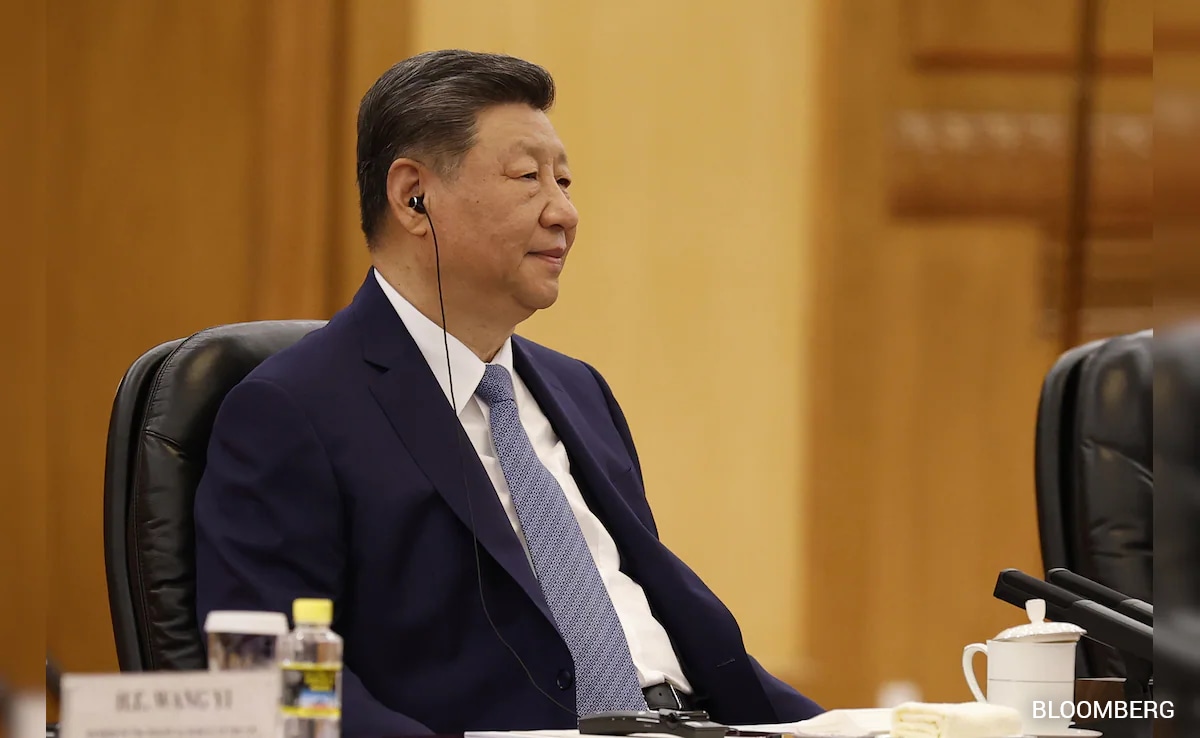
The physical closure or sustained disruption of the Strait of Hormuz represents the single greatest systemic risk to the Chinese industrial base. While historical Chinese foreign policy favored a "free rider" approach—relying on the United States Fifth Fleet to guarantee maritime security while maintaining a policy of non-interference—the recent direct communication between Xi Jinping and Saudi Crown Prince Mohammed bin Salman signals a fundamental pivot. China is transitioning from a consumer of security to a broker of it, driven by the inescapable mathematics of energy dependency and the fragility of the "String of Pearls" logistics network.
The Arithmetic of Dependency
China’s intervention is not a gesture of diplomatic goodwill but a response to a critical bottleneck in its national energy security function. The logic of this intervention can be broken down into three primary variables:
- The Import Ratio: China imports approximately 70% of its crude oil, with roughly 40% of those imports originating from the Persian Gulf. Unlike the United States, which has achieved near-total energy independence through shale production, China’s industrial output is tethered to the stability of the Hormuz transit corridor.
- The Strategic Petroleum Reserve (SPR) Constraint: While China’s SPR remains opaque, estimates suggest a 90-day coverage window. A prolonged closure of the Strait would trigger an exponential increase in domestic production costs, leading to price shocks that the Chinese manufacturing sector—already facing deflationary pressures—cannot absorb.
- The Insurance Premium Escalation: Even without a physical blockade, the mere threat of kinetic activity in the Strait drives "War Risk" insurance premiums for Very Large Crude Carriers (VLCCs). These costs are passed directly to the state-owned enterprises (SOEs), eroding the trade surplus that anchors the Yuan.
The Three Pillars of Chinese Mediation
Beijing’s strategy in the Gulf operates through a tripartite framework designed to minimize friction while maximizing leverage over both Riyadh and Tehran.
Economic Entrenchment as a De-escalation Tool
China utilizes its status as the primary buyer for both Iranian and Saudi crude to enforce a "Mutual Destruction" logic. By signaling that a conflict in the Strait would lead to a total cessation of Chinese purchases, Beijing creates a floor for regional stability. This is not based on shared values but on the synchronized realization that neither the Saudi Vision 2030 nor the Iranian survival economy can function without the Chinese petroyuan.
The Security-Development Nexus
China proposes an alternative to the Western "Security First" model. The Chinese framework argues that regional stability is a byproduct of infrastructure integration. By linking the Belt and Road Initiative (BRI) to Saudi Arabia’s industrial cities, China aims to make the physical destruction of infrastructure too costly for any regional actor to contemplate. The logic follows that a missile strike on a port facility is no longer just an attack on a sovereign neighbor, but an attack on Chinese-invested capital.
Strategic Ambiguity and Neutrality
By maintaining a "Comprehensive Strategic Partnership" with both sides of the Persian Gulf, China avoids the trap of the regional security dilemma. Unlike the United States, which is historically and militarily aligned with the GCC states against Iran, China maintains a functional relationship with the Islamic Revolutionary Guard Corps (IRGC). This allows Beijing to act as a backchannel for de-escalation that the West cannot access.
The Cost Function of Regional Instability
If the Strait of Hormuz is the "jugular" of global energy, the cost of its constriction is non-linear. A 20% reduction in flow through the Strait does not lead to a 20% increase in price; it leads to a total breakdown in the global "just-in-time" energy delivery system.
The primary mechanism of failure is the Maritime Logistics Feedback Loop:
- Stage 1: Kinetic threat in the Strait causes tankers to divert or anchor in safe harbors (e.g., Fujairah).
- Stage 2: Global tanker supply is artificially restricted, causing spot rates for shipping to skyrocket globally, not just in the Gulf.
- Stage 3: Refineries in East Asia (China, Japan, South Korea) begin drawing down inventories, leading to a spike in refined product prices (diesel, jet fuel).
- Stage 4: The "Bullwhip Effect" hits global manufacturing, as the cost of shipping finished goods increases due to higher bunker fuel prices.
China’s rare, high-level call to the Saudi leadership suggests that Beijing’s internal modeling shows the region is approaching Stage 1.
Tactical Realities of the Hormuz Chokepoint
The Strait of Hormuz is roughly 21 miles wide at its narrowest point, with shipping lanes consisting of twond-mile-wide channels separated by a two-mile buffer zone. This geography makes it susceptible to asymmetric naval warfare, specifically:
- Sea Mines: Low-cost, high-impact denial assets that require specialized minesweeping capabilities that China’s People's Liberation Army Navy (PLAN) currently lacks the footprint to deploy in the Gulf.
- Swarm Tactics: Fast inshore attack craft (FIAC) that can overwhelm traditional destroyer-based defenses.
- Anti-Ship Cruise Missiles (ASCMs): Launched from mobile coastal batteries, making them difficult to preemptively neutralize without a full-scale air campaign.
China’s diplomatic push is a recognition that it possesses the economic power to stop a war but lacks the blue-water naval capacity to win one in this specific theater. The PLAN’s base in Djibouti is a logistics hub, not a carrier strike group base. Therefore, diplomacy is the only tool currently in the Chinese inventory capable of protecting its energy interests.
The Strategic Pivot: From Riyadh to Tehran
The call to Saudi Arabia is only half of the equation. The unspoken reality of Chinese strategy is the pressure applied to Tehran. China is the only major global power with significant "soft" and "hard" economic leverage over Iran.
The China-Iran 25-Year Cooperation Program serves as the ultimate carrot. However, the stick is the potential for China to diversify its energy mix toward Russian or Central Asian sources via overland pipelines (e.g., Power of Siberia 2). If Iran facilitates a closure of the Strait, it risks permanent displacement in the Chinese energy market by Russian suppliers who are currently desperate for market share and offer a land-based, "Strait-free" delivery mechanism.
Limitations of the Chinese Broker Model
The Chinese approach is not without its systemic vulnerabilities. The primary risk is the Enforcement Gap. While China can negotiate a "reopening" or a "de-escalation," it lacks the regional security architecture to enforce it.
- Proxy Autonomy: Regional actors like the Houthis or various militias often operate with a degree of autonomy that transcends state-level diplomatic agreements. China’s "State-to-State" focus ignores the sub-state actors who can trigger a crisis with a single drone strike.
- The "Free Rider" Paradox: If China successfully stabilizes the region, it inadvertently maintains the global status quo that benefits its competitors. Conversely, if it fails, it suffers more than its competitors.
- The US Response: Any increase in Chinese influence in the Gulf triggers a competitive response from Washington. The "Integrated Deterrence" model used by the US is increasingly viewing Chinese diplomatic success as a threat to the US-Saudi security pact.
The Operational Blueprint for Regional Stability
For this diplomatic intervention to translate into long-term maritime security, the following structural shifts are required:
- Integration of the IMX/CTF-151: China must move beyond unilateral calls and begin coordinating—even if informally—with the International Maritime Exercise or Combined Task Force 151. Shared situational awareness is the only way to prevent accidental kinetic escalations.
- Expansion of Land-Based Bypass Infrastructure: Support for the East-West Pipeline in Saudi Arabia and the Habshan–Fujairah pipeline in the UAE must be a priority for Chinese investment. Reducing the percentage of oil that must pass through Hormuz is the only way to lower the strategic value of the chokepoint.
- Digital Maritime Sovereignty: Implementation of blockchain-based tracking for cargo and insurance in the Gulf could allow for "Green Lanes" that remain functional even during periods of high tension, providing a technical solution to a political problem.
The era of Chinese passivity in the Middle East is over. The call between Xi and MBS signifies that Beijing has calculated the cost of inaction and found it higher than the cost of intervention. The move is a clinical, data-backed realization that the "Chinese Dream" is fundamentally a maritime project, and that project is currently at the mercy of the narrow, turbulent waters of the Strait of Hormuz.