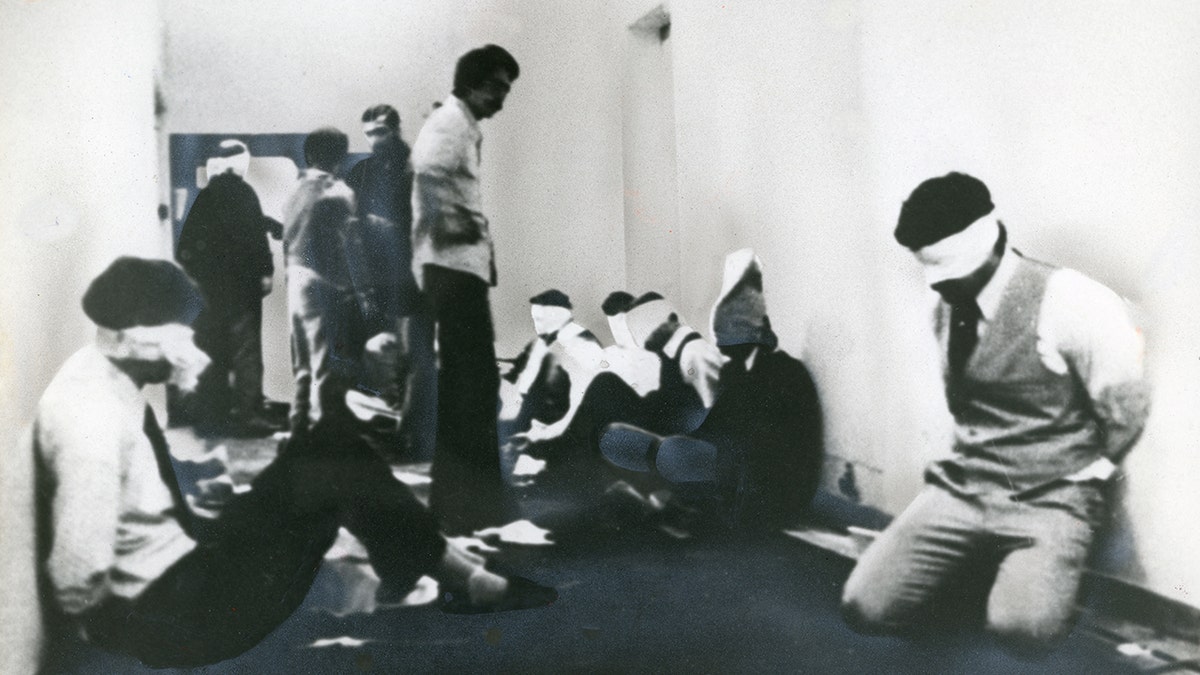
The dawn in Tehran does not break with a soft glow. It arrives with a cold, metallic sharpness that cuts through the smog of the city, catching the light on the high, concrete walls of Evin Prison. For most people, the morning sun means the start of a commute, the scent of fresh barbari bread, and the mundane frustrations of a day ahead. For others, it is the final clarity before the world goes dark.
Two men, identified by the Iranian judiciary as Vahid Salami and Mansour Rasouli, stood at the edge of that darkness this week. They were not names known to the world until the moment they ceased to breathe. To the state, they were components of a "spy network linked to Israel." To the families they left behind, they were holes in the fabric of a life that can never be mended.
The official report from Mizan, the news agency of the Iranian judiciary, is sterile. It uses words like "corruption on earth" and "intelligence cooperation." It lists accusations of gathering classified information and passing it to Mossad. It reads like a ledger of treason, black and white, devoid of the sweat, the shaking hands, or the weight of a noose.
But the reality of an execution is never sterile. It is a sensory assault.
The Weight of a Secret
Imagine the psychological landscape of a man accused of espionage in a country where the walls have ears. In the quiet corners of Tehran or the bustling streets of Isfahan, the line between a conversation and a crime is razor-thin. The state claimed these men were part of a sophisticated apparatus designed to undermine national security. They were accused of identifying sensitive sites and relaying data to handlers across the border.
Whether the charges were accurate or the product of a judicial system that human rights organizations frequently describe as a "black box" is a question that haunts the periphery of every such case. In Iran, the legal process for those accused of security crimes is often a ghost. There are no televised debates between high-powered lawyers. There is often no access to independent counsel. There is only the interrogation, the confession—frequently alleged to be coerced—and the final, irrevocable verdict.
The stakes are invisible until they are absolute. In the world of high-stakes intelligence, humans are often treated as "assets." It is a cold, business-like term. An asset is used until its value is depleted. An asset is discarded when the risk of holding it outweighs the reward. If these men were indeed spies, they were the smallest cogs in a machine that spans continents. If they were innocent, they were casualties in a shadow war they likely never understood.
The Machinery of the State
Iran leads the world in executions per capita. This is not a statistic meant to shock; it is a structural reality of how the current administration maintains its grip on the narrative of safety and sovereignty. By executing those accused of working for Israel, the state sends a message that is loud, clear, and terrifying. It is a performance of power.
The judiciary’s report claimed that Salami and Rasouli were involved in a plot that included kidnapping and obtaining "fake confessions" from Iranian officials. This adds a layer of cinematic tension to the story—a world of safe houses, encrypted messages, and midnight handoffs. But the "theatre" of the court hides the human cost. When a man is hanged in Iran, it is often done in the early hours. The family is sometimes notified only after the body has been moved to the morgue.
The psychological toll on the populace is a slow-acting poison. When the news of an execution breaks, it ripples through the tea shops and the Telegram channels. People look at their neighbors with a little more suspicion. They speak a little more softly. The state’s goal is not just to punish the individual, but to discipline the collective.
A Shadow War with Human Faces
The conflict between Iran and Israel is often described in terms of "proxy wars," "nuclear capabilities," and "geopolitical chess." These are grand, sweeping terms that mask the granular misery of the individuals caught in the crossfire. For decades, this shadow war has been fought in the hallways of cyber-centers, the laboratories of nuclear scientists, and the prison cells of the accused.
Consider the life of an accused spy. It is a life lived in a permanent state of hyper-vigilance. Every phone call is a potential trap. Every new acquaintance is a possible informant. The "spy network" described by the Iranian judiciary is a web that, once entered, has no exit. If the state decides you are a thread in that web, the sheer weight of the institution will eventually pull you under.
The judiciary claimed that these men were compensated with "large sums of money." In the narrative of the state, they were mercenaries who sold their souls and their country for a paycheck. Yet, history often shows that those recruited into such dangerous work are frequently the desperate, the disillusioned, or the deceived. They are promised a way out of a dead-end life, only to find they have walked into a graveyard.
The Silence After the Snap
Justice, in its truest sense, requires transparency. It requires the ability for the public to see the evidence, to hear the defense, and to believe that the outcome was dictated by law rather than politics. When the judiciary outlet reports an execution, it provides the conclusion but hides the math. We are told they were guilty because they were executed. We are told they were spies because the state said they were.
The tragedy of the Iranian execution system is the lack of a "second act." There is no room for an appeal to the truth once the trapdoor has opened. The finality of the act is its most potent weapon. It silences the accused forever, ensuring that their version of the story—whatever it may have been—is buried with them.
In the streets of Tehran today, the traffic will be just as dense as it was yesterday. The sun will set behind the Alborz mountains, painting the sky in bruises of purple and gold. Life moves on because it must. But in two homes, there are chairs that will stay empty. There are voices that will never again be heard over the dinner table.
Behind the headlines of "Spy Network Linked to Israel" lies the jagged reality of a state that uses death as a comma in its political sentences. The two men are gone. The shadow war continues. The "spy network" will be replaced by new names and new faces, each one a temporary "asset" in a game where the only certain outcome is the cold, sharp arrival of the dawn.
The noose does not just end a life. It tightens around the throat of a nation's conscience, a reminder that in the battle between empires, the individual is always the first thing to be sacrificed. When the news cycle moves on to the next headline, the silence left behind in that prison yard remains, heavy and absolute.