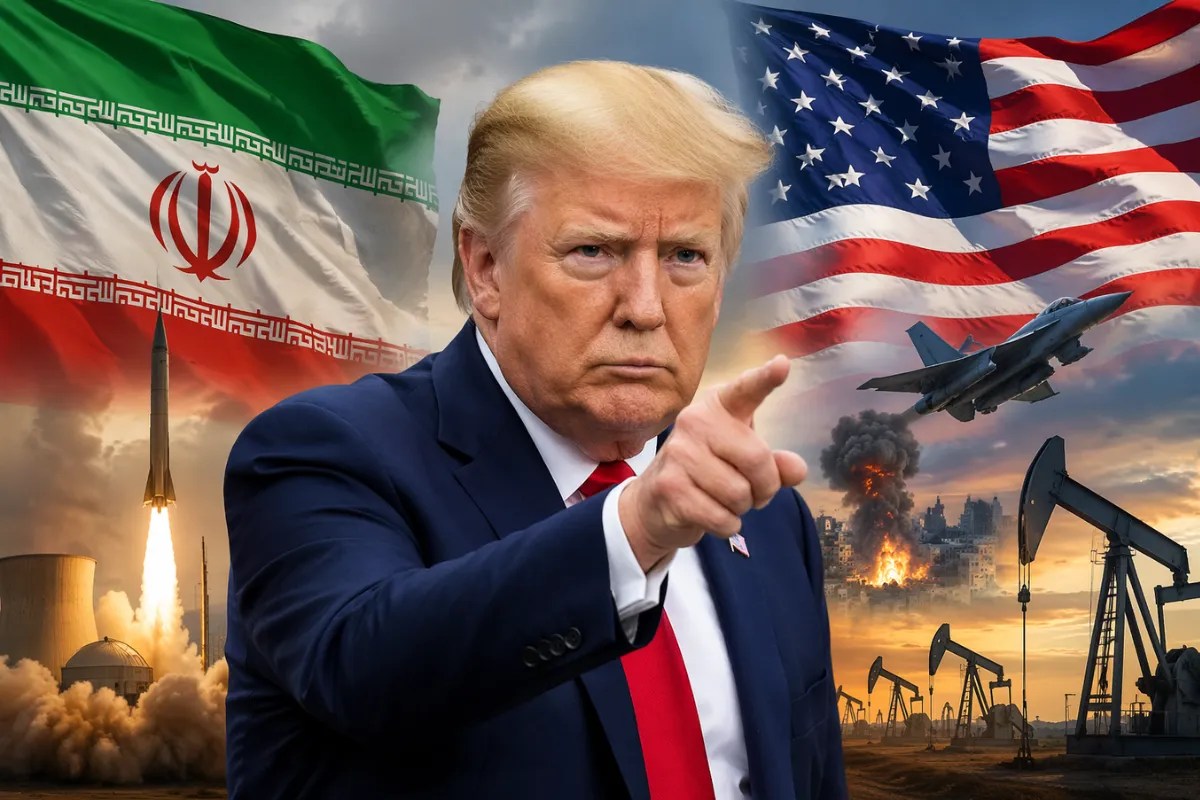
The headlines are screaming about a "final ultimatum." Three to five days. A ticking clock. Total destruction of the Iranian nuclear program or a regime-ending strike. It’s a compelling narrative for cable news junkies, but it ignores every fundamental law of geopolitical chess played in the Middle East over the last forty years.
Trump doesn't do "final" ultimatums. He does high-stakes marketing. To treat a leaked three-day window as a tactical reality isn't just naive; it’s a failure to understand how brinkmanship actually functions in the 2020s.
The Logistics of the Empty Threat
War isn't a microwave dinner. You don't just "hit" Iran because a clock hit zero on a Tuesday. To believe the narrative that a three-day response window dictates the start of a regional conflagration is to ignore the massive logistical tail required for a sustained air campaign against a hardened, decentralized adversary.
If the U.S. were truly 72 hours away from a kinetic strike of the magnitude being reported, the indicators would be visible from space and felt in every global market. We aren't seeing the necessary surge in tanker support, the specific repositioning of carrier strike groups into high-threat envelopes, or the massive evacuation of non-essential personnel from neighboring "partner" nations who would face the immediate brunt of Iranian retaliation.
The "ultimatum" is a psychological operation, not a military one. It's designed to squeeze the Iranian Rial and force a panicked concession before a single Tomahawk leaves its tube.
Why a Strike is the Ultimate Policy Failure
The "lazy consensus" among hawks is that a surgical strike resets the clock. It doesn't. It smashes the clock and scatters the gears.
Military experts—the ones who actually have to plan these sorties—know that Iran’s nuclear infrastructure is buried under hundreds of feet of granite in places like Fordow. You don't "clean up" that problem in a weekend. You start a decade-long war that makes the occupation of Iraq look like a training exercise.
- The Centrifuge Fallacy: People think destroying a building stops the program. It doesn't. Knowledge is the weapon. Iran has the intellectual capital to rebuild, and a strike provides them the perfect "moral" justification to withdraw from the NPT entirely and sprint for a warhead.
- The Proxy Trap: Iran doesn't need to sink a U.S. destroyer to win. They just need to tell their regional affiliates to turn off the lights in the global oil market. A $200 barrel of oil is a more effective weapon against a U.S. President than a thousand ballistic missiles.
- The Domestic Rally: Nothing saves a struggling regime faster than foreign bombs. A strike would evaporate the internal dissent that has been the only real leverage the West has had over Tehran.
The Art of the No-Deal
The media portrays this as a binary choice: Iran submits or Iran burns. This is a fundamental misunderstanding of the "Maximum Pressure" playbook. The goal isn't necessarily a signed piece of paper or a mushroom cloud. The goal is the maintenance of a permanent state of crisis that justifies a specific domestic and regional posture.
In my years tracking these cycles, I’ve seen this exact "ticking clock" rhetoric used to shore up alliances in the Gulf and keep defense contractors in the black. When the five days pass and nothing happens, the goalposts will move. The "ultimatum" will be redefined as a "grace period," and the cycle of sanctions will simply deepen.
Addressing the "Nuclear Breakout" Panic
The most frequent question asked by the panicked public is: "What if they get the bomb tomorrow?"
The premise is flawed. Having enough highly enriched uranium (HEU) is not the same as having an deliverable nuclear weapon. There is the "weaponization" phase—miniaturizing a warhead to fit on a missile and ensuring it can survive the heat of re-entry. Iran is months, if not years, away from that specific technical milestone.
The three-day ultimatum is a response to a political timeline, not a technical one. It’s about optics before a summit or a domestic policy shift. It has nothing to do with the actual physics of a nuclear explosion.
The Real Cost of Bluster
The danger of the "Final Ultimatum" rhetoric isn't that it leads to war. It's that it leads to irrelevance. When you set a deadline and the world watches it expire with a whimper, you lose the only thing that keeps the peace: the credibility of your threat.
Washington is currently addicted to the "or else" school of diplomacy. But if the "or else" is never delivered, the adversary stops listening. Iran knows this. They’ve watched red lines being drawn in disappearing ink for decades. They aren't checking their watches; they're checking the price of gold and the resolve of the American voter.
Stop looking at the three-day countdown. Start looking at the back-channel negotiations in Oman. That's where the real movement happens, far away from the theatrical ultimatums designed to keep the 24-hour news cycle spinning.
The clock isn't ticking for Tehran. It's ticking for a foreign policy strategy that relies on noise because it lacks the stomach for the actual signal.