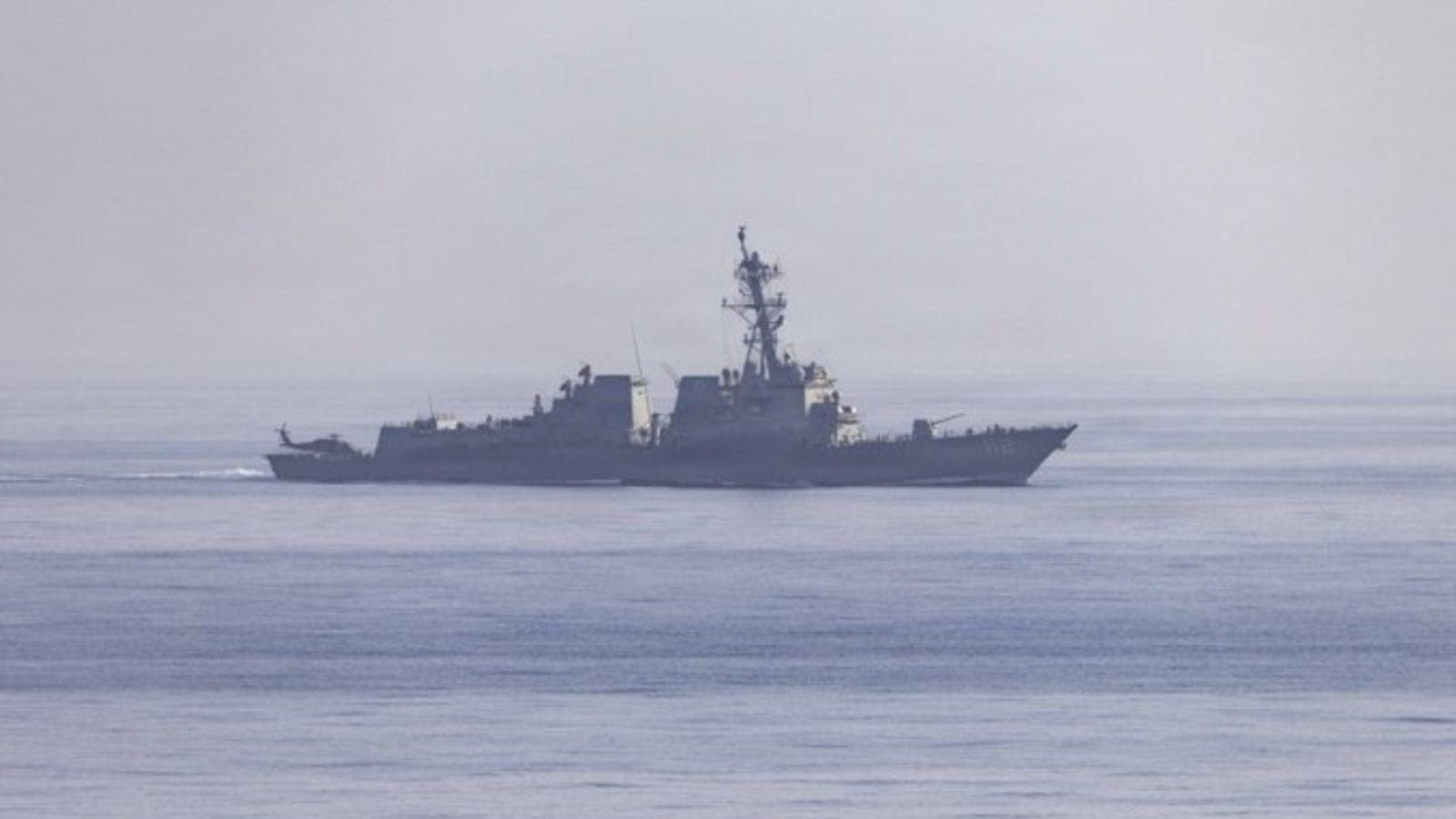
The security of the Strait of Hormuz represents a binary risk to European energy stability and global price equilibrium. While traditional maritime security paradigms rely on the projection of American naval hegemony, a burgeoning European initiative seeks to decouple regional security from Washington’s broader "maximum pressure" campaigns. This shift is not merely a diplomatic preference but a structural necessity driven by the divergence of transatlantic interests in the Persian Gulf. By analyzing the European-led mission through the lens of strategic autonomy, risk mitigation, and economic interdependence, it becomes clear that this mission is designed to insulate global trade from the escalatory cycles of U.S.-Iran friction.
The Tripartite Calculus of European Intervention
European nations—led by France, the Netherlands, and Denmark—are moving to establish a maritime observation mission that functions independently of the U.S.-led International Maritime Security Construct (IMSC). This decision is dictated by three distinct operational pressures:
- De-escalation vs. Deterrence: The U.S. model (Operation Sentinel) utilizes a high-visibility deterrent posture that Tehran perceives as an extension of economic warfare. Europe’s objective is de-escalation, requiring a presence that provides situational awareness without the "belligerent" signaling inherent in U.S. command structures.
- Legal and Diplomatic Preservation: Maintaining the Joint Comprehensive Plan of Action (JCPOA) requires European powers to remain neutral arbiters. Integrating into a U.S. command would effectively end the legal fiction of European neutrality, triggering Iranian retaliatory measures against EU-flagged vessels.
- Economic Continuity: Approximately 20% of the world’s oil and a significant portion of liquefied natural gas (LNG) pass through the Strait. For Europe, the cost of a full-scale kinetic conflict in the Gulf far outweighs the cost of maintaining a bespoke naval presence.
The Mechanics of Maritime Observance
The European mission operates on a "deconfliction" framework rather than a "confrontation" framework. This distinction is vital for understanding why specific nations refuse to merge their assets with the IMSC.
Information Superiority over Kinetic Force
Instead of deploying carrier strike groups, the European approach emphasizes Distributed Maritime Operations (DMO). This involves a network of frigates, surveillance aircraft, and liaison officers stationed at the French naval base in Abu Dhabi. The goal is to create a "transparent" maritime environment where miscalculations or "false flag" operations are identified in real-time, preventing the accidental ignition of a regional war.
Sovereignty and Flag Protection
Shipping companies operate on margins dictated by insurance premiums. When a region is declared a War Risk Area by the Joint War Committee (JWC), premiums skyrocket. A dedicated European mission provides a psychological and physical buffer that helps stabilize these "additional premiums" (APs) for European-owned tonnage, even if the vessels are not under direct escort.
The U.S. Disconnect: Divergent Risk Profiles
The friction between Washington and Brussels stems from a fundamental disagreement on the definition of security. To the United States, security in the Hormuz is achieved through the total attrition of Iranian capability. To Europe, security is the absence of disruption.
The Policy of Maximum Pressure
The U.S. "maximum pressure" campaign utilizes the U.S. Treasury as a primary combatant. Because European economies are more exposed to energy price volatility and possess fewer domestic reserves than the U.S., they cannot afford the "controlled instability" that Washington appears willing to tolerate. The U.S. has reached a level of shale-driven energy independence that grants it a geopolitical luxury Europe does not share: the ability to let the Middle East burn.
The Problem of Command and Control (C2)
A unified command under the U.S. Fifth Fleet would subject European naval assets to American Rules of Engagement (ROE). If a U.S. vessel engages an Iranian fast-attack craft, any European vessel in a unified task force becomes a legitimate target under Iran’s "reciprocal response" doctrine. By maintaining a separate C2 structure, Europe preserves a "firewall" between American kinetic actions and European maritime assets.
Structural Bottlenecks in European Naval Capacity
While the strategic intent is clear, the execution faces significant hardware and logistical constraints. European navies have undergone decades of post-Cold War contraction, leaving a deficit in hulls available for long-term deployment.
- Sustained Presence: Maintaining a single station in the Gulf requires a minimum of three to four hulls to account for transit time, maintenance cycles, and crew rotations.
- Logistical Nodes: The mission relies heavily on French infrastructure in the UAE. Without broader regional cooperation from littoral states like Oman or Kuwait, the mission’s endurance is capped by its reliance on a single primary hub.
- Political Fragmentation: Not all EU members agree on the "exclude the US" approach. This creates a tiered system of participation where some nations provide physical assets, others provide staff officers, and some offer only "political support."
The Cost Function of Neutrality
The primary risk of the European plan is the "middle-ground fallacy." By distancing themselves from the U.S., European nations risk losing the protection of the world’s most powerful navy. Conversely, by entering the Gulf at all, they risk being drawn into the very conflict they seek to avoid.
The effectiveness of this mission will be measured by two metrics:
- Insurance Premium Delta: The difference between insurance rates for vessels participating in the European mission versus those operating independently.
- Incident Frequency: Whether the presence of "neutral" European warships actually reduces the boarding and seizure of tankers by the IRGC.
Geopolitical Realignment and the Indo-Pacific Link
The Strait of Hormuz is not an isolated geography; it is the western terminus of the Indo-Pacific maritime corridor. European interest in Hormuz is a precursor to a larger strategic pivot. As China and India increase their naval footprints in the Western Indian Ocean, Europe must prove it can secure its own supply lines without total reliance on the American security umbrella. Failure in Hormuz would signal the end of Europe’s relevance as a global maritime actor.
The Strategic Path Forward
The establishment of a European-led maritime mission is a necessary exercise in risk compartmentalization. To succeed, the mission must move beyond mere observation and into active maritime diplomacy.
The immediate requirement is the formalization of a "Maritime Security Center" in the region that invites participation from non-aligned powers such as Japan and South Korea, who share Europe's vulnerability to energy shocks. This would transform the initiative from a "European" project into a "Global Consumer" project, further isolating the "maximum pressure" ideology from the functional requirements of global trade.
Naval assets must be deployed with ROEs that prioritize the "protection of the commons" over the "punishment of the adversary." This involves a persistent, non-threatening presence that utilizes electronic surveillance and transparent reporting to disincentivize clandestine attacks. If Europe can stabilize the Hormuz without the U.S., it establishes a template for "Strategic Autonomy" that can be applied to other contested waters, effectively ending the era where global trade security is a monopoly of the United States Navy.