The needle on the dashboard doesn't lie, but we often wish it would.
For Rajesh, a mid-level manager in the sprawling concrete maze of Gurgaon, that thin orange line hovering near 'E' isn't just a mechanical measurement. It is a silent thief. Every time global oil prices tick upward, his world shrinks. The weekend trips to see family in Jaipur vanish. The premium school supplies for his daughter are swapped for generic brands. The commute—that hour-long crawl through stagnant heat and exhaust—starts to feel less like a career necessity and more like a financial hemorrhage.
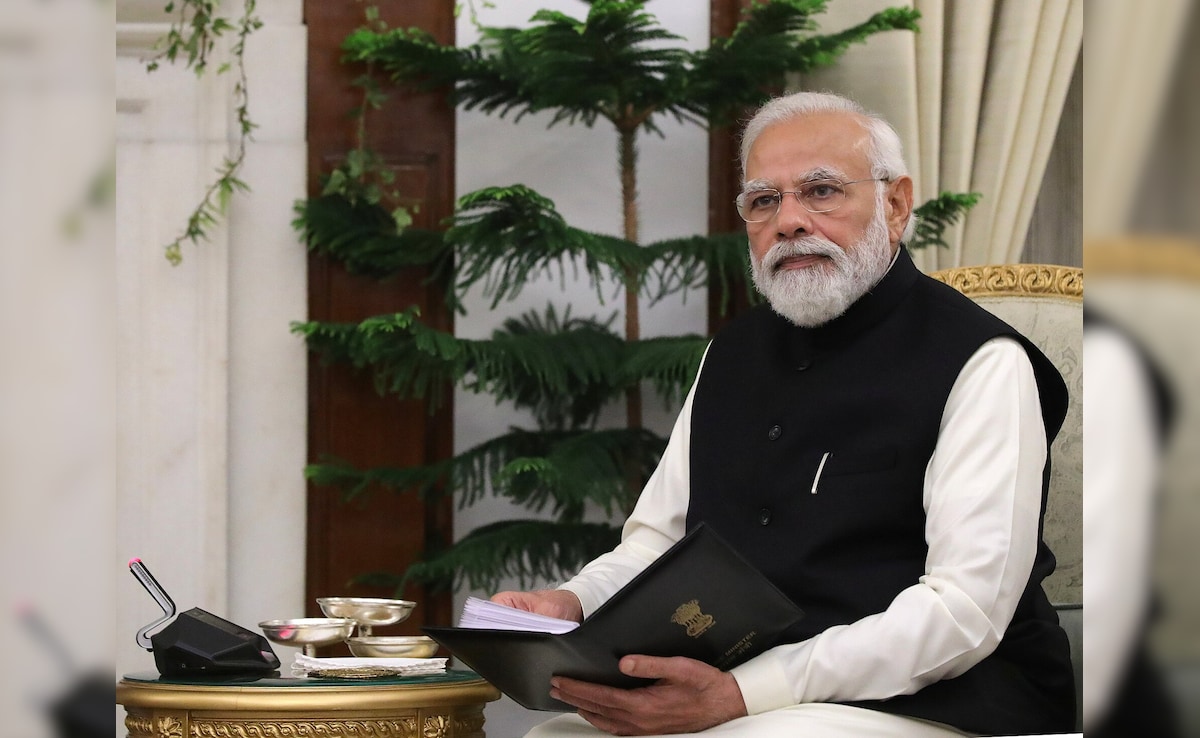
When Prime Minister Narendra Modi recently signaled a shift toward work-from-home (WFH) models and travel curbs to combat surging oil prices, the announcement was met with the usual flurry of dry economic analysis. Analysts talked about "import bills" and "fiscal deficits." But for the person sitting in the driver’s seat, the story isn't about macroeconomics. It is about the visceral relief of not having to turn the key in the ignition.
Oil is the invisible ghost in the room. It dictates the price of the tomato in your fridge and the cost of the shirt on your back. When it becomes scarce or prohibitively expensive, the gears of civilization don't just grind; they scream.
The Great Stillness
We have been here before, though the memory is often buried under the convenience of modern life. History shows us that when the flow of energy becomes a trickle, the only rational response is to stop moving.
Consider the 1970s. The world didn't just "adjust" to the oil crisis; it fundamentally rewrote the social contract of movement. In the United States, Oregon’s Governor Tom McCall didn't just ask people to save fuel; he shut down the Christmas lights. He banned the sale of gasoline on weekends. People didn't just drive less—they learned to live smaller. They walked to the corner store. They rediscovered their neighbors.
India’s current pivot toward WFH isn't a radical experiment. It is a survival reflex. By removing millions of cars from the road, the nation isn't just saving liters of fuel; it is reclaiming time and sanity. The "travel curb" isn't a restriction of freedom; it’s an insurance policy against a total economic freeze.
The Global Mirror
India is far from alone in this tightening of the belt. Across the map, nations are looking at their asphalt arteries and realizing they can no longer afford the blood flow.
In Germany, the government famously introduced the "9-euro ticket," a massive experiment in nearly-free public transit designed to lure people out of their gas-guzzling private shells. It worked. For a few months, the autobahn felt a little less like a pressure cooker. People who hadn't stepped foot on a train in a decade found themselves looking out the window at the countryside, watching the world go by at 100 miles per hour without the stress of a steering wheel in their hands.
Italy took a different path, focusing on the "Thermostat Operation." They realized that energy isn't just consumed on the road, but in the very air we breathe indoors. By capping the temperature of air conditioning in public buildings, they turned a collective sacrifice into a national statement. It was a reminder that comfort is a luxury of the stable, and in times of volatility, a few degrees of heat is a small price to pay for sovereignty.
The Hypothetical Life of Sarah
To understand the weight of these policies, let’s look at a hypothetical worker named Sarah in London. Under the weight of soaring energy costs, her city implements a "car-free Sunday" policy, similar to what was seen in the Netherlands during past crises.
At first, Sarah feels trapped. She worries about her errands, her social life, her agency. But then, the Sunday arrives. The roar of the city vanishes. The air, usually thick with the metallic tang of brakes and burnt fuel, turns sweet. She hears birdsong in the middle of a major intersection. The "curb" on her travel didn't steal her day; it gave her back her city.
This is the psychological pivot we are currently facing. We view WFH as a "concession" to a bad economy. In reality, it is a forced evolution toward a more sustainable way of existing. The oil price hike is merely the catalyst that pushed us off the fence.
The Invisible Stakes
Why does this matter so much now? Because the stakes are no longer just about the price at the pump. We are witnessing the decoupling of "productivity" from "proximity."
For decades, the assumption was that if you weren't in the office, you weren't working. If you weren't traveling to the meeting, the deal wasn't serious. Oil was the lubricant that allowed this inefficiency to persist. We spent billions of dollars and millions of man-hours moving bodies through space just to sit them in different chairs.
The surge in oil prices has stripped away the mask. We can no longer afford the vanity of the commute.
But there is a darker side to this necessity. Not everyone can work from home. The delivery driver, the nurse, the factory worker—they are the ones who bear the true brunt of the oil hike. When the white-collar workforce retreats to their home offices, the roads clear for those who have no choice but to be out there. In a strange twist of fate, travel curbs for the few become a lifeline for the many. It reduces the demand, stabilizes the price, and ensures that the ambulance has enough fuel to reach the hospital.
The Friction of Change
Change is never a smooth glide. It is a series of jolts.
The push for WFH in India faces massive cultural hurdles. Managers who grew up in the era of "face time" struggle to trust a screen. Employees struggle with the blurring lines between their dinner table and their desk. The infrastructure of the home—the Wi-Fi, the power backup, the quiet corner—is now as critical as the national highway system.
But the alternative is a slow grind to a halt. When oil prices climb, every kilometer driven is a gamble. A nation that refuses to adapt its movement patterns is a nation that is volunteering for bankruptcy.
The Prime Minister’s call wasn't just a suggestion; it was a map. He is pointing toward a future where the economy is built on bits and bytes rather than pistons and petroleum. It is a world where we move ideas instead of people.
The New Map
Imagine the map of your life. For years, it has been defined by the routes you take. The path to the office. The path to the airport. The path to the mall.
Now, imagine that map dissolving. The center of gravity shifts. The "local" becomes the "universal."
In France, they call it the "15-minute city"—an urban planning concept where everything you need is within a short walk or bike ride. This isn't just about environmentalism. It is about economic resilience. If you don't need oil to live your daily life, you are no longer a hostage to the whims of global supply chains or geopolitical skirmishes in corners of the world you’ve never visited.
India’s nudge toward WFH is the first step toward this resilience. It is an admission that the old way—the heavy, oily, expensive way—is breaking.
The Cost of Silence
There is a specific kind of silence that comes when a street is cleared of cars. It is heavy, expectant, and strangely hopeful.
As Rajesh sits in his home in Gurgaon, his laptop humming in the quiet of his living room, he watches the sun set over a highway that is noticeably less choked than it was a month ago. He isn't spending those forty dollars today. He isn't breathing in the grey mist of a thousand idling engines.
He is working. He is producing. He is contributing to the GDP. But he is doing it without the tax of the commute.
The ghost of the oil price hike still haunts the markets. It still threatens the stability of nations. But for the individual, the shift in perspective is the only real shield. We are learning, painfully and slowly, that our value isn't measured by the miles we clock, but by the work we do and the lives we actually get to live when the engine is finally turned off.
The road ahead is empty, not because we have nowhere to go, but because we have finally realized we might already be there.