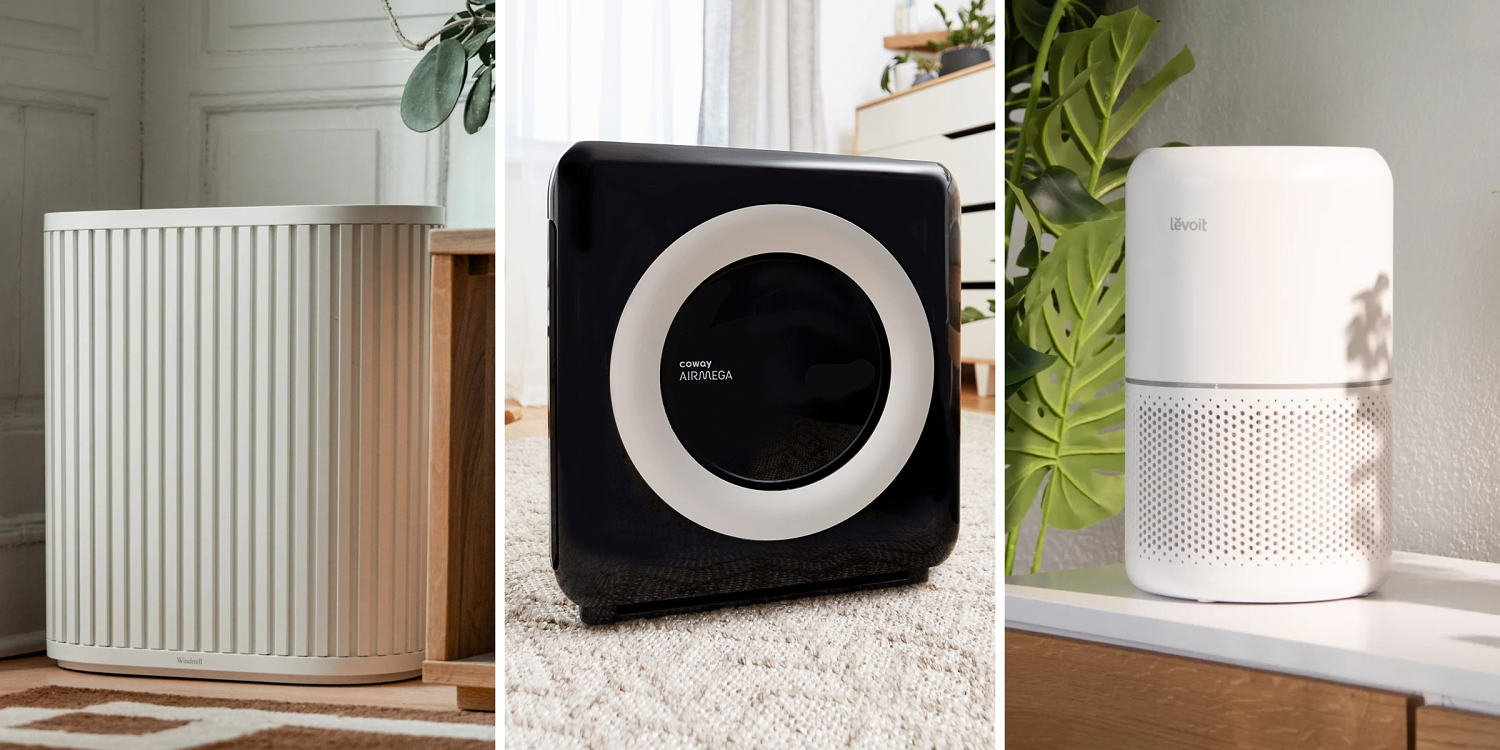
Walk into any high-end tech shop today and you’ll find a wall of plastic towers promising pristine air. They hum, they glow, and they drain your wallet. You bought one because you were told the air in your living room is a toxic soup of dander, VOCs, and mystery particles. You think that by dropping five hundred dollars on a machine with a fancy "HEPA" label, you are buying health.
You are buying a fan. That is it.
The industry thrives on your anxiety about invisible enemies. They sell you clean air, but they deliver a noisy box that moves air around a single corner of one room, leaving the rest of your home as stagnant as ever. I have spent a decade testing air quality monitors in real-world environments, not sterile labs. The data is clear: residential air purifiers are a glorified placebo for the vast majority of homeowners.
The Myth of the Clean Bubble
Manufacturers love to throw around CADR—Clean Air Delivery Rate. It sounds scientific. It sounds like a guarantee. In reality, CADR is a measurement taken in a small, controlled box where the device is placed in the center of the room.
Imagine a scenario where your living room is actually a series of interconnected hallways, nooks, and bedrooms with doors that open and close. Your expensive purifier sits by the sofa. It pulls air from three feet away, filters it, and spits it back out. Meanwhile, the air in the kitchen, the bedroom, and the hallway remains entirely untouched by your miracle machine.
To actually "clean" an entire home to the standard implied by these machines, you would need to run a unit in every single room, all at high speed, 24 hours a day. The electricity bill alone would be criminal. And the noise? You’d be living inside a jet engine.
The Filter Scam
Let’s talk about HEPA. High-Efficiency Particulate Air. It catches 99.97% of particles at 0.3 microns. It is a legitimate standard for hospitals and cleanrooms. It is utterly unnecessary for your living room.
Most people buy these machines to fight dust and pet dander. These are heavy particles. They fall to the ground quickly. A filter cannot "suck" dust off your floor from across the room. If the dust isn't airborne, the machine isn't touching it. You are better off buying a high-quality vacuum with a sealed HEPA exhaust and using it twice a week. That actually removes the source. The air purifier just waits for the dust to somehow drift perfectly into its intake.
Why You Are Asking The Wrong Question
People search for "the best air purifier" because they assume the air is the problem. It isn't. The problem is the enclosure.
If you have poor indoor air quality, you don't need a filter. You need to stop suffocating your home. Modern construction is designed to be airtight for energy efficiency. We have built giant, insulated Tupperware containers and we wonder why the air feels stale.
Instead of spending eight hundred dollars on a top-tier model that looks like a spaceship, spend two hundred dollars on a certified HVAC technician to check your ERV (Energy Recovery Ventilator) or HRVs. If you don't have one, that is your missing link. These systems bring in actual fresh air from outside, exchange the heat, and push the stagnant, CO2-heavy indoor air out.
An air purifier is a closed loop. It recirculates the same air, stripping out some particles while leaving CO2, methane, and other gaseous pollutants to build up. You are filtering the same "bad" air over and over, while the actual composition of the room remains stale.
The Economics of Noise
You want to know why these companies push "auto-mode" so hard? Because it keeps the fan speed low. When the fan speed is low, the machine is silent. If the machine were silent, you’d realize it isn't doing anything.
At the low settings these units default to, the air change rate is abysmal. You are getting maybe one-quarter of the air volume cleaned per hour. If you turn it up to the speed required to actually make a dent in particle counts, it sounds like a vacuum cleaner in the room. You can't watch television. You can't hold a conversation. So, you turn it down. And the cycle of uselessness continues.
A Better Way To Breathe
If you have genuine respiratory issues, you need a two-pronged strategy that has nothing to do with expensive consumer electronics.
- Source Control: This is the boring, unmarketable truth. Use low-VOC paints. Stop burning scented candles. Vacuum with a sealed, HEPA-certified machine. Cook with your range hood on—the one that actually vents outside, not the one that just recycles grease onto your cabinets.
- Ventilation: If you have a central heating and cooling system, upgrade to a high-MERV filter. MERV 13 is the sweet spot. It captures the particles you care about without choking your HVAC motor. If your system isn't rated for it, talk to a professional about modifying the intake.
The Dirty Truth About My Stance
Admitting this feels wrong to most people. We love the idea of a "fix" that we can just buy and plug into a wall. It feels like taking a pill to solve a lifestyle problem. It is much harder to clean your house, change your habits, and manage your home’s ventilation.
I have seen companies blow millions on marketing these plastic towers, knowing full well the data doesn't back their efficacy for general consumers. They rely on the fact that you will never verify the air quality improvement yourself. You see a light change from red to blue on the machine and assume you won. You didn't. The sensor on the machine is usually right next to the intake. Of course the air is clean right there. It just passed through the filter.
Stop looking for a machine to save you. You are the one fouling the air in your home. Take the machine off the pedestal, put it in the closet, and open a window. Or, if you really want to change the air, stop looking for gadgets and start looking at your home’s mechanical systems.
Efficiency isn't found in a box with an LED ring. It’s found in ventilation, filtration at the source, and a bit of effort. Anything else is just noise.