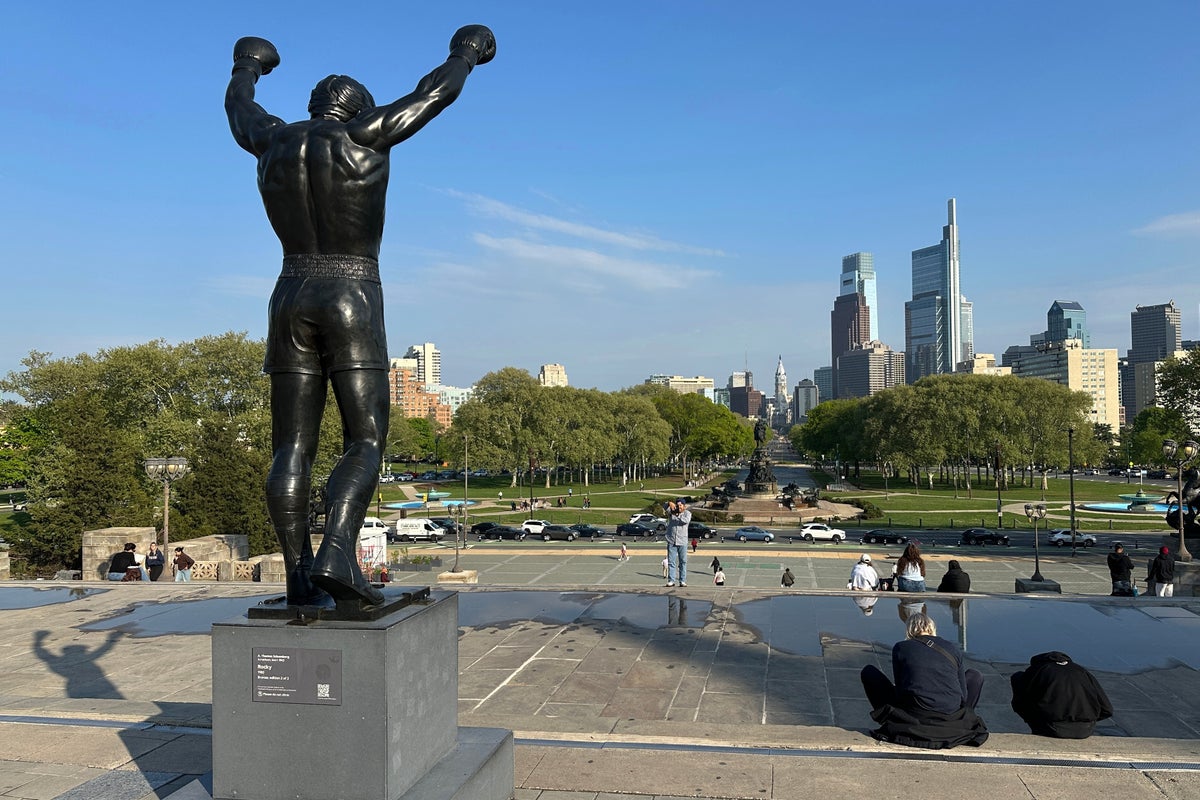
For decades, the bronze likeness of a fictional South Philly underdog stood as the most controversial resident of the Benjamin Franklin Parkway. It was a three-ton slab of Hollywood artifice that the city’s high-culture gatekeepers treated like a persistent stain on the doorstep of the Philadelphia Museum of Art. Now, a massive new exhibition dedicated to the Rocky franchise signals a total surrender by the establishment. Philadelphia has finally stopped fighting its most famous non-existent citizen.
The shift isn't just about tourism dollars or nostalgia. It represents a fundamental change in how cities curate their identities. While the Art Commission once labeled the statue a "prop" and banished it to a sports complex miles away, the new exhibition marks a formal merger between the museum's elite halls and the grit of the street. To understand how we got here, you have to look past the bronze and into the deep-seated friction between institutional prestige and the raw, populist energy that defines the city.
A History of Institutional Hostility
The statue wasn't a gift from the city or a commissioned piece of public art. Sylvester Stallone paid for it himself and placed it at the top of the "Rocky Steps" in 1980 while filming Rocky III. When the cameras stopped rolling, he left it there.
The backlash from the art elite was immediate and visceral. Members of the Art Commission and the museum’s board were horrified. To them, the statue was a vulgar intrusion into a space reserved for the likes of Rodin and Eakins. They didn't see a symbol of perseverance; they saw a marketing gimmick. This sparked a multi-decade tug-of-war where the statue was repeatedly moved, protested, and eventually dumped at the Spectrum sports arena.
The elite's argument was simple. Public art should be "timeless" and "challenging." A movie character, they argued, lacked the intellectual weight required for a permanent spot on the Parkway. But the public disagreed. People didn't care about the Art Commission’s definitions of high culture. They wanted to stand where the underdog stood. They wanted to touch the bronze gloves.
The Economic Reality of the Underdog
Philadelphia’s eventual embrace of the statue wasn't born out of a sudden appreciation for its aesthetic value. It was a pragmatic response to a global phenomenon.
By the mid-2000s, the "Rocky Steps" had become the third-most-visited site in Philadelphia, trailing only the Liberty Bell and Independence Hall. The sheer volume of foot traffic was undeniable. Tourists weren't coming to the museum to see the Duchamp collection; they were coming to run the stairs and take a photo with the statue. The museum's leadership faced a choice. They could continue to snub the millions of visitors arriving at their doorstep, or they could find a way to monetize and manage that energy.
The move to bring the statue back to the foot of the museum in 2006 was the first crack in the dam. The current exhibition is the final collapse. By creating a dedicated space for Rocky artifacts, the museum is finally admitting that the line between "pop culture" and "art" is a distinction the general public has long since ignored.
The Problem with Public Memory
We often mistake statues for history. They aren't. They are reflections of what a specific group of people wants to remember at a specific moment in time.
The Rocky statue is unique because it honors a man who never lived. This creates a strange paradox for the city. Philadelphia is a place with genuine, flesh-and-blood heroes like Joe Frazier, who actually fought and bled in its gyms. Yet, the bronze monument to a fictional character overshadows the real legacies of the city’s boxing greats. This has led to long-standing resentment within the local boxing community. They see the city celebrating a cinematic fantasy while the gyms where the real work happens are forced to close their doors due to a lack of funding and support.
Why the Exhibition Matters Now
The new exhibition isn't just a collection of trunks and scripts. It is a strategic move to sanitize and control the narrative. By bringing the "prop" inside the museum walls, the institution gains authority over it. They can frame it within the context of film history, set design, and cultural impact.
This transition from "eyesore" to "curated exhibit" allows the museum to maintain its dignity while still cashing the checks generated by the franchise. It also serves as a distraction from the city’s more pressing issues. It is much easier to celebrate a fictional triumph than to address the systemic poverty and violence that still plague the neighborhoods where the movie was filmed.
The Architecture of a Legend
The statue itself, sculpted by Thomas Schomberg, is actually a remarkably technical piece of work. It captures a specific moment of vulnerability and triumph that is difficult to achieve in heavy metal.
- Height: At nearly ten feet tall, it is designed to dwarf the spectator.
- Pose: The raised arms create a V-shape that draws the eye upward, mimicking the climb of the stairs.
- Texture: The bronze is cast to show the sweat and strain of a man at the end of his rope.
Critics who dismissed it as a mere prop ignored the craftsmanship involved. They were blinded by the source material. If the same statue had been titled "The Victorious Laborer" and attributed to an anonymous 19th-century sculptor, it likely would have been accepted decades ago. The "Rocky" name was the barrier.
The Tourism Industrial Complex
Philadelphia has learned to weaponize its cinematic identity. The "Rocky" brand is now a pillar of the city’s marketing strategy. From marathons to retail shops, the underdog narrative is sold to millions.
This has created a strange ecosystem where the city’s real identity is often buried under the Hollywood version. Visitors expect a gritty, 1970s aesthetic that no longer exists in many of the gentrifying parts of the city. The museum exhibition serves as a hub for this manufactured nostalgia. It provides a safe, clean environment to experience the "grit" of the films without having to venture into the actual neighborhoods that inspired them.
Managing the Crowd
The logistical nightmare of the statue cannot be overstated. Before its current placement, the disorganized crowds often spilled into traffic. The museum’s decision to integrate the statue and the exhibition into a coherent visitor experience is a move toward crowd control as much as it is toward cultural appreciation. They have finally built the infrastructure to handle the fame they tried for forty years to ignore.
The Unspoken Trade-off
There is a cost to this surrender. When an institution like the Philadelphia Museum of Art pivots toward pop culture, it risks diluting its mission. If the museum becomes a theme park for movie fans, what happens to the difficult, avant-garde work that requires quiet contemplation?
The tension hasn't actually disappeared; it has just moved indoors. The curators are now tasked with the impossible job of making the Rocky exhibit feel significant to art historians while keeping it accessible to the guy who just drove six hours from Ohio to see the gloves. It is a tightrope walk over a very deep canyon of commercialism.
The Real Winner in the Bronze War
The ultimate victor in this forty-year battle isn't the museum or the city. It’s the power of the narrative.
The Rocky story resonated so deeply with the global consciousness that it eventually forced an elite institution to change its entire philosophy on what belongs in a "temple of art." The statue didn't change. The museum did. This isn't just a win for a movie character; it’s a demonstration of how popular will can eventually erode institutional snobbery.
The exhibition is the white flag. Philadelphia has accepted that it will always be the city of Rocky Balboa, whether the art world likes it or not. The bronze man on the Parkway isn't going anywhere, and now, he finally has the keys to the front door.
Go to the museum. Look at the paintings. But don't be surprised if the biggest line is for the guy who never existed.