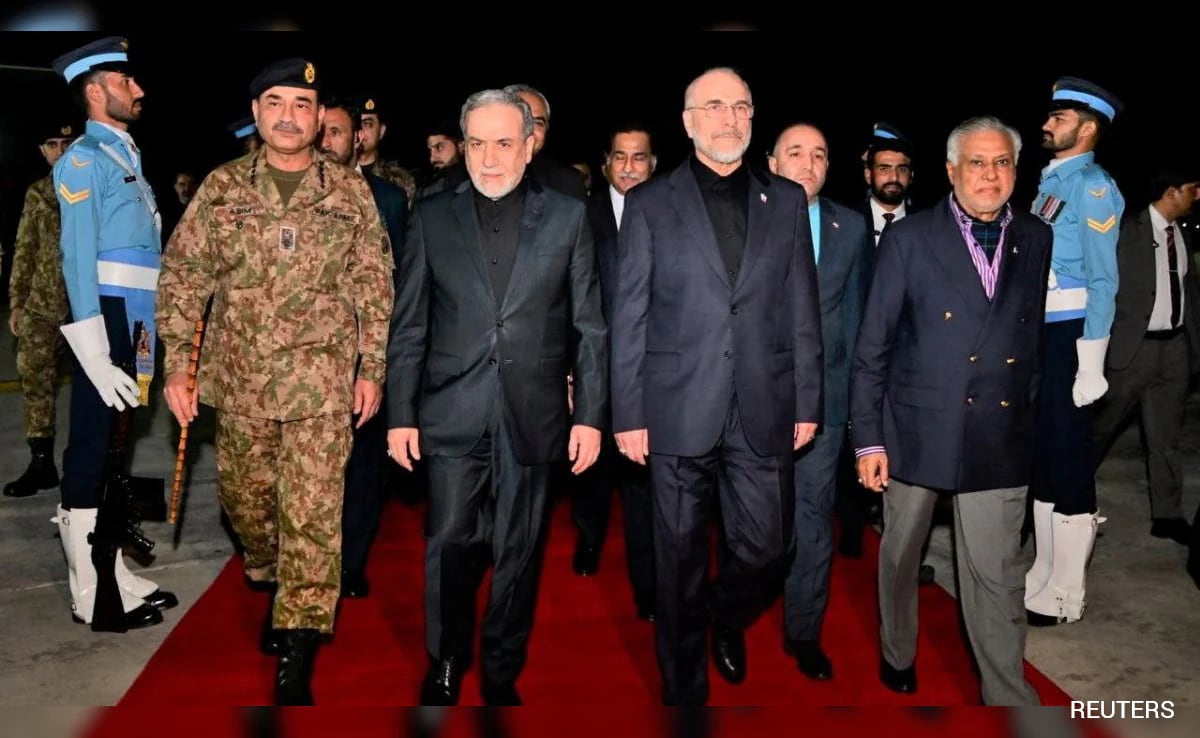
The tarmac at the airbase didn't just radiate heat; it pulsed with the weight of two nations holding a collective breath. When the hatch of the Iranian aircraft swung open, the air didn't rush in. It hesitated. This wasn't just another diplomatic junket or a routine exchange of pleasantries over porcelain cups of tea. It was a high-stakes repair mission for a fractured glass floor.
General Asim Munir stood on the greeting line, a figure of rigid military precision. His presence was the message. In this part of the world, a handshake between generals carries more kinetic energy than a dozen signed treaties in a civilian hall. As the Iranian delegation stepped down—men with weary eyes and the heavy gait of those carrying a region’s stability on their shoulders—the cameras flashed, but the real story was written in the silence between the shutters.
For decades, the thousand-kilometer ribbon of dust and rock separating Pakistan and Iran has been less of a border and more of a scar. It is a place where geography defies governance. Think of it as a vast, sun-bleached basement where neither side can quite agree on who left the light on or who is responsible for the leak in the corner. Lately, that leak has looked a lot like fire.
The Ghost in the Mountains
To understand why this meeting matters, you have to look past the crisp uniforms and the red carpets. You have to look at the Jaish al-Adl insurgents who melt into the Sistan-Baluchestan ridges like mountain mist. You have to consider the families in villages like Panjgur, where the sound of a drone isn't a curiosity—it is a heartbeat-skipping omen.
Not long ago, these two neighbors were trading more than just trade goods; they were trading missiles. It was a surreal, terrifying escalation that caught the world off guard. Iran struck what it claimed were terrorist hideouts inside Pakistani territory. Pakistan, refusing to let its sovereignty be treated as a suggestion, struck back within forty-eight hours.
The world watched, waiting for the explosion. But then, something rare happened in modern geopolitics. Both sides stepped back from the ledge. They realized that in a neighborhood this volatile, a house fire next door is never just the neighbor’s problem. The arrival of this delegation in Rawalpindi is the physical manifestation of that realization. It is the "we need to talk" moment after a screaming match that almost ended in a wreck.
The Invisible Stakes at the Dinner Table
Economics is often discussed in numbers—billions of dollars, percentage points of GDP, trade deficits. But for the person living in the border provinces, economics is the price of a gallon of smuggled fuel. It is the ability to move a truck of pomegranates across a line without it being seized or incinerated.
The Iranian delegation isn't just here to talk about "security cooperation," though that is the headline. They are here because both nations are starving for a normalcy that has remained agonizingly out of reach. Iran is suffocating under a blanket of international sanctions, looking for any lungful of air it can find through its eastern neighbor. Pakistan is grappling with a tectonic economic shift, desperate for the cheap energy and stable markets that a peaceful border provides.
When General Munir and the Iranian officials sit across from each other, they aren't just looking at maps. They are looking at the specter of a third party—the shadow of extra-regional players who would love nothing more than to see these two giants of the Islamic world at each other's throats. There is a specific kind of tension that comes from knowing that if you don't find common ground, someone else will come along and dig a trench in the middle of it.
Beyond the Rhetoric of Brotherhood
We often hear the word "brotherly" tossed around in these press releases. It’s a convenient cliché. In reality, the relationship is more like that of two business partners who inherited a failing firm and don't particularly like each other’s management styles, yet know they will go bankrupt if they don't cooperate.
The military-to-military engagement is the core of this visit. In Pakistan, the army isn't just a wing of the state; it is the spine. By meeting with Asim Munir, the Iranians are acknowledging where the true levers of power reside. They are bypassing the bureaucratic fluff to speak directly to the man who controls the boots on the ground.
This isn't about soft diplomacy. It’s about hard borders.
They are discussing intelligence sharing that actually works, rather than the "lip service" agreements of the past. They are talking about a joint mechanism to ensure that if a spark flies in the wilderness of the border, there is a bucket of water ready on both sides before it becomes an inferno.
The Human Cost of Miscalculation
Imagine a hypothetical shepherd named Gul. He lives in a valley where the border is an invisible line drawn by men in far-off cities. For Gul, a "security lapse" isn't a headline. It’s the reason his son can't go to school because the road is blocked by a new checkpoint. It's the reason the marketplace is empty because the traders are afraid of the next stray shell.
When these delegations meet in high-ceilinged rooms in Rawalpindi, they are ostensibly making decisions for Gul. But the gap between a general’s map and a shepherd’s reality is vast. The success of this visit won't be measured by the warmth of the smiles in the official photographs. It will be measured by whether Gul can graze his flock without looking at the sky in fear.
The stakes are higher than they have been in a generation. To the west, the Middle East is a tinderbox. To the north, Afghanistan remains a wild card that neither Tehran nor Islamabad can fully predict. The regional architecture is shifting. Old alliances are fraying, and new, colder ones are forming.
The Architecture of a New Peace
This visit is an attempt to build something sturdier than a ceasefire. It’s an attempt to build a fence that actually functions as a bridge. They are looking at the "border markets" project—a plan to turn the smuggling routes into legitimate hubs of commerce. It’s a brilliant, if difficult, strategy: make peace more profitable than conflict.
If you give a young man a job moving legal goods across a border, he is significantly less likely to pick up a rifle for a separatist group. It is the oldest trick in the book, yet the hardest one to execute in a region where trust is the rarest commodity of all.
As the meetings stretched into the evening, the sun dipped behind the Margalla Hills, casting long, sharp shadows over the capital. The optics were perfect. The handshakes were firm. The statements were calibrated to sound both resolute and conciliatory.
But the real work happens after the planes take off. It happens in the quiet coordination between border posts. It happens when an intelligence officer picks up the phone to warn his counterpart about a movement in the dark, rather than letting the trap spring just to watch the other side bleed.
The Iranian delegation came to Pakistan because they had no other choice. Isolation is a slow death, and conflict is a fast one. In the middle ground between those two extremes lies a fragile, difficult peace that requires constant tending.
Asim Munir knows this. The men from Tehran know this.
The border is still there, a jagged line through some of the most unforgiving terrain on Earth. The wind still blows hot and dry across the ridges of Baluchestan. But for the first time in months, that wind doesn't carry the scent of cordite. It carries the heavy, humid scent of a long-overdue conversation.
A map was spread out on a heavy oak table in a room where history is made by the stroke of a pen and the movement of a battalion. The two sides leaned in. The ink was dry, but the intentions were still wet, shimmering under the overhead lights. Outside, the world kept spinning, oblivious to the fact that a few men in a quiet room had just decided that, for today at least, the guns would remain silent.
The true test of a man isn't how he starts a fight, but how he chooses to end one. In the dust of the frontier, the ending is still being written, one wary step at least.