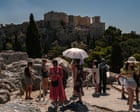
The narrative is predictable. A mayor stands in a historic square, looks at the crowds of tourists dragging rolling suitcases over cobblestones, and declares that the city is "dying." They call it overtourism. They blame short-term rentals. They vow to "save" the capital by turning back the clock. In Athens, Mayor Haris Doukas is the latest to pick up this banner, claiming the city cannot operate as a "giant hotel."
It is a charming sentiment. It is also economically illiterate.
The "lazy consensus" suggests that tourism is a parasite sucking the soul out of Athens. In reality, tourism is the only reason the lights are still on in many of the city’s historic neighborhoods. To "rescue" Athens from tourists is to rescue the Greek economy from its most reliable engine of growth. The problem isn't that there are too many visitors; it’s that the city leadership is too unimaginative to manage the wealth they bring.
The Myth of the Displaced Athenian
The loudest argument against tourism is that it drives locals out of the center. Critics point to Exarcheia or Koukaki and lament the loss of the "authentic" Athenian life.
Let’s be honest: before the short-term rental boom, many of these "authentic" buildings were rotting. Greece went through a decade-long depression that wiped out 25% of its GDP. During that time, central Athens was defined by boarded-up storefronts and crumbling facades. Private capital, fueled by the demand for Airbnb stays, did what the state could not: it renovated the housing stock.
When people talk about displacement, they ignore the fact that the "locals" they are protecting are often the very landlords who cashed out, moved to the suburbs, and are now living comfortably on the rent paid by those "evil" tourists. The capital didn't disappear; it just shifted hands. If the city wants to keep young Greeks in the center, the solution isn't to ban hotels—it’s to fix the Byzantine zoning laws and stagnant wages that make the center unaffordable for everyone except the wealthy.
Overtourism is a Management Failure Not a Volume Problem
The word "overtourism" is a linguistic trap. It implies a hard ceiling on how many humans can occupy a space before the space breaks. But look at Tokyo or London. These cities handle millions more visitors than Athens without the constant existential dread.
Why? Because they have infrastructure that works.
The Acropolis reached its limit not because there are too many people in the world who love history, but because the entry systems, foot traffic flow, and surrounding transit were designed for 1985. The Mayor’s "rescue" plan focuses on restricting supply—limiting licenses, increasing taxes—rather than expanding the city’s capacity to absorb demand.
If you have a crowd at your front door, you don’t burn the house down. You build a bigger door. Or better yet, you build three more doors and guide people toward them. Athens hasn't even begun to effectively market its northern neighborhoods or its coastal "Riviera" to balance the load. The "giant hotel" isn't the problem; the lack of a modern lobby is.
The Tax Trap: Rent-Seeking Under the Guise of Progress
Mayor Doukas and his contemporaries love the idea of a "climate tax" or a "resilience fee" on tourists. It sounds noble. It’s actually just a way to plug holes in the municipal budget without having to reform the city's internal inefficiencies.
I’ve seen cities across Europe implement these "tourist taxes," and the result is almost always the same: the money disappears into the general fund. It rarely goes toward cleaning the streets, improving the metro, or creating green spaces for locals.
When you tax the visitor to "save" the local, you are essentially telling the visitor, "We want your money, but we don't want you." It’s a hostile business model. If Athens wants to be a global hub, it needs to treat tourism as a high-value industry that requires investment, not a vice that requires a sin tax.
Why the "Authenticity" Argument is Fake
The most tired trope in the anti-tourism playbook is the loss of "local character." The mayor wants to ensure Athens doesn't become a "disneyland."
Culture is not a static object kept under glass. It is a living, breathing entity that adapts to economic reality. The "authentic" Athens of the 1970s is gone, and it’s not coming back. Today’s Athens is a globalized, Mediterranean tech and tourism hub. The souvlaki joints that now have English menus aren't "fake"—they are surviving.
Trying to freeze a city in time is the quickest way to turn it into a museum. And museums are dead spaces. The irony of the "anti-overtourism" movement is that by trying to preserve the city's soul, they risk turning it into a sterile, high-end enclave where only the ultra-rich can afford to live or visit.
The Uncomfortable Truth About Short-Term Rentals
The crusade against platforms like Airbnb is the ultimate red herring. It’s easy to blame an algorithm for the housing crisis. It’s much harder to admit that the Greek state has failed to build social housing or provide incentives for long-term development for thirty years.
Short-term rentals democratized the travel industry. They allowed middle-class families to earn direct income from their assets rather than leaving all the profit to the big hotel chains. When a mayor vows to "crack down" on these rentals, he isn't just fighting "overtourism"—he is fighting the small property owners who used that income to survive the debt crisis.
If you ban Airbnbs in the center, the prices won't magically drop for the working class. The buildings will simply be bought by institutional investors and turned into luxury boutique hotels. The "locals" still won't be able to afford to live there, and the profits will leave the country instead of staying in the pockets of Athenian families.
Stop Trying to "Save" the Capital
Athens does not need a savior. It needs an administrator.
Instead of complaining about the "giant hotel," the city should be:
- Digitizing the City: Using real-time data to redirect tourists away from the Acropolis when it’s at capacity and toward under-visited museums.
- Infrastructure Overhaul: Investing the billions in tourism revenue into a transit system that makes living in the suburbs and working in the center viable for Greeks.
- Incentivizing the Fringe: Giving tax breaks to businesses that open in non-tourist districts to pull the "soul" of the city outward rather than huddling it in the center.
The current strategy of restriction is a race to the bottom. It signals to the world that Athens is closed for business, tired, and overwhelmed.
The city is vibrant because people want to be there. The crowds are a sign of success, not a symptom of failure. If the leadership can't handle the heat of being a top-tier global destination, they should step aside for someone who knows how to build a city that can host the world without losing its mind.
Stop blaming the visitors for the city’s inability to evolve.
Build the infrastructure. Manage the flow. Take the money.