The standard retrospective on Apple’s fiftieth anniversary is a predictable slog of hagiography. Most analysts will point to the iPhone as the pinnacle of human achievement and dismiss the Newton or the Pippin as "noble failures." This narrative is not just lazy; it is fundamentally wrong. By celebrating the products that "changed how we live," we are actually celebrating the closing of the American mind and the commodification of human attention.
Apple didn’t succeed because it was "innovative." It succeeded because it was the most effective velvet-lined prison builder in the history of capitalism. If we want to discuss the reality of the last five decades, we have to stop looking at the shiny glass rectangles and start looking at the erosion of general-purpose computing.
The iPhone Was Not a Tool It Was an Eviction Notice
The "lazy consensus" dictates that the iPhone liberated us by putting the internet in our pockets. In reality, the iPhone evicted the user from their own device.
Before 2007, a computer was something you owned and controlled. After 2007, the "smartphone" became a terminal for a corporation to rent you back your own digital life. The iPhone’s real legacy isn't the touchscreen or the App Store; it’s the normalization of the "walled garden." This isn't just a business strategy; it’s an architectural shift toward digital feudalism.
When you "buy" an iPhone, you are actually signing a long-term lease on a curated experience where you have zero administrative rights. You cannot install software from outside the sanctioned marketplace without "jailbreaking"—a term that should tell you everything you need to know about the device's relationship with its owner.
The technical reality is that the iPhone killed the "tinkerer" culture that built Apple in the first place. Steve Wozniak’s Apple II was an open invitation to explore. The iPhone is a closed door with a high-resolution peephole. By celebrating it, we are celebrating the death of the hobbyist and the birth of the passive consumer.
The Newton Was the Only Time Apple Was Actually Right
Most hacks list the Newton MessagePad as a "failure" because the handwriting recognition was spotty at launch. This is the hallmark of a shallow critic.
The Newton was a failure of timing, not a failure of vision. More importantly, it was the last time Apple tried to build a device that truly augmented human intelligence rather than just capturing human data. The Newton’s "Intelligence" layer—the way it understood "Meeting with John at 5" and automatically created a calendar event with a linked contact—was decades ahead of its time.
Unlike the modern iPad, which is a giant iPhone for Netflix and "content consumption," the Newton was designed for active data manipulation. It used an object-oriented database system that made data fluid across the entire OS. Today, your data is trapped in silos. Your "Notes" app doesn't talk to your "Tasks" app unless a developer specifically builds a bridge.
The Newton tried to treat information as a unified whole. We traded that sophisticated vision for the "App" model because apps are easier to monetize. We didn't get a better experience; we got a more profitable one for the landlord.
The Apple Watch Is a Biometric Shackle Not a Health Revolution
The narrative around the Apple Watch is centered on "saving lives" via heart rate monitoring and fall detection. This is the ultimate marketing pivot for a device that has failed its primary mission: making us less dependent on our phones.
The Apple Watch didn't solve the problem of digital distraction; it just moved the distraction six inches closer to your brain. It is the ultimate expression of the "nudge" economy. By gamifying your heartbeat and your "rings," Apple has successfully outsourced the management of your physical body to an algorithm.
I’ve seen dozens of "wearable tech" startups burn through hundreds of millions trying to compete here. They all fail because they think the Watch is a health device. It isn't. It’s a data-harvesting node. The value isn't in telling you that you walked 10,000 steps; the value is in the aggregate data that allows Apple to negotiate with insurance companies and healthcare providers. You aren't the customer; you are the sensor.
The Macintosh 128K Was a Disaster Hidden in a Beige Box
To the nostalgic, the 1984 Mac is a masterpiece. To anyone who had to actually use it for work, it was an underpowered toy that nearly bankrupted the company.
The Mac’s "success" is a triumph of marketing over engineering. It shipped with 128KB of RAM, which was insufficient for the GUI it was trying to run. It had no hard drive. It was slow, it overheated because Jobs had an irrational hatred of fans, and it was overpriced.
The "insanely great" Mac was actually a regressive step for many professionals. It traded the flexibility of the command line for the rigidity of the mouse. While the GUI made computers accessible to the masses, it also created a generation of users who have no idea how their machines actually function. We traded literacy for "user-friendliness."
The industry calls this "abstracting away the complexity." In reality, it’s a lobotomy. When you don’t understand how the machine works, you can’t fix it. When you can’t fix it, you are forced to replace it. This is the foundation of the planned obsolescence model that Apple perfected.
The Pippin and the Cube Were Not Failures They Were Beta Tests for Arrogance
The G4 Cube and the Pippin are often cited as Apple’s "bad years." But if you look at the mechanics of those failures, you see the blueprint for everything Apple does now.
The G4 Cube was an exercise in form over function—a computer that cracked its own acrylic casing because it couldn't handle the heat. This "aesthetic first, physics second" approach is exactly why MacBooks had "butterfly keyboards" that died if a grain of dust touched them. Apple learned that people will buy a flawed product if it looks like a piece of art.
The Pippin was an attempt to enter the gaming market by licensing a platform. It failed because Apple didn't understand that gaming is about community and content, not just hardware. Yet, this failure informed the predatory 30% tax they now levy on every mobile game in the world. They didn't need to build a console; they just needed to own the toll booth.
The Cult of "Minimalism" Is a Scam
The industry praises Apple’s "minimalist" design. This is a clever rebranding of "removal of features to sell you dongles."
When Apple removed the headphone jack, it wasn't "courage." It was a calculated move to force consumers into the AirPods ecosystem—a product with non-replaceable batteries that are destined for a landfill in three years. This isn't design; it’s hostile architecture.
True minimalism should be about longevity and simplicity of repair. Apple's version is about the visual absence of buttons while increasing the complexity of the proprietary screws inside. We have been conditioned to believe that a slab of glass is "clean," ignoring the messy, exploitative supply chain and the e-waste mountain required to keep that glass shiny.
Stop Asking if Apple Can Still Innovate
The "People Also Ask" section of search engines is littered with variations of: "Is Apple losing its edge?" or "What is Apple’s next big thing?"
These questions are fundamentally flawed. They assume that Apple's goal is to produce groundbreaking technology. It isn't. Apple's goal is to maintain its position as the world's most profitable luxury lifestyle brand.
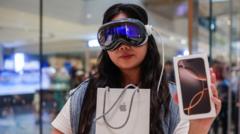
The Vision Pro isn't a "failure" because it hasn't sold millions of units. It is a success because it stakes a claim on the next piece of real estate: your actual field of vision. They are moving from the pocket to the wrist to the eyes. The goal is total sensory capture.
If you want "innovation," look at the open-source projects, the right-to-repair movement, and the developers trying to build decentralized networks. Apple is not going to save you; Apple is going to sell you a thinner version of your own chains.
The next time you look at that titanium-edged device, don't marvel at the engineering. Realize that you are looking at the most sophisticated distraction device ever built—a machine designed to keep you scrolling, clicking, and consuming until the heat death of your own curiosity.
Apple at 50 hasn't changed how we live. It has merely dictated the terms of our surrender to the screen.
Stop waiting for the next "one more thing." You already have it, and it’s already drained your bank account and your attention span. The most "innovative" thing you can do with an Apple product is turn it off.