Dario Amodei is not prone to hyperbole, which makes his recent warnings about a "moment of danger" in cybersecurity particularly striking. The Anthropic CEO has signaled that as artificial intelligence grows more capable, it is rapidly uncovering thousands of previously hidden software vulnerabilities. This is not a distant threat. It is a fundamental shift in how code is attacked and defended. We are moving from a world where hackers manually hunt for bugs to one where autonomous systems can scan, identify, and exploit weaknesses at a scale that human security teams cannot match.
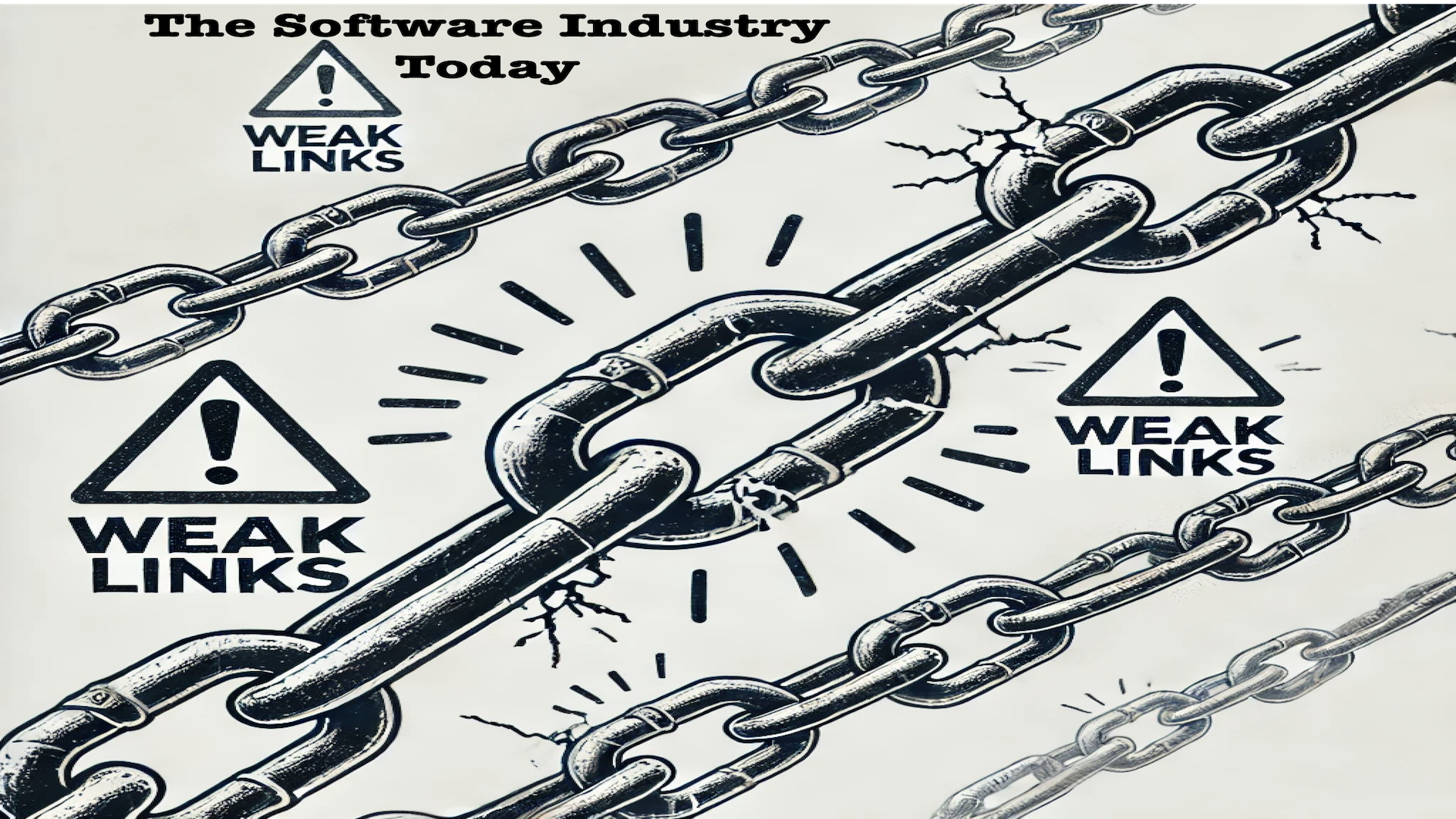
The core of the problem lies in the sheer volume of legacy code that underpins our global infrastructure. For decades, software development prioritized speed and functionality over security. We built a digital empire on a foundation of "good enough" code, assuming that the obscurity of complex systems provided a layer of protection. AI has stripped that obscurity away.
The End of Security Through Obscurity
For years, the cybersecurity industry relied on the fact that finding a "zero-day" vulnerability—a flaw unknown to the software creator—was a labor-intensive process. It required elite hackers to spend weeks or months reverse-engineering binaries and fuzzing inputs. This created a natural bottleneck. There were only so many skilled attackers and only so much time.
AI removes this bottleneck. Large Language Models (LLMs) and specialized code-analysis agents can now read through millions of lines of C++, Java, and Python in seconds. They don't just see text; they understand logic flow and memory management. When an AI identifies a buffer overflow or a logic flaw in a core library like OpenSSL or a Linux kernel module, it doesn't just find one bug. It finds a template for ten thousand others.
This is the "moment of danger" Amodei is referencing. The offensive capabilities of AI are currently outstripping the defensive ones. While we use AI to write code faster, we are often just generating more surface area for these automated scanners to target.
Why Automated Defense is Lagging
It would be easy to assume that if AI can find bugs, it can also fix them. While that is true in theory, the reality is messy. Patching a vulnerability in a live, mission-critical system is infinitely harder than finding it.
A security researcher can identify a flaw in a banking backend, but deploying a fix requires regression testing to ensure the "fix" doesn't break the entire system. AI-driven defense faces a massive trust gap. No CTO is going to let an autonomous agent rewrite their core transaction engine at 3:00 AM without human oversight. This creates a dangerous asymmetry: the attacker only needs to be right once and can act instantly, while the defender must be right every time and is slowed down by human-in-the-loop requirements.
Furthermore, many of the vulnerabilities being uncovered are deep within the "software supply chain." These are the open-source libraries and third-party modules that almost every modern application relies on. If an AI discovers a critical flaw in a widely used logging library, every company using that library is suddenly at risk. The coordination required to patch millions of disparate systems is a logistical nightmare that AI alone cannot solve.
The Economics of the Exploit Market
We must also look at the financial incentives. In the underground economy, a high-quality exploit can fetch hundreds of thousands of dollars. AI lowers the barrier to entry for producing these assets. We are seeing the "democratization" of high-end cyber warfare capabilities.
Previously, only nation-states had the resources to maintain a "cyber-arsenal" of sophisticated exploits. Now, a moderately skilled actor with access to a powerful enough model can automate the discovery phase of an attack. This shifts the economic balance. When the cost of finding a vulnerability drops toward zero, the number of attacks will inevitably skyrocket.
Companies are currently spending billions on "AI safety," but much of that focus is on preventing the model from saying something offensive or biased. Amodei’s warning suggests that the real safety concern is structural. If a model can help a biology student engineer a pathogen, it can certainly help a mid-tier hacker take down a power grid.
The Ghost in the Machine
There is a psychological component to this crisis that many analysts ignore. We have spent the last decade teaching ourselves to trust automated systems. We trust our GPS, our trading algorithms, and our autocomplete. As AI is integrated into the "DevSecOps" pipeline, there is a risk of complacency.
Engineers are already using AI to suggest code snippets and entire functions. If the AI is trained on a massive corpus of existing code—much of which contains those thousands of vulnerabilities Amodei mentioned—it will naturally reproduce those flaws. We are essentially laundering old bugs into new software. This creates a feedback loop where the AI finds a bug, a human asks the AI to fix it, and the AI provides a fix that introduces a different, subtler vulnerability.
Breaking the Cycle
To survive this transition, the industry needs to move beyond the "patch and pray" model.
First, we need to acknowledge that "memory-unsafe" languages like C and C++ are a liability in an AI-driven world. The "thousands of vulnerabilities" being found are largely spatial and temporal memory errors that simply do not exist in languages like Rust. A hard pivot toward memory safety is no longer a preference; it is a survival tactic.
Second, the "Human-in-the-Loop" model needs to evolve. We cannot have a human reviewing every single line of code in a world where AI is generating and attacking code at machine speed. We need "Verifiable AI"—systems that don't just suggest a fix but provide a formal, mathematical proof that the fix is secure and doesn't break existing logic.
The Reality of the AI Arms Race
The "moment of danger" isn't a single event. It’s a permanent state of affairs. There is no world in which we "solve" AI-driven cyber threats and go back to normal. We are entering an era of perpetual, automated conflict where the battlefield is the very logic our society runs on.
Anthropic is in a unique position because they see the "internal weights" of these models. They know what the systems are capable of before the public does. When a CEO of a leading AI lab tells you the red-teaming results are terrifying, you should believe him. He isn't selling a product in that moment; he is describing a structural weakness in our civilization.
The vulnerability isn't just in the code. It is in our inability to move as fast as the tools we have created. We are still using 20th-century bureaucratic processes to defend 21st-century infrastructure against 22nd-century threats.
Stop treating AI as a productivity tool and start treating it as a structural stress test. Every piece of software you currently run is likely being scanned by an adversary you cannot see, using a logic you do not fully understand. The only rational response is to assume your current perimeter is already compromised and rebuild from the ground up with the assumption that the attacker is faster, smarter, and never sleeps. Move your critical assets to memory-safe environments, implement hardware-level security keys, and stop trusting any code that hasn't been subjected to an AI-driven red team audit. The window for a "managed transition" is closing.